Quick answer: Budget around £800 for a minimum viable lost-wax setup (centrifugal casting plus a used kiln), or £1,500–£2,500 for a proper vacuum setup with a new burnout kiln. Most UK studios start smarter still: hand-carve the waxes and outsource casting to a trade caster for the first year, bringing it in-house only once volume justifies the equipment cost.
Lost-wax casting (cire perdue) is the oldest continuous metalworking technique still in daily use — and still the most practical way for a small UK jewellery studio to turn a wax carving or 3D print into a cast metal piece. This guide covers what you need to buy, in what order, and realistic budgets for each stage.
This isn't a technique manual (casting a clean piece takes practice and a teacher). It's a buying guide: what kit you actually need to start casting in 2026, what to skip, and where the cost traps sit.
The lost-wax workflow in plain English
- Carve or 3D print a wax model of the finished piece.
- Mount the model on a sprue base and surround with a flask.
- Pour investment (a plaster-silica mix) into the flask. Vacuum de-gas. Let set.
- Burn out the wax in a kiln — this leaves a hollow cavity the exact shape of your model.
- Melt metal and force it into the cavity (vacuum, centrifugal or steam pressure casting).
- Quench, break the flask, clean the casting.
Each stage has its own tools. You can't skip stages. Here's what you need at each step.
Stage 1: Wax carving tools
For hand-carved models (as opposed to 3D-printed), you need:
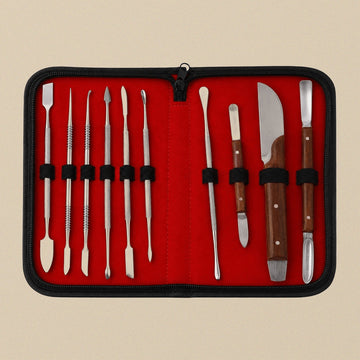
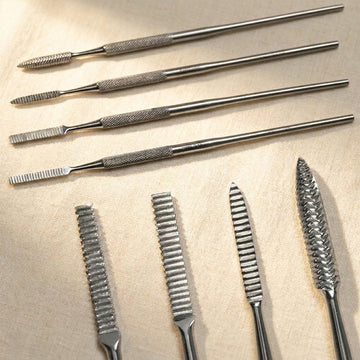
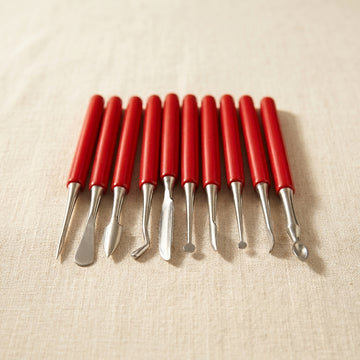
- A hand carver set — spatula, leaf, blade, needle, ball shapes. Around £20–£50 for a complete set.
- Wax knives and blades for rough-cutting blanks. Around £10–£20.
- An electric wax pen (optional but recommended) — temperature-controlled, for sprueing and repair work. £60–£180.
- Wax ring tube and blanks in different colours (blue for soft, green for hard). Consumable.
See the Wax Carving Tools collection for the full range. Skip the cheap all-in-one beginner kit — the spatula shapes are often too blunt to do precision work and you'll rebuy within a month.
Stage 2: Sprue base, flask and investment bowl
- Rubber sprue base — sized to match your flask. £5–£15.
- Stainless steel casting flask — typical starter size is 2½" × 3" for a single-ring tree. £15–£30.
- Rubber investment mixing bowl — flexible so you can squeeze out air bubbles. 4" × 5" covers small-flask work. £10–£20.
- Investment powder — jeweller-grade gypsum-bonded (like Satin Cast). Consumable, £15–£25 per kg.
- Vacuum de-gasser — essential for getting air bubbles out of the investment before it sets. Starter units around £150–£300.
The investment mixing bowl matters more than people expect — a rigid bowl means trapped air bubbles become pits in your casting. Always use a flexible rubber mixing bowl.
Stage 3: Burnout kiln
This is where beginner casting costs jump. You need a programmable kiln that can:
- Ramp up to 730°C (minimum) on a controlled schedule.
- Hold temperature stably for a full burnout cycle (typically 8–10 hours).
- Fit your flask size.
Expect to spend £400–£900 for a decent programmable burnout kiln suitable for small-studio work. This is not a place to cheap out — an incomplete burnout leaves carbon residue that ruins the casting. Used kilns from retiring studios are a good option if you can inspect before buying.
Stage 4: Melting and casting
Three common methods for small-studio work:
- Vacuum casting: most reliable for bench jewellery. Uses a vacuum pump to pull molten metal into the flask cavity. Starter units around £400–£800.
- Centrifugal casting: spin-casting — cheaper (£100–£250) but harder to control consistently.
- Steam/pressure casting: old-school potato-on-a-flask method. Essentially free but limited to very small pieces.
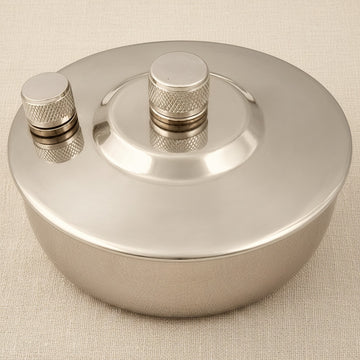
You'll also need a torch or crucible for melting metal, crucible tongs, a crucible dish, and your casting metal itself (sterling silver grain, 9ct gold, bronze). See the Casting & Lost-Wax Tools collection for crucibles, tongs and crucible + tongs sets.
Stage 5: Cleanup
- Flask quenching tongs — for dropping the hot flask into cold water.
- Wire brush — for initial investment removal.
- Pickle pot — to clean firescale off the casting.
- Side cutters or sprue cutters — to separate the casting from the sprue. See Pliers & Cutters.
- Files and polishing kit — normal bench finishing from here. See Files & Engraving and Polishing & Finishing.
Realistic total budget
For a genuinely usable small-studio lost-wax setup in 2026:
- Minimum viable starter (centrifugal + used kiln): around £800.
- Proper vacuum setup with new kiln: £1,500–£2,500.
- Full small-studio professional setup: £3,500+.
Most working UK studios build out in stages: start with hand-carve + outsource the casting to a UK trade caster for the first year, then bring casting in-house once the volume justifies the equipment cost.
Where to buy
Toolsmith stocks the wax carving, investment, flask and cleanup tools in the Casting & Lost-Wax Tools, Wax Carving Tools, Jewellery Making Tools and Student & Starter Kits collections. For kilns and vacuum casting units, specialist jewellery-equipment suppliers like Cookson, Walsh and Sutton are the main UK trade sources.
All Toolsmith tools are UK-warehoused with same-day dispatch before 2pm on weekdays, free UK delivery and 30-day returns if a tool isn't right for the job.
Related guides
- Dental Wax Carvers - Tip Geometries Explained (UK Lab Guide)
- Setting Up a Jewellery Bench on a Student Budget (UK, 2026)
- Disc Cutters for Jewellery - UK Buyers Guide
Frequently asked questions
What equipment do I need to start lost-wax casting?
Kit for every stage: wax carvers and blanks; a rubber sprue base, stainless flask and flexible rubber investment mixing bowl; a vacuum de-gasser (£150–£300); a programmable burnout kiln reaching at least 730°C (£400–£900); a casting method — vacuum (£400–£800), centrifugal (£100–£250) or steam pressure; plus a crucible and tongs, pickle pot, wire brush and sprue cutters for cleanup.
How much does a beginner lost-wax casting setup cost in the UK?
Around £800 minimum for a genuinely usable starter built on centrifugal casting and a used kiln; £1,500–£2,500 for a proper vacuum setup with a new kiln; £3,500+ for a full small-studio professional setup. Alternatively, outsource casting to a UK trade caster in year one and spend almost nothing on equipment while you learn.
Can I save money on the burnout kiln?
No — the kiln is the one place not to cheap out. It must ramp to at least 730°C on a controlled schedule and hold temperature stably through a typical 8–10 hour burnout; an incomplete burnout leaves carbon residue that ruins the casting. A used kiln from a retiring studio is a good option if you can inspect it before buying.