Quick answer: Build the bench in stages, not all at once: £80–£120 of week-one essentials (saw frame, bench pin, needle files, chain-nose pliers, flush cutters), forming kit by month three, soldering kit by month six. A complete usable first-year bench costs around £250–£400 — and skip pendant motors, polishing machines and cheap "complete kit" bundles entirely.
Setting up a jewellery bench on a UK student budget is a legitimate challenge in 2026. Tuition fees are higher than ever, tool prices have risen since COVID supply chains resettled, and the temptation to "kit out all at once" from a cheap marketplace site ends with half your money on tools that will be in the bin by second year.
This guide covers the four-stage build approach: what to buy in weeks 1–2, what to add by month 3, what to save for month 6, and what to skip entirely until you're working professionally. Total first-year spend, if done carefully: around £250–£400 for a complete usable bench.
Stage 1: Week 1–2 essentials (£80–£120)
This is the "day you start your course" kit. Don't buy anything else until you're using these daily.
- Jewellers saw frame (adjustable, around £12–£20) — plus a pack of saw blades in grade 2/0 and 4/0.
- Bench pin and clamp (around £8–£15) — you can't saw without one.
- Needle file set (Swiss grade 2 cut, 140mm or 160mm, around £15–£30) — one good set beats three cheap sets.
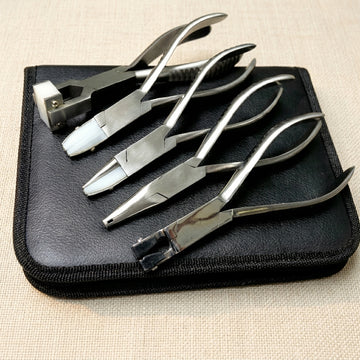
- Chain-nose pliers + flush cutters (around £20–£35 for a decent pair of each) — the two plier shapes you'll use every single day.
- Dividers or scribe (around £6–£12) — for marking out; see Measuring & Marking Tools.
- Steel ruler with metric and imperial (around £5) — small enough to fit on a bench peg.
- Safety specs (around £4–£10) — non-negotiable.
This is enough to do pierce work, filing, component fitting, and basic wire work. Don't rush past this stage — the wrong saw frame makes everything harder for a year.
Stage 2: Month 2–3 additions (£80–£130)
Once you've used Stage 1 kit in anger for 6–8 weeks, you'll have earned the right to Stage 2. The stuff that makes forming and shaping possible:
- Hardened steel ring mandrel (tapered, UK + US sized, around £18–£30) — see Mandrels & Ring Sizing.
- Chasing hammer (~100g, around £14–£22).
- Hardened bench block (2" × 4" minimum, around £15–£25).
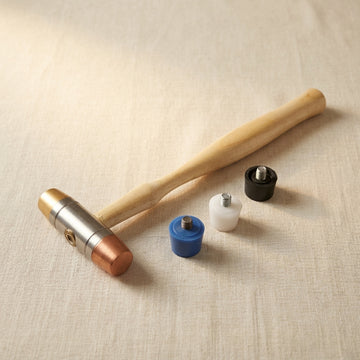
- Brass mallet (1lb, around £14–£20).
- Round-nose pliers (stepped, around £12–£25) — for ear-wire loops and consistent curves.
- Finger gauge set (metal, UK + US, around £12–£20).
You can now size rings, form basic shapes, hammer-harden silver and do proper bench work. Stage 2 kit should last your entire career if you look after it.
Stage 3: Month 4–6 (£80–£150)
Now you're ready for the kit that separates a jewellery student from a hobbyist. Soldering is the big one — check with your course first whether the studio has a solder station you can use, because home soldering has ventilation and fire-risk implications.
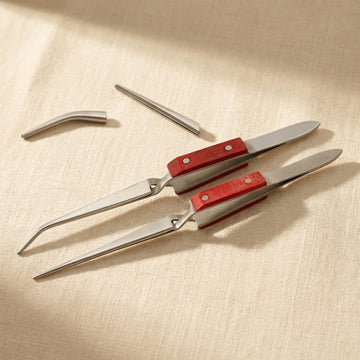
- Third-hand soldering tweezers (reverse-action, fibre-insert handle, around £10–£20) — see Soldering Tools.
- Soldering board or charcoal block (around £8–£20).
- Titanium solder pick (around £10–£18) — a small upgrade over a steel pick that makes soldering much cleaner.
- AA or 4A tweezers set (fine point + curved, around £18–£35).
- Cross-lock (reverse-action) tweezers (around £8–£15).
- Ring clamp or wooden bench clamp (around £8–£15) — so you can file ring work without burning your fingers.
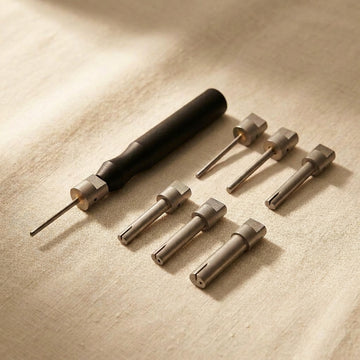
- Dapping/doming set (10–18 punch starter, around £25–£55) — see Hammers & Forming Blocks.
By end of Stage 3 you have a complete bench for 90% of student coursework and independent project work.
What to skip entirely (for now)
These items are widely recommended by "jewellery starter kit" articles but are not worth your money in year one:
- Pendant motor + flex shaft: lovely tool but £200+. Use your college's shared motor until you're sure you need one for home use.
- Polishing machine: big, noisy, needs proper extraction. Use the college one. Hand-polishing with emery sticks and a burnisher covers all student needs.
- Vulcaniser / casting kit: £1,500+ total investment. Use the college's or outsource casts to a UK trade caster for your first year.
- Engraving gravers: only if you're specifically doing engraving modules. Otherwise skip until you have a reason.
- "Complete jewellery kit" bundles: almost universally low-quality. Individual tool-by-tool buying of decent kit is cheaper long-term.
Where NOT to cheap out
- Saw blades: cheap blades snap every third cut and waste an hour of frustration. Buy a gross of quality 2/0 and 4/0 blades.
- Pliers: the gap between cheap and decent is only £10–£15 per pair. Worth it.
- Bench block: a soft block doubles your hammer-work time. Always hardened.
- Ring mandrel: must be hardened steel with deep UK + US size stamps. Ink-printed markings wear off in weeks.
Our student kit recommendation
For a UK jewellery student in 2026, the Toolsmith Student & Starter Kits collection bundles several of the items above into storage-boxed sets — often cheaper than buying each tool separately, and with a wooden box so nothing walks off at a shared college bench.
Alternatively, the individual tools are split across Jewellery Making Tools, Pliers & Cutters, Hammers & Forming Blocks, Files & Engraving Tools and Soldering Tools.
All UK-warehoused, same-day dispatch before 2pm weekdays, free UK delivery, and 30-day returns if a tool isn't right for the job. Trade and education pricing available for colleges — email info@toolsmithltd.co.uk.
Related guides
- How to Hold a Hammer at the Bench - UK Silversmith Technique Guide
- Best Ring Mandrels for Small UK Jewellery Studios (2026 Guide)
- Parallel-Action vs Standard Jewellers Pliers - Whats Worth the Premium
- Best Jewellers Pliers Under 30 Pounds (UK, 2026)
- UK College Jewellery Tool Orders: A Trade Account Guide
- Bench Organisation: Tool Racks, Stands & Storage
Frequently asked questions
What tools should a jewellery student buy first?
The week-one kit: an adjustable jewellers saw frame with 2/0 and 4/0 blades, a bench pin and clamp, a Swiss grade-2 needle file set, chain-nose pliers, flush cutters, dividers or a scribe, a steel ruler and safety specs — around £80–£120 in total. That covers pierce work, filing, component fitting and basic wire work.
Which jewellery tools are not worth buying in year one?
Skip the pendant motor and flex shaft (£200+ — use your college's shared one), the polishing machine, the vulcaniser or casting kit (£1,500+ total), and engraving gravers unless your course specifically requires them. Cheap "complete jewellery kit" bundles are almost universally low quality — buying decent tools individually works out cheaper long-term.
Where should a student never cheap out on jewellery tools?
Four places: saw blades (cheap ones snap every third cut — buy a gross of quality 2/0 and 4/0), pliers (the £10–£15 gap between cheap and decent is worth it), the bench block (always hardened steel — a soft block doubles hammer-work time) and the ring mandrel (hardened steel with deep-stamped UK and US sizes; ink-printed markings wear off in weeks).