Prices at the time of writing.
Quick answer: Grip the hammer at the very end of the handle, let a controlled wrist snap — not an arm swing — deliver the strike, overlap planishing hits by a third of the hammer face, and match the hammer to the job. A starter silversmith bench needs three: a chasing hammer, a planishing hammer and a brass mallet, roughly £80–£150 with a hardened bench block.
Hammer technique is the most under-taught skill in UK silversmithing. Most bench students learn to carve wax, saw metal and set stones long before anyone explains how to hold a hammer properly — and poor hammer technique is the single biggest cause of wrist strain, inconsistent forming and the dreaded "chased but not flat" look on a raised bowl.
This guide covers the four things that matter: grip, wrist position, strike pattern, and hammer-head selection. If you've been hitting metal for six months and your bowls still look lopsided, read this before buying another tool.
Rule one: hold the hammer at the end of the handle
The single most common beginner mistake is gripping the hammer halfway up the handle — often called "choking" the hammer. It feels safer and more controlled, but it drastically reduces the energy the hammer delivers per strike. You end up needing 3–4 times more strikes to achieve the same forming, and your wrist takes 3–4 times more punishment.
Grip the handle at the very end, thumb relaxed along the side, grip firm but not white-knuckled. Think "tennis racket for a gentle volley" rather than "sword in battle". The hammer's own weight and pivot point around your wrist does the work.
Rule two: the wrist does the work, not the arm
Watch a working silversmith in any UK studio and you'll see the arm stay relaxed — the hammer movement comes from a controlled snap of the wrist. Arm-swing hammering feels more powerful but is actually less accurate and exhausting after twenty minutes.
Start with your wrist extended slightly back, arm at roughly 90 degrees, hammer head hovering just above the work. Snap the wrist down for the strike, let the hammer rebound, and return to starting position. The elbow should barely move. If your forearm is aching after a session, you're over-using the arm.
Rule three: consistent strike pattern, overlapping hits
For planishing or raising work, hits should overlap each other by about one-third of the hammer face. Random or spaced-out strikes leave high spots and flat spots that are very hard to fix later. Work in straight rows across the piece, reset, and start the next row one-third offset.
For chasing and stamping work, the strike pattern is different — precise placement of each hit directly on the punch, with no horizontal drift. A consistent strike rhythm (roughly one hit per second for stamping) helps keep hits vertical and reduces tool slippage.
Rule four: use the right hammer for the job
This is where UK bench students overspend. Each hammer type has a specific geometry and weight for a specific job:
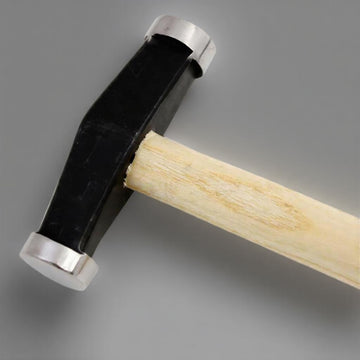
- Chasing hammer (around 100–120g): weighted head, shock-absorbing handle — for driving punches and stamps. The weight does the work, your wrist just directs it.
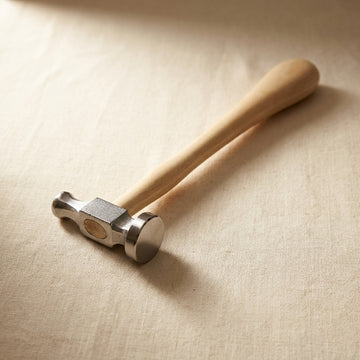
- Planishing hammer (around 170g): polished domed face — for smoothing and work-hardening raised forms. Never use a chasing hammer to planish; the flat face leaves micro-marks.
- Raising hammer (cross-pein): narrow, curved head for hollow-ware and bowl raising. Not for general bench use.
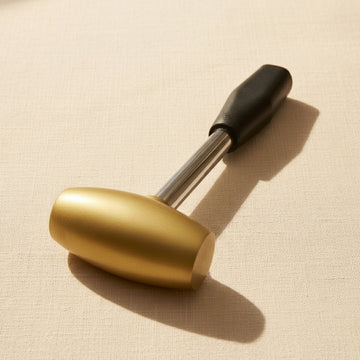
- Brass or nylon mallet: non-marring — for riveting, seating stones, shaping soft metal without marking the surface.
- Texturing hammer: interchangeable patterned faces — for adding surface texture. Use lightly; heavy strikes flatten the pattern.
A UK silversmith starter bench should have three hammers: chasing (for stamping and punch work), planishing (for sheet forming), and a brass mallet (for non-marring strikes). Add the rest as your work expands. See the Hammers & Forming Blocks collection for the full range.
Common mistakes and how to fix them
- "My bowls come out lopsided" — usually because you're striking harder on one side of the piece than the other. Rotate the piece between every row of strikes and keep your strike force uniform.
- "My planishing looks uneven" — strikes aren't overlapping enough. Aim for one-third overlap in every row.
- "My wrist aches after fifteen minutes" — you're arm-swinging, not wrist-snapping. Practice with a lighter chasing hammer first to retrain the motion.
- "My stamping is drifting sideways" — check your strike rhythm and make sure the punch is perfectly vertical before each hit.
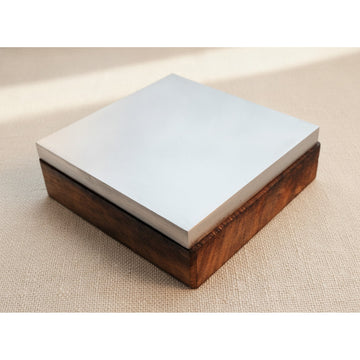
- "My bench block is denting" — either the block isn't hardened (buy a proper hardened steel block) or you're striking the work through it instead of against it.
What to practice first
If you're just starting, practice hammer technique on a cheap copper sheet offcut, not on your work. Plan 20 minutes of just hammering in straight rows, overlapping hits, at a consistent force. Your wrist will tell you fast if you're over-gripping or over-swinging. After two weeks of daily 20-minute sessions, your technique on real work will be measurably better.
Tools we'd recommend
For a UK silversmith setting up a first bench in 2026, the hammer-related core kit:
- 1 × Chasing hammer (~100g) with shock handle
- 1 × Planishing hammer (~170g) with polished face
- 1 × Brass mallet (1lb) for non-marring work
- 1 × Hardened steel bench block (minimum 2" × 4")
- 1 × Leather sandbag (for quieter hammering)
Total UK cost for the hammer core in 2026: roughly £80–£150 depending on brand. See the Hammers & Forming Blocks and Jewellery Making Tools collections. UK-warehoused, same-day dispatch target for orders before 2pm Mon–Fri, free UK delivery, 30-day returns.
Related guides
- Setting Up a Jewellery Bench on a Student Budget (UK, 2026)
- Parallel-Action vs Standard Jewellers Pliers - Whats Worth the Premium
- Best Ring Mandrels for Small UK Jewellery Studios (2026 Guide)
- Chasing, Repoussé & Forming Hammers: A UK Silversmith's Hammer Library
- Forming Stakes & Mini Anvils for Silversmiths: T-Stakes, Wheel Stakes & Micro-Forming
Frequently asked questions
What hammers do I need for a silversmith starter bench?
Three: a chasing hammer (around 100–120g) for driving punches and stamps, a planishing hammer (around 170g with a polished domed face) for smoothing and work-hardening formed sheet, and a 1lb brass mallet for non-marring work. Add a hardened steel bench block of at least 2" x 4". The hammer core costs roughly £80–£150 in the UK in 2026.
How should I hold a hammer for silversmithing?
Grip at the very end of the handle — never halfway up — with the thumb relaxed along the side and a firm but not white-knuckled hold. "Choking" the hammer cuts the energy delivered per strike so much that you need 3–4 times more strikes and your wrist takes 3–4 times more punishment. The strike comes from a wrist snap; the elbow barely moves.
Why do my hammered bowls come out lopsided or uneven?
Lopsided bowls usually mean you are striking harder on one side — rotate the piece between every row of strikes and keep the force uniform. Uneven planishing means strikes are not overlapping enough; aim for one-third overlap in straight rows. And a wrist that aches after fifteen minutes means you are arm-swinging instead of wrist-snapping.