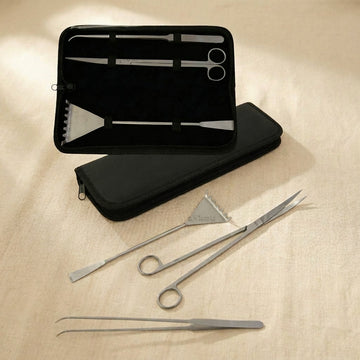
Quick answer: Start with three tools in 304-grade stainless steel: curved-tip planting tweezers, straight or angled scissors, and a substrate spatula — a starter kit such as the 3-piece set covers about 90% of maintenance tasks. Avoid kitchen scissors and craft tweezers, which rust and crush plants; add wave scissors later if you grow a carpet.
The gulf between a thriving, meticulously composed aquascape and a chaotic, algae-ridden fishtank often comes down to one thing: the tools you use. For the hobbyist moving beyond their first setup, the realisation dawns that maintaining a planted aquarium is a craft. And like any craft, from carpentry to watchmaking, success depends on using the right tool for the job. Many beginners, in a bid to save a few pounds, reach for kitchen scissors or a pair of tweezers from a first-aid kit. This is a false economy, and one that will cost you time, frustration, and potentially the health of your tank.
This guide is a practical look at the essential aquascaping tools. We’ll cut through the marketing fluff and focus on the practicalities: why specific shapes matter, what materials to look for, and how a small, well-chosen kit can elevate your aquascaping from amateur to accomplished. This isn't about boutique brands or carbon-fibre handles; it's about functional, reliable steel that gets the job done.
Why Your Kitchen Scissors (and Craft Tweezers) Belong in the Drawer
Let's address the first hurdle. You see a tuft of overgrown stem plants, grab the nearest pair of household scissors, and plunge them in. A few weeks later, you notice rust spots on the blades and a strange film on the water's surface. This is the first lesson in aquascaping tool selection.
The Inevitability of Rust
The term "stainless steel" is a broad church. The steel used for cheap kitchenware or general-purpose craft tools is typically a low-grade alloy like 201 stainless. Whilst it resists the occasional splash, it was never designed for repeated, prolonged submersion in the mineral-rich, slightly acidic environment of a planted aquarium. Rust will appear, often within weeks. This isn't just an aesthetic problem; rusting metal leaches iron oxides and potentially other unknown metallic compounds into your water column. For delicate inhabitants like shrimp, this can be stressful or even fatal. A proper aquascaping tool will be made from, at a minimum, 304-grade stainless steel. This alloy offers a far higher level of corrosion resistance, making it the baseline standard for any metal object you intend to put in your tank.
Ergonomics and Precision: Length and Shape
Beyond the material, household tools are simply the wrong shape and size. A standard 60-litre aquarium is around 30-35cm deep. A pair of 15cm kitchen scissors means you're getting your entire forearm wet, disturbing fish and potentially knocking over hardscape just to make a single cut. Aquascaping tools are designed with long shanks, typically 19-25cm, allowing you to reach the substrate with minimal disturbance.
The tips are another critical difference. Craft tweezers have blunt, wide ends designed for picking up beads, not for gripping the delicate stem of a *Rotala* plant. They crush the plant tissue. Household scissors have thick blades that mash their way through plant matter rather than making a clean cut. A crushed stem invites rot and algae, whilst a cleanly snipped one promotes healthy new growth. The principle is the same across disciplines; just as a professional would never use kitchen scissors for animal care, the same specialisation is required here. We cover the importance of purpose-built tools in our guide to Pet Grooming Scissors: Curved, Straight, Thinning, and the logic holds true for the aquatic world.
The Scissor Arsenal: Straight, Angled, and Wave
Not all scissors are created equal. Having a small selection of different blade shapes will allow you to tackle any pruning task with precision and ease. It’s the difference between a chore and a satisfying maintenance session.
Straight Scissors: The Workhorse
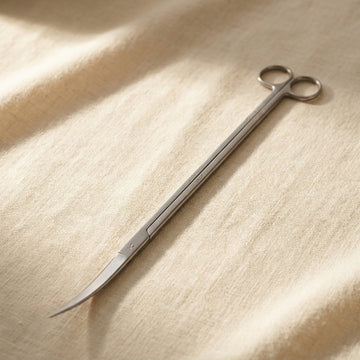
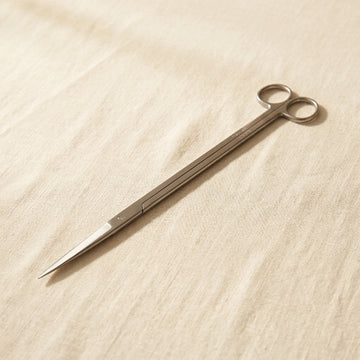
A long pair of straight scissors is the most basic and versatile tool. They excel at trimming the tops of tall stem plants like *Cabomba* or *Ludwigia* before they reach the surface. They are also perfect for trimming plants in the back corners of the tank where a straight reach is required. Their utility isn't limited to plants; they're also handy for cutting filter floss to size or snipping fishing line used to tie moss to driftwood. However, their limitation becomes apparent when you try to trim plants low to the ground.
Curved Scissors: The Carpeting Plant Specialists
For anyone wanting to grow a lush foreground carpet of plants like *Monte Carlo*, *Glossostigma*, or Dwarf Hairgrass, a pair of curved scissors is not a luxury—it's a necessity. Trying to trim these low-growing plants with straight scissors forces you to angle your entire hand down, digging your knuckles into the substrate and uprooting the very plants you're trying to trim. Curved blades solve this problem elegantly.
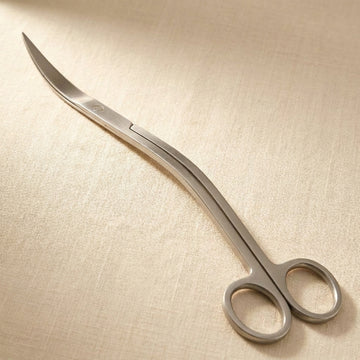
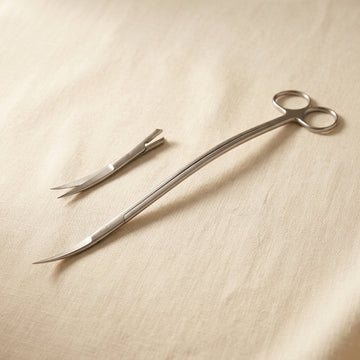
- Wave-Style Scissors: These are the ultimate tool for mowing a foreground carpet. The distinctive 'S' shape of the handles and shanks on our Professional 8" Wave-Style Aquarium Scissors allows you to keep your hand and arm parallel to the water's surface. The blades, however, sit horizontally just above the substrate. You can glide the scissors across the carpet, trimming it to a uniform, neat height without disturbing the substrate or your wrist. It's a game-changing experience.
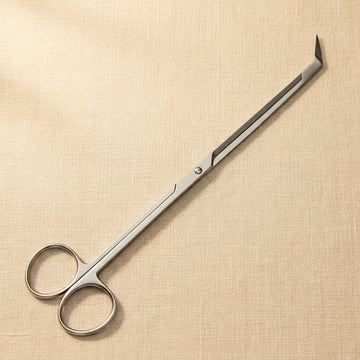
- 60° Angled Scissors: These offer a more aggressive curve than standard curved scissors, making them phenomenal for detail work in tight spaces. The steep angle of a tool like these 60° Angled Aquarium Plant Scissors lets you get right under pieces of driftwood or behind rocks to snip away errant leaves or trim the base of plants without disturbing the hardscape.
45° Angled Scissors: The All-Rounder
If you were to choose just one pair of non-straight scissors, the 45-degree angle might be it. These 45° Angled Aquarium Plant Scissors represent a 'Goldilocks' middle ground. They are more versatile for general pruning in a planted tank than straight scissors, allowing for a more comfortable hand position when trimming mid-ground plants. Whilst not as specialised as wave scissors for carpets, they provide enough of a curve to make trimming foregrounds manageable in a pinch.
Micro & Spring Scissors: For the Details
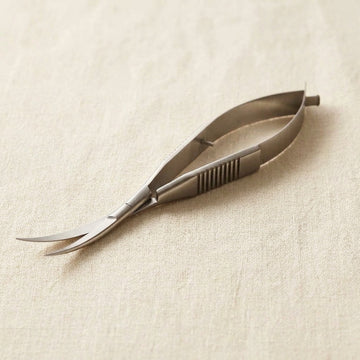
For nano tanks or highly detailed scapes, even standard-length tools can feel clumsy. This is where smaller, more nimble tools come into their own. A pair of 6" Micro Spring Curved Scissors is perfect for trimming moss on wood or getting to a single awkward leaf without disturbing the surrounding area. The spring-loaded action reduces hand fatigue during long, focused trimming sessions, a feature appreciated by anyone working on intricate projects, which is why you'll find them in our general Scissors & Shears section as well.
Tweezers and Spatulas: The Unsung Heroes
Scissors get the glory, but the tools used for planting and substrate work are arguably more important for establishing a successful aquascape from day one.
Planting Tweezers (Forceps)
Planting delicate stems with your fingers is a recipe for disaster. Your fingers are blunt instruments; they crush the base of the stem, damage leaves, and create a large hole in the substrate that allows the plant to float back up. Professional aquascaping tweezers, also known as forceps, are the solution.
The most essential type is the curved-tip tweezer. The curve is ergonomic, allowing you to grip a stem, guide it down through the water column, and insert it into the substrate at the correct angle. Your hand remains in a comfortable position, and your view isn't obstructed. The fine, serrated tips provide a secure grip without crushing the plant. You can slide the tweezer deep into a 4-5cm substrate bed, release the plant, and withdraw the tool, leaving the stem firmly anchored. This is simply impossible to do with your fingers.
The Substrate Spatula
This is the tool that, more than any other, separates a beginner's aquascape from a composed, intentional design. A substrate spatula, or "sand flattener," is a simple tool with a dual-ended head—one wide, one narrow. Its purpose is to groom your substrate.
Its functions are threefold:
- Creating Slopes: It allows you to build and maintain the gentle slopes and contours that create a sense of depth and perspective in your tank.
- Smoothing Surfaces: After planting or maintenance, the substrate can look messy. The spatula smooths sand or aquasoil back into a pristine, level surface.
- Defining Lines: For scapes that use both sand and a nutrient-rich soil, the spatula is essential for creating and maintaining a clean, sharp line between the two materials, preventing them from mixing and looking messy.
Dragging a ruler or a credit card through the substrate just mixes and clouds the water. The specific weight and shape of a spatula are designed to press and smooth, not drag.
Tool Specifications: Length and Material
When browsing the world of Aquarium & Aquascaping tools, two specifications stand out: length and material grade. Getting these right is crucial.
Tool Length: For the vast majority of UK aquariums, which tend to be in the 30 to 120-litre range (with depths of 30-50cm), tools in the 19cm to 25cm range are the sweet spot. They provide enough reach to get to the bottom of the tank without you having to get your sleeves wet, but are still nimble enough to manoeuvre. For very deep tanks (60cm+), you will need to look for longer 30cm+ tools. Conversely, using a 25cm tool in a 15-litre nano scape is overkill and clumsy; a shorter 15-19cm tool is far more appropriate.
Material Grade: As mentioned, 304-grade stainless steel is the minimum you should accept. It provides the necessary corrosion resistance for freshwater use. You may see tools advertised with a black finish. This is typically a PVD (Physical Vapour Deposition) coating or an electrostatic paint that adds an extra layer of rust protection and has the added benefit of reducing glare and reflections under bright aquarium lighting, which can be less stressful for shy fish.
Care and Maintenance: Protecting Your Investment
Proper tools are an investment, but they will last a lifetime if cared for correctly. The routine is simple but non-negotiable.
- Rinse Immediately: After every use, rinse your tools. Ideally, use some water taken from the tank during a water change or, failing that, dechlorinated tap water. Standard tap water with high levels of chlorine can be surprisingly corrosive.
- Dry Thoroughly: This is the most important step. Water is the enemy. Use a clean, lint-free microfibre cloth to dry every surface, paying special attention to the hinge and blade edges. Do not let them air-dry.
- Store Dry: Store your tools in a dry place. A tool pouch, stand, or magnetic bar are all excellent options. Leaving them on the damp lid or rim of your aquarium is asking for trouble.
- Oil Sparingly: Every few months, apply a tiny drop of food-grade silicone oil to the pivot point of your scissors. This displaces any residual moisture and keeps the cutting action silky smooth.
Putting It All Together: The Ideal Starter Kit
You do not need to spend £100 on a massive, 10-piece carbon-fibre-handled designer kit for your first proper aquascape. In fact, 90% of all maintenance tasks can be accomplished with just three core tools. This is the most efficient and cost-effective way to start.
A perfect starter set, like our 3-Piece Stainless Steel Aquarium Kit, should contain:
- Curved-Tip Tweezers: For precise, gentle planting.
- Straight or Angled Scissors: For versatile trimming of stem and mid-ground plants.
- A Substrate Spatula: For creating and maintaining a clean, composed foundation.
With this trio, you are equipped to plant, prune, and perfect your aquascape. As your skills develop and your ambitions grow—perhaps you decide to tackle a complex Iwagumi layout or a dense carpeting project—you can then add more specialised tools like wave scissors to your collection as needed. By starting with a solid foundation of quality steel, you set yourself up for success and a far more enjoyable hobby.
Related guides
Frequently asked questions
What aquascaping tools do I need to start?
Just three: curved-tip tweezers for planting stems without crushing them, straight or 45° angled scissors for versatile trimming, and a substrate spatula for building slopes and keeping clean sand lines. That trio handles roughly 90% of maintenance; add specialist tools like wave-style scissors once you take on carpeting plants such as Monte Carlo.
Why can’t I use kitchen scissors or craft tweezers in my aquarium?
Household tools are usually low-grade steel (such as 201 stainless) that rusts within weeks of repeated submersion, leaching metal compounds that can stress or even kill shrimp. They are also the wrong shape: short blades mean a soaked forearm, thick blades crush stems, and blunt tweezer tips damage plants. Proper tools use 304-grade steel with long shanks.
What length should aquascaping tools be?
For typical UK aquariums of 30–120 litres (30–50cm deep), tools of 19–25cm are the sweet spot — enough reach to work at the substrate without wet sleeves, yet still nimble. Very deep tanks of 60cm or more need 30cm+ tools, while a 15-litre nano scape is better served by shorter 15–19cm tools.