Quick answer: Farrier tools need two sessions a week: a Friday end-of-round clean (wipe, check edges, oil, store upright) and a 30–40 minute Saturday bench service — strip and degrease pivot joints, inspect and stone edges, sharpen, oil each pivot and check handles. The full service kit costs about £60–£120 one-time, and the routine turns good nippers into a career investment.
A farrier's tools are out in every weather, buried in mud, exposed to ammonia from the urine-rich yard, and used against iron, steel and cornified hoof horn — all day, every working day. Without a weekly maintenance routine, even the best forged-steel nippers are a year from the bin. With a routine, they're a career investment.
This is the weekly maintenance protocol used by working UK farriers. It takes around 30–40 minutes and pays for itself in extended tool life, better cuts and fewer emergency replacements mid-round.
Friday-end-of-round clean (the "never skip" bit)
At the end of Friday's round (or your last working day of the week), before the tools go back in the truck overnight:
- Wipe down every bladed tool with a clean rag to remove hoof material, mud and moisture.
- Check cutting edges visually — any new chips or deformations? Flag for the weekend service.
- Spray with a light machine oil (WD-40 is fine as a short-term splash; 3-in-1 or proper tool oil is better). Focus on the joint pivots and the cutting edges.
- Store upright in the tool roll or box — never in the footwell where condensation collects overnight.
Skipping this step for a Friday-to-Monday weekend is the single biggest cause of premature rusting on nippers and hoof knives.
Saturday morning bench service (30–40 minutes)
Step 1: Full disassembly of articulated tools
Hoof nippers, pin cutters and clinchers have pivot joints that hold mud, hair and hoof debris. Once a week, fully open the joint (often requires loosening the central bolt or spreading the handles) and scrub out the accumulated gunge with a stiff brush and paraffin or a citrus-based degreaser. This is the step most farriers skip — and it's why most nippers wobble before the 5-year mark.
Step 2: Inspect for edge damage
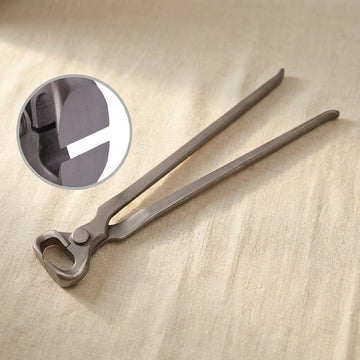
- Hoof nippers: check both cutting edges for chips, rolling and flat spots. Small chips can be stoned out; large chips need a grinder touch-up (or a professional re-edge if you're not confident).
- Hoof knives: check for nicks and flat spots along the bevel. Honing on a ceramic stone weekly keeps the edge; regrinding once a month keeps the profile.
- Pin cutters: the cutting jaws take heavy wear. Light passes with a whetstone weekly; professional regrind every few months.
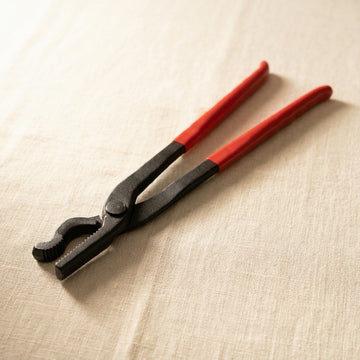
- Clinchers: the clinching surface should be smooth and symmetric. Wear on one side only usually means a worn pivot — tighten or replace the pivot pin.
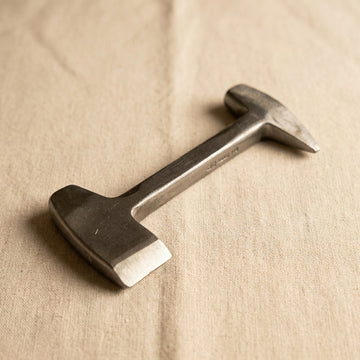
- Clinch cutter: check for a clean chisel edge. Quick hone on a flat stone each week.
Step 3: Sharpening
The correct sharpening method depends on the tool. As a quick reference for UK farriers:
- Hoof knives: freehand on a medium ceramic stone, maintaining the original bevel angle. Strop on leather with polishing compound to finish.
- Hoof nippers: a flat diamond stone works best. Keep strokes parallel to the original cutting edge. Never round the back of the blade.
- Clinch cutter: flat stone, single bevel, same technique as a woodworking chisel.
- Pin cutters: usually a professional job unless you have the experience — uneven sharpening will cause the blades to misalign.
Step 4: Pivot lubrication
After cleaning and sharpening, drip a single drop of tool oil into each pivot joint and work the handles through their full range 20–30 times to distribute it. Wipe any excess so mud doesn't stick next week. Don't over-oil — excess oil attracts dust and actually creates more wear, not less.
Step 5: Handle check
- Wooden handles (hoof knives, rasps): check for cracks or splits. Sand smooth if rough; re-oil with linseed or boiled walnut oil quarterly.
- PVC / dipped handles (nippers, cutters): check for splits that expose the steel underneath — replace the dipped coating or add heat-shrink tubing.
- Rubber grip handles: inspect for perishing and wear; replace if slipping.
Monthly: the deep service
Once a month add these to the Saturday routine:
- Tighten pivot bolts on all articulated tools. Use a proper spanner, not pliers — pliers round off the bolt heads.
- Check the rasp teeth for flat spots and loading. Replace rasps when the teeth no longer cut cleanly — a loaded rasp heats up the hoof and is a welfare issue.
- Inspect the anvil face if you hot-shoe. Rust patches should be wire-brushed and re-polished with a belt sander.
- Check your emasculator for clean alignment if you also do castration work. Misaligned emasculators are a serious welfare risk.
Tools we recommend for a UK farrier's weekly bench service
- Flat diamond stone (300 + 600 grit)
- Medium ceramic bench stone
- Leather strop
- Polishing compound
- Tool oil (3-in-1 or equivalent)
- Stiff wire brush
- Paraffin or citrus degreaser
- Set of metric spanners for pivot bolts
- Clean rags
Total kit for a proper weekly service station: around £60–£120 UK in 2026, one-time cost.
Where to buy farrier tools in the UK
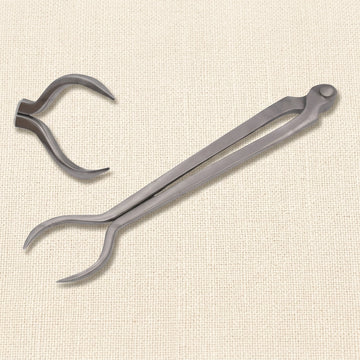
Toolsmith stocks hoof pin cutters, clinch cutters, farrier nippers, hoof tongs, pritchel tools, burdizzos and the full farrier range in the Farrier & Veterinary Tools collection. They ship from UK stock: orders placed before 2pm UK time, Monday to Friday, are dispatched the same working day, with free UK delivery.
For agricultural colleges and farrier apprenticeship schemes, trade and bulk pricing is available — email info@toolsmithltd.co.uk.
Related guides
- UK Veterinary Hemostats - 5 Must-Have Forceps for Small-Animal Practice
- Farrier Rasps Explained: Choosing & Maintaining
- Sheep Shears & Hoof-Trimming Tools: A UK Flock Guide
Frequently asked questions
What do I need to maintain farrier tools each week?
Around 30–40 minutes on the bench plus a Friday end-of-round clean, and a one-time service kit of roughly £60–£120: a flat diamond stone (300 and 600 grit), medium ceramic bench stone, leather strop, polishing compound, tool oil, stiff wire brush, paraffin or citrus degreaser, metric spanners for pivot bolts and clean rags.
How should I sharpen hoof knives and hoof nippers?
Hoof knives: freehand on a medium ceramic stone keeping the original bevel angle, then strop on leather with polishing compound. Hoof nippers: a flat diamond stone with strokes parallel to the cutting edge — never round the back of the blade. Clinch cutters take a flat stone like a woodworking chisel; pin cutters are usually a professional regrind.
Why do hoof nippers wobble or rust before their time?
Wobble usually comes from skipping the weekly pivot-joint strip-down — mud, hair and hoof debris grind the joint loose well before the five-year mark. Premature rust mostly comes from leaving tools uncleaned and unoiled over a Friday-to-Monday weekend, or storing them in a vehicle footwell where condensation collects overnight. Wipe, oil and store upright instead.