Quick answer: For a small-animal surgical tray, five hemostat patterns cover 90% of the work: mosquito (curved and straight), Crile, Rochester-Pean, plus optional Halstead and Kelly. A minimum setup — 4 curved and 2 straight mosquitos, 4 Criles and 2 Rochester-Peans in 420/440 stainless — costs around £180–£300. Ask which stainless grade an instrument is made from, and check that the ratchet holds and the jaws meet before it goes on a tray.
Hemostat forceps are the single most-used instrument in small-animal veterinary practice. They clamp vessels, grip suture ends, hold tissue, extract foreign bodies, and double as general-purpose locking clamps during every surgical procedure. UK vet practices typically stock dozens — but for an RVN just kitting out a first field bag or a new small-animal practice setting up its surgical tray, the question is which 5 hemostat patterns actually matter first.
This guide covers the five hemostat types that handle 90% of small-animal surgical and clinical work, with UK brand recommendations and realistic 2026 prices.
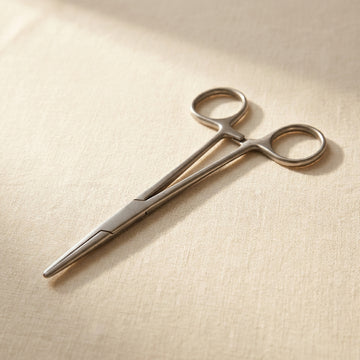
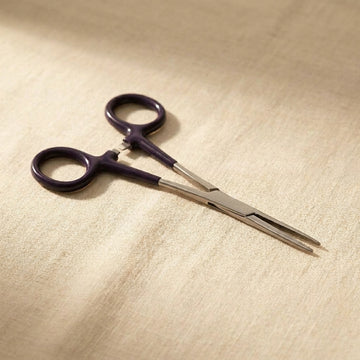
1. Mosquito hemostat (curved and straight)
The workhorse. 5" (125mm) fine-tip locking forceps, available in straight and curved. Used for:
- Clamping small vessels during spays, neuters and minor surgical procedures
- Grasping delicate tissue in precise dissection
- Suture tagging — holding loose suture ends out of the field
- Drain placement and wound exploration
Every small-animal surgical kit needs at least 4 mosquito hemostats — 2 curved, 2 straight. Curved is more common in daily surgical use; straight is useful for specific presentations and suture work. Budget around £10–£18 per instrument for quality stainless, around £4–£8 for value instruments. Toolsmith's hemostats are made in Pakistan and sit in this value tier; check the ratchet, jaws and box joint on any instrument, ours included.
2. Halstead hemostat
Similar shape to the mosquito but with finer jaws and a more delicate action. Used specifically for the smallest vessels and most precise tissue work. In a practice that does oncological, orthopaedic or soft-tissue surgery, a pair of Halsteds extends your range beyond the standard mosquito's grip.
Not essential for every practice — if you're mostly doing neuters, dentals and minor lump removals, you can skip Halsteds and use fine-tip mosquitos instead.
3. Crile hemostat (curved, 6" / 150mm)
Larger than a mosquito, heavier jaw geometry, used for medium vessels and firmer tissue holds. In small-animal work, Criles come into play during:
- Larger abdominal surgery (enterotomies, splenectomies)
- Clamping pedicles during spays in larger dogs
- Any procedure where a mosquito would slip off a larger structure
Most practices stock 2–4 Criles on a standard surgical tray. Budget £12–£22 per instrument for quality stainless.
4. Kelly hemostat
Similar length and weight to Crile but with transverse serrations only on the distal half of the jaw (Crile is fully serrated). Used where you want a gripping surface at the tip and a smoother base — useful for suture work where you don't want the proximal jaw biting into the suture.
Not strictly necessary if you have Criles, but nice to have for specialist use. Many UK practices carry one or two.
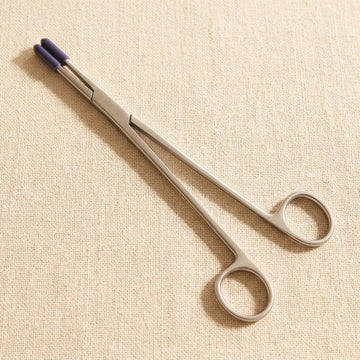
5. Rochester-Pean (large artery forceps)
Heavy-jawed large forceps (7" / 180mm or more), for major vessel clamping and heavy tissue grip. Used in:
- Splenectomy and major abdominal procedures
- Emergency hemostasis when a mosquito or Crile won't do
- Placenta and uterine horn clamping in C-sections
Every surgical tray in a small-animal practice should have at least one pair. Mobile practice kits often carry two.
Locking mechanisms: 1-ratchet vs 3-ratchet
All standard hemostats have a ratcheted locking mechanism on the handles. The number of ratchet teeth (usually 3) determines the closure force. A 1-click hold is a light clamp — good for delicate tissue. 3-click is full closure — used for full hemostasis on a vessel that needs to be ligated.
Train new nurses and students to call out the click count when passing forceps ("3 clicks locked on pedicle, ready for ligature"). It prevents ambiguity in surgery.
Material grade: why stainless matters
Veterinary hemostats should be stainless steel — typically 420 or 440 grade. This matters because:
- They must survive repeated autoclave cycles (134°C / 273°F, 18 minutes)
- They must resist corrosion from blood, bodily fluids and cleaning agents
- The jaw alignment must hold tolerance through years of opening and closing cycles
An instrument described only as "stainless appearance" may not be stainless steel at all, so ask for the grade. Inspect the ratchet, jaws and box joint of every instrument, ours included, after cleaning and sterilising, and replace any instrument whose ratchet slips or whose jaws no longer meet. Every UK practice should have a replace-on-fail policy for surgical instruments — you cannot operate safely with degrading kit.
Practical buying plan for a new small-animal practice
Minimum surgical tray setup (2026 UK):
- 4 × curved mosquito (125mm)
- 2 × straight mosquito (125mm)
- 4 × Crile curved (150mm)
- 2 × Rochester-Pean (180mm)
- Optional: 2 × Halstead, 2 × Kelly
Total minimum outlay at quality stainless: around £180–£300 for 12 instruments. For a mobile / field kit, halve those numbers and carry 2 of each pattern.
Where to buy veterinary hemostats in the UK
Toolsmith stocks stainless-steel hemostats, forceps, and supporting small-animal surgical instruments in the Surgical Instruments and Veterinary Instruments collections. Large-animal and farrier clinical instruments sit in Farrier & Veterinary Tools.
For established UK trade suppliers of autoclave-rated surgical instruments, NASCO UK, Millpledge Veterinary and JAK Marketing are long-standing trade sources. Toolsmith's hemostats sit in the value tier; we aim to dispatch orders placed before 2pm UK time, Monday to Friday, the same working day from UK stock.
For practices and veterinary colleges, trade and education pricing is available — email info@toolsmithltd.co.uk.
Related guides
- Farrier Tool Maintenance - Weekly Routine for Hoof Pros (UK)
- Equine Dental Rasps and Floats: A UK Equine Vet's Toolkit Guide
- Surgical Scissors for UK Vets: Mayo, Metzenbaum & Iris
- Veterinary Needle Holders: Mayo-Hegar, Olsen-Hegar & Castroviejo
- Surgical Scalpels, Gigli Saws & Bone Instruments: A UK Guide
- Livestock Husbandry Tools: Burdizzos, Elastrators & Dehorners
Frequently asked questions
Which hemostat forceps do I need first for a small-animal practice?
Start with mosquito hemostats — at least four (two curved, two straight, 125mm) — then add four curved Criles (150mm) for larger vessels and two Rochester-Peans (180mm) for major clamping. Halstead and Kelly patterns are useful extras rather than essentials. That twelve-instrument tray handles roughly 90% of small-animal surgical and clinical work.
What is the difference between a Crile and a Kelly hemostat?
They are similar in length and weight, but a Crile has transverse serrations along the full jaw while a Kelly is serrated only on the distal half. The Kelly's smoother base suits suture work where you don't want the proximal jaw biting into the suture; if you already stock Criles, Kellys are nice to have rather than necessary.
Why do veterinary hemostats need good stainless steel?
Hemostats must survive repeated 134°C autoclave cycles, resist corrosion from blood and cleaning agents, and hold jaw alignment through years of use. 420 or 440 stainless is made for this; an instrument described only as "stainless appearance" may not be stainless steel, so ask for the grade and check the ratchet and jaws after every sterilising cycle.