Quick answer: For an apprentice, a sharp, mid-aggressive, well-priced rasp — a Bellota is a common first choice — teaches control without the cut running away from you. High-volume farriers favour aggressive premium patterns like the Heller Legend or Save Edge. Always fit a handle and tang guard, keep the rasp dry and clean, and demote a worn rasp to finishing work rather than binning it.
The rasp is the tool a farrier reaches for more than any other. It shapes the hoof, levels the bearing surface, finishes the wall after nailing, and sets the foot up for the shoe. A good rasp in a practised hand makes the job look effortless; a blunt or badly chosen one turns hoof preparation into hard, slow graft that tires the farrier and unsettles the horse. Yet for such a fundamental tool, rasps are bought with surprisingly little thought — usually whatever the supplier had in stock. This guide fixes that: what a farrier's rasp actually is, the patterns and brands that matter in the UK, how to choose one for your work, and — just as important — how to make it last instead of binning it half-blunt.
What a farrier's rasp actually is
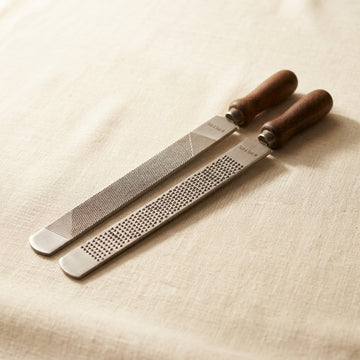
A farrier's rasp is a double-sided tool, and that's the first thing to understand. One face carries rasp teeth — individual raised, chisel-like cutters that tear through horn quickly for bulk removal. The other face carries file teeth — fine, continuous rows that cut a smoother, flatter surface for finishing. One tool, two jobs: rough the foot down with the rasp side, finish it clean with the file (or "plane") side. Knowing which side to use when is half of using a rasp well.
It's a big, flat, roughly 14-inch steel bar, used two-handed, and it takes real wrist and shoulder work. That's exactly why the right rasp matters — a sharp, well-chosen one does the cutting so your body doesn't have to.
The anatomy: rasp side, file side, tang
- Rasp side (coarse): rows of individual punched teeth for fast stock removal — bringing down an overgrown wall, levelling the foot, taking off the bulk before shoeing.
- File/plane side (fine): continuous-cut rows that leave a smooth, flat finish — dressing the wall after nailing, finishing the bearing surface, smoothing clenches.
- The tang: the narrow pointed end that takes a handle. Always fit a handle and a tang guard — a bare tang is a puncture wound waiting to happen if the horse moves and the rasp slips.
- Edges: the long edges are often used for the finest finishing passes and for working into the angle of the white line.
Tooth pattern and coarseness
Rasps differ in how aggressive the rasp side is and how fine the file side cuts. A coarser, more aggressive rasp removes horn faster but leaves a rougher surface; a finer pattern cuts more slowly but finishes cleaner. Most UK farriers want a rasp that's aggressive enough to take down a foot quickly yet has a file side fine enough to leave a presentable finish without switching tools. The very aggressive patterns suit heavy, fast trimming on big feet; finer patterns suit precise finishing work. Tooth geometry — the angle and set of each cutter — is what separates a premium rasp that stays sharp from a cheap one that glazes over in a fortnight.
The brands UK farriers actually use
A handful of names dominate the trade, and they earn their reputation on how long the teeth stay sharp:
- Heller: the long-standing benchmark — the "Legend" and "Red Tang" patterns are trade staples, known for aggressive cutting and consistent quality.
- Bellota: Spanish-made, excellent value, a very popular UK choice — sharp out of the packet and keenly priced for the working farrier who gets through rasps.
- Save Edge: American, prized for holding an edge a long time; favoured by farriers who'd rather pay more and replace less often.
- Bahco / others: solid mid-range options that do the job without the premium price.
There's no single "best" — it's a balance of how aggressively you like a rasp to cut, how long it holds up, and how much you're willing to spend per rasp. Most farriers settle on a brand and pattern through experience and stick with it.
Choosing a rasp for your work
Two questions decide it: who's using it, and what feet?
- Apprentice or new to the foot: a sharp, mid-aggressive, well-priced rasp (a Bellota is a common first choice) lets you learn control without a brutal cut running away from you. A rasp is one of the core tools in any starter kit — see our first 10 farrier tools guide for how it sits alongside the knife, nippers and clinchers.
- Established farrier, high volume: an aggressive premium pattern (Heller Legend, Save Edge) that takes feet down fast and holds up across a busy day.
- Cobs and natives vs heavy horses: bigger, tougher feet reward a more aggressive rasp; finer feet and finishing work reward a finer file side.
Most working farriers carry more than one — a fresh, aggressive rasp for taking feet down and an older, finer one kept for finishing, where a slightly worn rasp side actually leaves a nicer surface.
Handles and safety
Never use a rasp without a handle on the tang. A wooden or composite rasp handle gives control and protects the hand; a tang guard at the other end stops the point catching you on the return stroke. It's the cheapest piece of farrier kit you'll buy and the one that prevents the most injuries. Pair it with the knife work covered in our hoof knife buying guide and you've got the two tools that do most of the hoof preparation between them.
Making a rasp last
Rasps are often treated as throwaway, but a little care doubles their working life:
- Keep them dry. Rust is the enemy — it dulls the teeth and pits the steel. Wipe the rasp down after use, never leave it damp in the box, and store it somewhere dry. A light wipe of oil before storage keeps the surface protected.
- Clean the teeth. Horn and grit pack into the teeth and stop them cutting. A file card or stiff brush across the teeth clears them and restores the bite — a glazed rasp is often just a clogged one.
- Don't drop them or let them clash. Teeth chip on hard surfaces and against other tools. Store them flat, separated, not jumbled in a box where they grind against nippers and hammers.
- Retire the rasp side to finishing. When the rasp side has lost its first aggressive bite, it isn't scrap — it's now a fine finishing rasp. Demote it rather than bin it.
This is part of a wider routine — our weekly farrier tool maintenance guide covers keeping the whole kit (knives, nippers, clinchers and rasps) in working order, which is the difference between tools that last years and tools you replace every season.
Rasp side or file side? A quick rule
If you're removing material — bringing a wall down, levelling the foot — use the rasp (coarse) side. If you're finishing — dressing the wall after nailing, smoothing the bearing surface, tidying clenches — flip to the file (fine) side. Beginners tend to overwork the rasp side and leave a rough foot; learning to switch early to the file side is what gives a finished foot that clean, professional look.
Dispatch from UK stock
A blunt rasp on a full round costs you the day. Our farrier range includes a 20-inch double-sided hoof rasp with a wooden handle; we do not currently sell separate rasp handles or tang guards. Everything we sell ships from UK stock, either packed by us or through Amazon's UK fulfilment centres. We aim to dispatch orders placed before 2pm UK time, Monday to Friday, the same working day; later orders go out from the next working day. Most UK orders arrive 2–3 working days after dispatch, and UK delivery is free.
Related guides
- UK Farrier Hoof Knife Buying Guide
- The First 10 Farrier Tools: A UK Apprentice Starter Kit
- Farrier Tool Maintenance: A Weekly Routine
- Sheep Shears & Hoof-Trimming Tools: A UK Flock Guide
- Shop all Farrier Tools
Frequently asked questions
What farrier's rasp should I buy as an apprentice?
A sharp, mid-aggressive rasp at a sensible price — a Bellota is the common first choice — lets you learn control before moving to the more aggressive premium patterns favoured for high volume. Fit a handle and tang guard from day one; a bare tang is a puncture injury waiting to happen if the horse moves.
What is the difference between the rasp side and the file side?
The rasp side carries individual punched teeth for fast bulk removal — bringing down an overgrown wall and levelling the foot. The file side has fine continuous rows that leave a smooth, flat finish for dressing the wall after nailing and tidying clenches. Removing material: rasp side. Finishing: flip to the file side.
How do I make a farrier's rasp last longer?
Keep it dry — rust dulls the teeth — and wipe on a little oil before storage. Clear packed horn and grit with a file card or stiff brush, since a glazed rasp is often just a clogged one. Store rasps flat and separated so the teeth don't chip, and retire a worn rasp side to finishing duties.