Quick answer: Buy hook straps as your first pair for heavy pulling: the padded neoprene cuff and steel hook are quicker and more secure than loop straps. Use them for top-end sets only and keep warm-ups strapless so grip still gets trained. For cable work, a tricep rope is the single most versatile attachment to own.
Two bits of gym kit get bought for the wrong reason more often than any others: lifting straps, because someone saw them on a strong person, and cable attachments, because the gym only had one. Both are genuinely useful — used deliberately. Here is what each actually changes, and how to pick a pair that lasts.
What straps are for (and what they are not)
Lifting straps take grip out of the equation. On heavy pulling — deadlifts, rows, shrugs, rack pulls — the forearms and fingers usually fail before the back and legs do. Straps let you train the muscles you came to train rather than stopping at the limits of your hands. That is the case for them.
The case against using them constantly is just as real: grip is trainable and worth having, so most sensible programmes run warm-ups and lighter sets strapless, then use straps for the heaviest work and high-rep sets where the hands would otherwise cap the session. Straps are a tool for the top end, not a default.
Hook straps vs loop straps
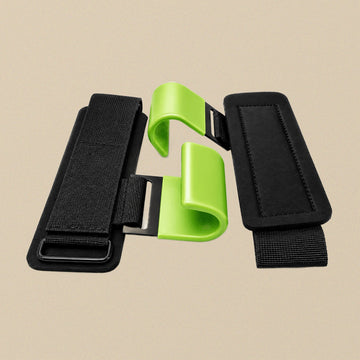
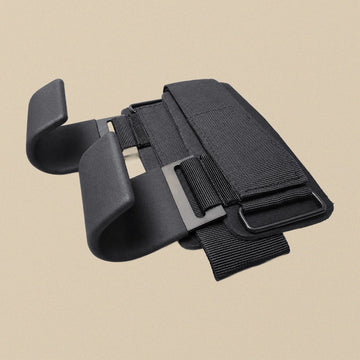
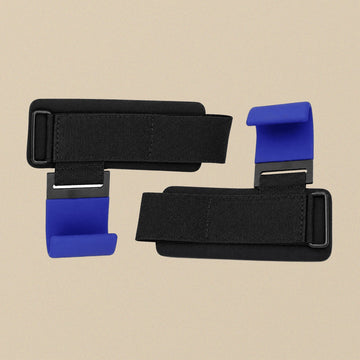
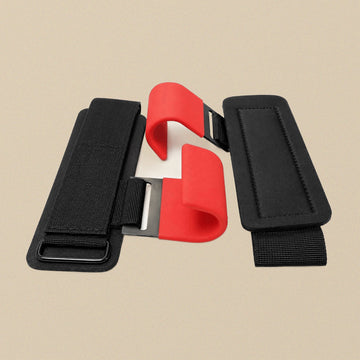
Hook straps — a padded wrist cuff with a steel hook that catches the bar — take the hands almost entirely out of it. They are the fastest to get on and off, the most secure at heavy loads, and the friendliest option if you have hand, wrist or thumb problems. Ours use 0.6 cm hooks on a 7.1 cm-wide neoprene-padded cuff, sold in pairs, in a spread of colours.
Classic loop or lasso straps (a length of cotton or nylon wrapped around the bar) are cheaper, pack flatter and keep a little more of the hand engaged — some lifters prefer that feel. Hooks are quicker and more secure; loops are more adjustable and lower-profile. If you are choosing your first pair for general strength work, hooks are the easier win.
Fit and padding matter more than colour
The cuff is where comfort lives. A wide, neoprene-padded cuff spreads load across the wrist rather than concentrating it on a single tendon-y line — the difference between straps you use and straps that live in the bag. Check the stitching where the hook meets the strap (that is the failure point on cheap pairs), make sure the closure holds under tension without needing to be over-tightened, and set them so the hook sits centred in your palm-line rather than off to one side.
Cable attachments: changing what a machine trains
A cable stack does whatever the handle on the end tells it to. A tricep rope with foam grips is the most versatile attachment there is: the neutral grip is kinder on wrists and elbows than a straight bar, and the ability to spread the ends at the bottom of a pushdown adds the range that a fixed bar cannot. The same rope covers face pulls, hammer curls, overhead extensions and cable crunches — which is why it is usually the attachment worth owning personally if your gym's is permanently in use.
Buying and caring
- Buy in pairs and check the stitching — straps fail at the hook seam first.
- Match padding to load: the heavier you pull, the more you will want the wide neoprene cuff.
- Air them out. Neoprene holds sweat; hang them rather than sealing them in a bag.
- Inspect hooks for spread occasionally — a bent hook is a dropped bar waiting to happen.
- Keep training grip somewhere in the week: farmer's carries, holds, or simply strapless warm-ups.
Everything above ships from UK stock with free UK delivery and same-day dispatch before 2pm — browse the fitness range below.
Related guides
- Shop Fitness & Gym Equipment →
- Leather Skipping Ropes: Wooden Handles, Cable vs Leather & Rope Care
- Same-Day UK Dispatch: What It Actually Means at Toolsmith
- UK Trade Accounts: Colleges, Bulk Orders & VAT
Frequently asked questions
Which lifting straps should I buy first — hook straps or loop straps?
Hook straps are the easier first pair for general strength work: the steel hook takes the hands almost entirely out of heavy pulls, goes on and off fastest, and suits anyone with hand or wrist problems. Loop straps are cheaper, pack flatter and keep more hand engagement, but hooks are quicker and more secure at heavy loads.
Should I use lifting straps on every set?
No. Grip is trainable and worth keeping, so run warm-ups and lighter sets strapless and save the straps for the heaviest work and high-rep sets where your hands would otherwise end the session early. Adding farmer's carries or timed holds elsewhere in the week keeps grip progressing alongside strapped pulling.
Which cable attachment is the most versatile to own?
A tricep rope with foam grips. Its neutral grip is kinder on wrists and elbows than a straight bar, and spreading the rope ends at the bottom of a pushdown adds range a fixed bar cannot match. The same rope also covers face pulls, hammer curls, overhead extensions and cable crunches, so one attachment earns its bag space.