Quick answer: For metal bracelets, buy a link removal tool (a jig that supports the link while a screw pushes the pin out) plus a pin pusher; a 16-piece watch repair kit is the sensible way to start, bundling the spring-bar tool and small parts. For leather straps, notching pliers — 1.5 mm for slim dress straps, 3 mm for thicker leather — give a clean cut.
Every watch eventually needs a strap job — a bracelet shortened, a spring bar swapped, a leather strap that is almost right and needs one more hole. It is the most common watch task there is, and the one most often done with a penknife and regret. The tools that do it properly cost less than the scratches they prevent.
Link removal tools
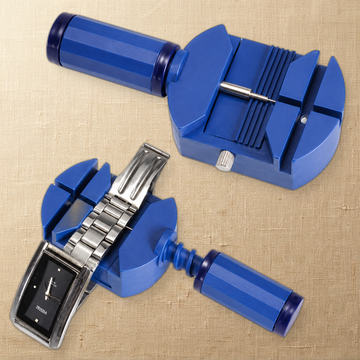
Metal bracelets are held together by pins or screws, and a link removal tool is simply a small jig that supports the link while a threaded pin pushes the bracelet pin straight out. The support is the whole point: pushing a pin freehand bends it, marks the link and usually slips into the case. Look for a jig that holds the bracelet square, a fine feed screw, and a couple of spare pins in the box — they are consumables and the one you lose will be the size you need.
Two rules save most beginners' bracelets: check the arrows stamped inside the links — pins only drive one way — and remove links evenly from both sides of the clasp so the watch keeps sitting centred on the wrist.
Pin pushers and spring-bar tools
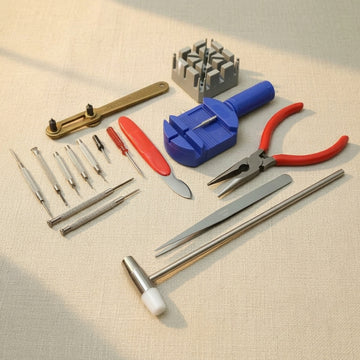
A pin pusher — a hardened steel scribe in a wooden handle — starts stubborn pins and pushes them clear once the jig has broken them free. For the strap-to-case join, spring bars need a proper forked spring-bar tool: our 16-piece watch repair kit bundles that with pushers, a case knife and the small parts, which is the sensible way to start rather than buying six items separately. Spring-loaded watch repair pliers in stainless handle the fiddlier compressions where fingers cannot hold the bar and the strap at once.
Holding tiny screws
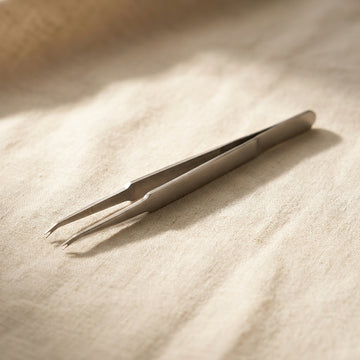
Screw-link bracelets bring their own frustration: a 1.2 mm screw that rolls off the bench is gone. Prong-style screw-holding tweezers — a clockmaker's pattern — grip the screw head so you can present it to the thread and start it without three attempts. Keep a small tray or a magnet mat under the job as well; both are cheaper than a replacement screw kit.
Notching pliers for leather
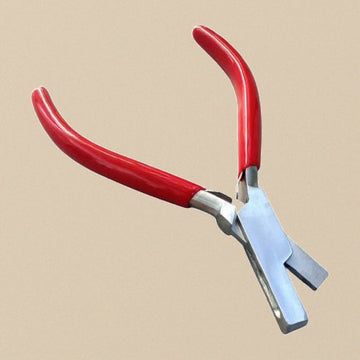
Fitting a leather strap often means one more hole or a tidier tip, and that is what leather notching pliers are for — a clean, repeatable cut rather than a punched hole with a torn edge. They come sized by notch: 1.5 mm for slim dress straps and small buckles, 3 mm for thicker leather and wider tongues. Stainless construction with PVC grips is standard; the thing to check is that the jaws meet cleanly, because a notch cut with a misaligned jaw frays instead of shearing.
Doing the job without marks
- Work over a soft mat — most bracelet scratches happen when a link skids across a hard bench.
- Support before you push. If the link is not seated in the jig, stop.
- Never force a screwed link — apply a drop of penetrating oil, wait, then try again.
- Keep removed links in a labelled bag; a resold watch is worth more complete.
- Match the tool to the strap: notching pliers for leather, jig and pusher for metal.
Everything above ships from UK stock with same-day dispatch before 2pm — browse the strap and band tool range below.
Related guides
- Shop Strap & Band Tools →
- Watch Spring Bar Replacement: A Step-by-Step UK Guide
- Your First Leather Watch Strap Build: A UK Kit Walkthrough
- Watch Repair Toolkit Under £60: A UK First Set
Frequently asked questions
What tools do I need to resize a watch bracelet?
A link removal tool — a small jig that holds the bracelet square while a threaded pin pushes the bracelet pin straight out — plus a pin pusher for stubborn pins. Check the arrows stamped inside the links (pins only drive one way) and remove links evenly from both sides of the clasp so the watch stays centred on your wrist.
Which size notching pliers do I need for a leather watch strap?
1.5 mm notching pliers suit slim dress straps and small buckles; 3 mm handles thicker leather and wider buckle tongues. Check that the jaws meet cleanly before buying, because a notch cut with misaligned jaws frays instead of shearing. Notching pliers give a clean, repeatable cut where a freehand punch leaves a torn edge.
How do I avoid scratching a watch when removing links?
Work over a soft mat, since most bracelet scratches happen when a link skids across a hard bench. Make sure the link is fully seated in the jig before pushing — if it is not supported, stop. Never force a screwed link; apply a drop of penetrating oil and wait. Keep removed links in a labelled bag, as a resold watch is worth more complete.