Quick answer: You need two things: a spring bar tool (basic around £8, premium Bergeon-style around £35 — both do the job for occasional use) and replacement bars matched to your lug width, usually 18mm, 20mm, 22mm or 24mm. Measure the lugs first, spring-test every new bar before fitting, and leave valuable or warrantied watches to a professional watchmaker.
Spring bars are the small, spring-loaded pins that hold a watch strap to the watch case. They fail. They get lost. They corrode. They bend. Eventually, every watch owner either needs one replaced or faces paying a watchmaker £20 for a job that takes ninety seconds with the right tool.
Here's the full UK step-by-step for replacing a watch spring bar yourself, covering both standard lug setups and the Rolex-style fixed lug-hole variants. Safety note: if your watch is a significant value piece or under warranty, get a professional watchmaker to do this. For everyday quartz, Seiko-level automatics and vintage watches where you're the custodian rather than a collector, this is a job you can confidently do at home.
What you'll need
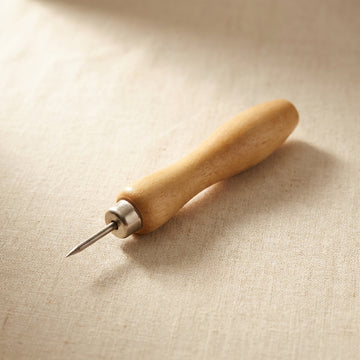
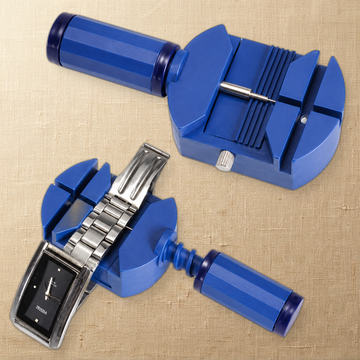
- Spring bar tool — the dedicated tool with a forked end and a pin end. Basic models are around £8, premium (Bergeon-style) around £35. Both do the same job for occasional use.
- Replacement spring bar — matched to your lug width (usually 18mm, 20mm, 22mm or 24mm). Check your existing strap or measure the inside of the lugs.
- Watch case holder or soft cloth — so the case doesn't slip or scratch during the job.
- Good light and a flat non-slip surface — spring bars ping off into carpet and are never seen again.
Step 1: Measure the lug width
The lug width is the distance between the two lugs where the strap attaches. Standard sizes are 18mm, 20mm, 22mm and 24mm. If in doubt, remove the existing strap, lay it flat, and measure across where the spring bar slots in. Get this right before ordering spring bars — a 1mm mismatch either falls out or won't fit.
Step 2: Remove the old spring bar
- Place the watch case in a holder or on a soft cloth, face down.
- Look at the inside of the lug — there are two types:
- Drilled lugs: you can see a hole through the lug from the outside. Use the pin end of the spring bar tool, push from outside. Spring bar drops out.
- Blind (internal) lugs: no hole visible from outside. Use the forked end between the strap and the lug, catch the spring bar shoulder, compress and lift out.
- Tip: compress one end first, rotate it out of the lug hole, then the other end releases easily. Don't try to compress both ends simultaneously.
Step 3: Check before fitting the new bar
Before fitting the replacement, spring-test the new bar: push the tip in with your thumbnail and confirm both ends return with a firm spring. A weak or missing spring return means the bar is already failing — don't fit it. This is the most common mistake in DIY replacement: fitting a dud bar from a bulk pack, then wondering why the strap came off a week later.
Step 4: Fit the new spring bar
- Thread the new bar through the loops of the strap.
- Align one end of the bar in its lug hole.
- Compress the other end with the forked tool and slot it into its lug hole.
- Release — both ends should seat with an audible click.
- Tug the strap firmly away from the case. If it holds, you're done. If either end pops out, the bar isn't seated properly — remove and retry.
A note on quick-release spring bars
Many modern straps (especially NATOs and third-party leather) come with quick-release spring bars — a small tab on the bar that compresses without needing a tool. These are genuinely useful for frequent strap swapping, but for daily-wear watches we'd recommend standard bars. The quick-release mechanism is one more thing to fail, and when it fails your watch is on the floor.
When to replace even without failure
- Any time you replace a strap — fit fresh bars. The old ones have been compressed hundreds of times.
- After exposure to salt water — even if the watch is rated, the bars inside the lugs can corrode quietly.
- Every 3–5 years on a daily-wear watch — spring fatigue is real.
- At the first sign of stiffness or play — don't wait for failure on the wrist.
Where to buy spring bars and tools in the UK
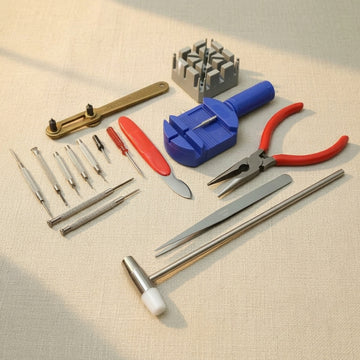
Toolsmith stocks watch repair kits including spring bar tools, strap and band tools for ongoing bench work, and the full watchmaker's toolset in Watch & Clock Tools. For replacement spring bars themselves, Cousins UK is the long-established UK trade supplier and stocks matched sets by lug size.
All Toolsmith tools are UK warehoused with a same-day dispatch target for orders before 2pm Mon–Fri, free UK delivery, and 30-day returns if the kit isn't right for the job.
Related guides
- Watch Case Opening Tools - Complete UK Guide
- First Leather Watch Strap Build — UK Kit Walkthrough
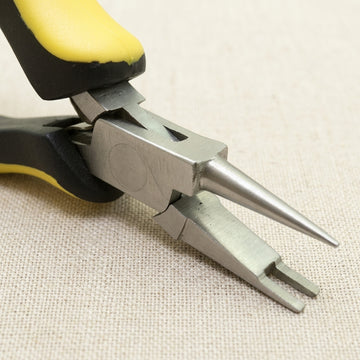
- Watch Strap & Bracelet Sizing: Link Removers, Pin Pushers & Notching Pliers
Frequently asked questions
What tool do I need to replace a watch spring bar?
A dedicated spring bar tool with a forked end and a pin end — basic models cost around £8, premium Bergeon-style versions around £35, and both do the same job for occasional use. Add a watch case holder or soft cloth, good light and a flat non-slip surface, plus replacement bars matched to your lug width. The job takes about ninety seconds with practice.
How do I measure the lug width for spring bars?
Measure the distance between the two lugs where the strap attaches — standard sizes are 18mm, 20mm, 22mm and 24mm. If in doubt, remove the existing strap, lay it flat and measure across where the spring bar slots in. Get it exact before ordering: a 1mm mismatch either falls out or won't fit.
Are quick-release spring bars a good idea for daily wear?
They are genuinely useful if you swap straps often — the small tab compresses without a tool. But for a daily-wear watch, standard bars are the safer choice: the quick-release mechanism is one more thing to fail, and when it fails your watch is on the floor. Fit fresh bars whenever you change a strap, and every 3–5 years on a daily wearer.