Quick answer: Build the kit around a quality Hausmann speculum with thick pads and at least two hand floats — a standard straight float plus an S-shaped float for caudal ramps — each with a coarse carbide-chip head and a finer finishing head. Add a cordless motorised float for heavy corrective work. Choose floats with well-bonded carbide heads and rigid handles from established makers such as Hauptner and Equivet; poorly hardened low-cost floats can blunt within a handful of horses.
Equine dentistry, more than almost any other ambulatory discipline, sits at the precise intersection of veterinary science, skilled craftsmanship, and sheer physical effort. It’s a field with deep roots in farriery and veterinary medicine, requiring a nuanced understanding of anatomy, pathology, and the tools designed to correct it. A professional dental kit is not merely a collection of rasps; it is a small library of patterned instruments. Each float, extractor, and speculum is shaped with a specific purpose, designed to address a particular challenge in one of the most inaccessible and formidable environments we work in: the equine mouth. The mark of a seasoned practitioner is not the size of their tool roll, but their ability to select the right instrument based on a thorough anatomical understanding, not a catalogue picture. This guide is for the UK practitioner—the ambulatory vet stocking their vehicle, the BAEDT-qualified technician, and the cross-trained farrier—who knows that the right tool doesn't just make the job easier; it makes it possible.
Equine dental anatomy: the bench-pro short version
Before we can discuss the tools, we must first agree on the landscape. The equine mouth is a marvel of continuous adaptation, a fact that creates the very need for our intervention. A quick refresher for the professional on the move:
- The Dental Formula: An adult horse has between 36 and 44 teeth, a number that varies with the presence or absence of canines (typically in geldings and stallions) and the vestigial first premolars, or "wolf teeth". Foals and youngstock have 24 deciduous (milk) teeth, which are shed as the permanent teeth erupt, a process that can present its own set of challenges with retained caps.
- Continuous Eruption: The defining characteristic of equine dentition is its hypsodont nature. The teeth erupt continuously from the gum line at a rate of approximately 2-3mm per year to compensate for the wear caused by a high-fibre diet. This relentless eruption is the fundamental reason routine floating is a necessity. Without the abrasive action of grazing for 16 hours a day, the wear becomes uneven, and problems begin.
-
Common Pathology: Our work is primarily concerned with correcting the predictable patterns of abnormal wear. The most common of these are the sharp enamel points that form due to the anisognathic relationship of the jaws (the upper jaw being wider than the lower). This results in sharp points on the buccal (cheek) side of the upper cheek teeth (maxillary arcade) and the lingual (tongue) side of the lower cheek teeth (mandibular arcade). Beyond these classic targets for floating, we regularly encounter more complex issues requiring specific instrumentation:
- Hooks: Overgrowths on the rostral (front) aspect of the first upper cheek teeth (106, 206) and the caudal (rear) aspect of the last lower molars (311, 411).
- Ramps: A gradual upward slope of the caudal lower cheek teeth, often impacting the opposing upper molar.
- Wave Mouth: An undulating appearance of the occlusal (grinding) surface along the entire arcade.
- Step Mouth: A dramatic height difference between two adjacent teeth, often caused by the loss of the opposing tooth.
Understanding these common pathologies is to understand the "why" behind every tool in your kit. Each instrument is a solution to one of these specific anatomical or pathological problems.
Hand floats: the working library
The hand float is the foundational tool of equine dentistry. It is the direct extension of the practitioner's hand, offering unparalleled proprioceptive feedback. Whilst motorised equipment has its place, mastery of the hand float remains a non-negotiable skill. Your "working library" should contain, at a minimum, a selection of floats that allow you to access every surface of the cheek teeth arcades.
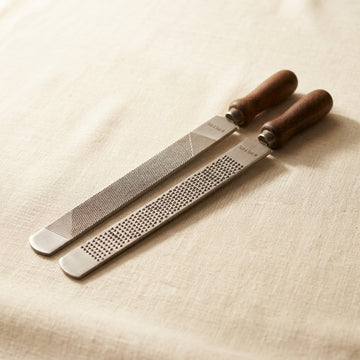
- The Standard Straight Float: This is your workhorse. Typically featuring a handle set at a 60 to 100-degree angle to the shaft, it is designed for routine maintenance on the buccal and lingual surfaces of both arcades. A well-balanced straight float feels comfortable in the hand, allowing for a smooth, controlled push-pull stroke. The length must be sufficient to reach the caudal molars without requiring you to place your own head in a precarious position. Many practitioners carry two: a longer one for large warmbloods and a shorter, more nimble version for ponies and finer-headed horses.
- The S-Shaped or Offset Float: This is a specialist tool for a common problem: addressing ramps and hooks on the last upper molars (the 11s). The unique 'S' curve in the shaft allows the blade to sit flush on the caudal aspect of the tooth whilst your hand remains in a comfortable, powerful position outside the horse's mouth. It allows you to work around the curvature of the dental arcade and reach the very back of a long-headed horse without having to dangerously over-extend the rostrum or fight the soft tissues.
-
Blade Materials and Cuts: The blade, or float head, is where the work happens. Carrying interchangeable heads is essential.
- Carbide Chip Blades: These are the industry standard for aggressive reduction. Small chips of tungsten carbide are brazed onto a steel plate. They are incredibly durable and can last for hundreds of horses, but they provide a very rough cut. They are excellent for removing large hooks or reducing significant overgrowths but must be followed by a finer blade. They are replaced, not sharpened.
- Tungsten-Grit Blades: These offer a less aggressive but smoother finish than carbide chip. A fine grit of tungsten is bonded to the blade surface. They are good for general floating and finishing work, blending the rougher cuts made by a chip blade. Like carbide, they are disposable and replaced when worn. -
- Steel-Grit and Diamond Blades: These are for finishing. A fine steel-grit or diamond-coated blade provides a smooth, polished surface on the tooth, reducing the chances of soft tissue irritation and leaving a superior finish. They are not for heavy reduction but are invaluable for quality work.
Why carry at least two heads? Because a single blade cannot perform both gross reduction and fine finishing. A typical field setup involves having a coarse or medium carbide chip head for the initial pass to remove the bulk of the enamel points, followed by a pass with a finer tungsten-grit or steel-grit head to smooth the edges and ensure a comfortable result for the horse.
Motorised vs hand floats
The debate between motorised and hand floating is often framed as a binary choice, but for the modern mixed-practice or specialist, the reality is that a comprehensive kit contains both. Each modality has distinct advantages and is suited to different situations, horses, and pathologies. The proficient practitioner knows when to reach for the hand rasp and when to plug in the power float.
-
Motorised Floats (Powerfloats): These instruments, whether electric, battery-powered, or air-driven (like those from Equivet or Powerfloat), use a rotating disc or burr to reduce tooth material.
- Advantages: The primary advantage is speed and efficiency. Motorised floats can reduce significant overgrowths (large hooks, ramps, wave mouths) in a fraction of the time it would take by hand. This reduces the overall procedure time, which can be beneficial for the horse. It also dramatically reduces operator fatigue, a significant factor over a long day or with a heavy caseload.
- Disadvantages: They absolutely require sedation and a full-mouth speculum. The lack of tactile feedback means there is a greater risk of thermal damage to the tooth or iatrogenic damage to soft tissues if not used with skill, care, and adequate irrigation. The noise and vibration can also be a source of anxiety for some horses, even under sedation.
-
Hand Floats: The traditional tool, relying entirely on manual effort.
- Advantages: The greatest advantage is proprioception. Through the handle of a good quality float, you can feel the topography of the tooth surface—the high spots, the sharp points, the subtle changes. This allows for incredibly precise and careful work. In the hands of a skilled operator, routine floats can often be performed on sensible horses with minimal or even zero sedation, which is a significant plus for certain clients and patients.
- Disadvantages: Hand floating is physically demanding and slow, especially when dealing with severe overgrowths. A full-mouth reduction on a horse with years of neglect can be an exhausting, time-consuming task with hand tools alone.
The Mixed-Practice Reality: The most effective and versatile approach is a blended one. A well-stocked ambulatory vehicle will have a set of high-quality hand floats for routine maintenance, youngstock, and sensitive horses. Alongside them will sit a cordless motorised unit for tackling the heavy-duty corrective work, the challenging cases, and for improving efficiency on busy days. The choice is not 'either/or', but 'which tool for this specific job, on this specific horse, today'.
Mouth speculums
No dental procedure, whether a simple examination or a full-mouth reduction, can be performed safely or effectively without a quality mouth speculum. This is a non-negotiable piece of safety equipment, protecting both the horse and the practitioner. The quality and type of speculum have a direct impact on patient comfort and procedural success.
- The Hausmann Speculum: This is the ubiquitous full-mouth gag, the absolute workhorse of equine dentistry. Its design uses two dental plates that cup the upper and lower incisors. A ratchet mechanism on the side arms allows the practitioner to open the mouth incrementally and secure it in place. This provides excellent, stable access to both cheek teeth arcades simultaneously. A quality Hausmann will have smooth, reliable ratchets and be constructed from durable stainless steel.
- The Bayer Wedge Speculum: This is a simpler tool, a hard rubber or polymer wedge that is inserted between the molars on one side. It is useful for quick examinations or procedures on a single tooth where a full-mouth gag is not required. However, it provides limited access and visibility and is not suitable for comprehensive floating.
- Why Pad Quality Matters: The interface between the speculum's metal plates and the horse's incisors is critical. Cheap speculums often come with thin, hard rubber pads. These offer poor protection and can easily bruise the bars of the mouth or damage the incisors. A high-quality speculum will feature thick, durable pads made from leather or a high-density polymer. These pads distribute pressure more evenly, significantly improving patient comfort, especially during longer procedures. It is a detail that horses undoubtedly appreciate, and it reflects a practitioner's commitment to welfare. Always check the condition of your pads and replace them before they become worn and ineffective.
- Cleaning and Cross-Contamination: A speculum is a primary vector for cross-contamination between horses. It must be thoroughly cleaned and disinfected after every single use. Scrubbing with a brush and an appropriate veterinary disinfectant (like a chlorhexidine solution) to remove all organic matter, followed by a thorough rinse, is the minimum standard of care. Failure to do so is a serious breach of biosecurity.
Incisor cutters and corrective instruments
Whilst routine floating of the cheek teeth forms the bulk of dental work, a professional kit must also contain instruments for addressing more specific problems, from incisor alignment to the removal of wolf teeth. Many of these tools are for advanced procedures, and their use requires a high degree of skill and anatomical knowledge.
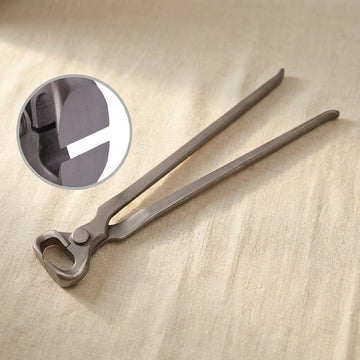
- Incisor Cutters: These are typically large, compound-action forceps with carbide blades, designed for reducing the length of incisors. Their use in the field should be approached with caution. They are suitable for making very mild reductions to correct minor abnormalities. However, significant incisor reduction or realignment is a specialist task, often requiring motorised equipment to do properly without risking pulp exposure or fracture. For most field practitioners, these are for small adjustments only; major cases should be referred.
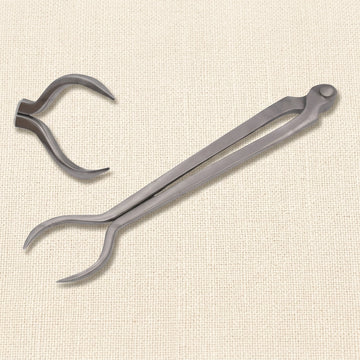
- Wolf Tooth Elevators and Extractors: The removal of wolf teeth (the first premolars, 105/205) is a common procedure in young performance horses, typically between 6 and 18 months of age. This requires a specialised set of tools. A wolf tooth elevator is a fine, sharp instrument used to carefully break down the periodontal ligament surrounding the small, peg-like tooth. Once loosened, a dedicated wolf tooth extractor forcep, with its fine, angled jaws, is used to grasp the tooth and extract it. This is a delicate procedure that requires a good feel to avoid fracturing the root.
- Molar Cutters and Shears: These are heavy-duty instruments designed to cut or shear off large portions of molar. In modern dentistry, their use in the field is increasingly rare. Motorised instruments provide a more controlled and less traumatic method for reducing large overgrowths. Molar cutters can exert tremendous force, risking jaw fracture or collateral damage. They are now mostly confined to hospital settings or specific advanced procedures by specialists.
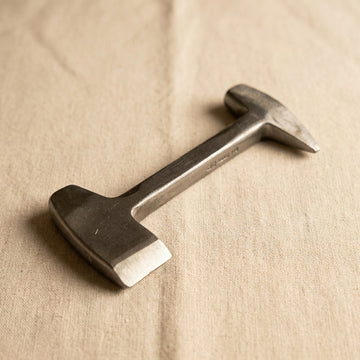
- Hook Chisels: For addressing hard, sharp hooks on the rostral upper (106/206) or caudal lower (311/411) cheek teeth, a chisel can be more effective than a float. A hook chisel is a simple, robust tool with a sharpened, chisel-tipped end. Used with a mallet or the palm of the hand, it allows the practitioner to apply a precise, sharp force to fracture the hook cleanly at its base. This is often quicker and more effective than trying to rasp down a very prominent and hardened hook.
Brand reality: GE-Equine vs Equivet (Schippers) vs Hauptner vs low-cost floats
In the world of professional tools, brand names are not about prestige; they are about reliability, longevity, and the quality of the materials. A working equine dental kit is an investment, and choosing the right manufacturer is crucial. The difference between a premium float and a cheap one becomes painfully obvious after the fifth horse of the day.
- Hauptner-Herberholz (German): When it comes to hand instruments, Hauptner is a benchmark. This German manufacturer has a long heritage of producing premium-quality veterinary and farriery tools. Their dental floats are exceptionally well-made, balanced, and durable. Forged from high-grade steel, they are designed to withstand the rigours of daily professional use for decades. Expect to pay a premium, with a single hand float often costing between £80 and £200, but this is a classic "buy it once" investment.
- Equivet / Schippers (Dutch): In the realm of motorised dentistry, Equivet (often associated with Schippers) is considered by many to be the gold standard. Their systems, particularly the cordless models, are powerful, reliable, and well-designed. They offer a wide range of heads and burrs for various applications. They represent a significant financial outlay but are the tool of choice for many dedicated equine dental specialists and high-caseload practices.
- GE-Equine (US): A well-respected American trade brand that offers a solid range of both hand and motorised equipment. Their products are known for being reliable and functional, representing a good balance of quality and price. They are a popular choice for practitioners looking for dependable, workhorse tools without the premium price tag of some European brands.
- Low-cost floats: A word of caution. The market is full of low-cost dental instruments, readily available on platforms like Amazon or eBay. Whilst the initial price is tempting, these are not recommended for professional, repeat use. The metallurgy is frequently sub-standard; the steel is often improperly hardened, leading to premature wear, bending, or breaking. Blades blunt with astonishing speed, sometimes within 4-6 horses, turning a day's work into a frustrating battle with your equipment. For a professional whose livelihood depends on their tools, this is a false economy. Toolsmith does not currently sell equine dental floats or equine specula.
The unavoidable truth is that a working equine dental kit is built on a foundation of European-forged steel and reputable, specialised engineering. Your tools are a direct reflection of your professional standards. Choose them as if your reputation depends on it—because it does.
Bench care and sharpening
The performance of your dental instruments is directly proportional to the care you invest in them. A few simple routines for cleaning, maintenance, and storage will protect your investment and ensure your tools are safe and effective for every patient.
-
Blade Maintenance: The approach to sharpening depends entirely on the blade type.
- Carbide Chip Blades: These are not designed to be sharpened. The carbide inserts are extremely hard, and attempting to sharpen them will likely damage them or the tool you use. Once they become dull or lose inserts, they should be replaced according to the manufacturer's instructions.
- Tungsten-Grit Blades: Similar to carbide chip, these are disposable items. The grit is bonded to the blade, and as it wears down, the blade loses its cutting ability. They are replaced, not re-surfaced.
- Solid Tungsten Carbide or Steel Blades: Some older or specific types of solid blades can be sharpened. A light dressing on a diamond stone can restore the edge on a steel-grit finishing blade. However, always check the manufacturer's recommendations first. For most modern modular systems, replacement is the standard procedure.
- Cleaning and Sterilisation: After each horse, instruments must be thoroughly scrubbed in cold water to remove all blood, saliva, and tooth debris. A subsequent wash with a disinfectant solution like chlorhexidine is essential for biosecurity. Most high-quality hand instruments are made from stainless steel and are fully autoclave-safe. However, you must exercise extreme caution with motorised equipment. The handpiece containing the motor and electronics must never be submerged or autoclaved. Refer to your specific model's manual for the correct procedure for cleaning and disinfecting heads and shafts.
- Storage: Rust is the enemy of any steel tool. After cleaning, all instruments must be dried thoroughly. A light application of a suitable instrument oil or surgical milk to joints, ratchets, and non-stainless components will prevent seizing and corrosion. Store your kit in a dry, secure tool roll or box, ready for the next visit. This simple discipline at the end of a long day makes all the difference to the longevity of your equipment.
Field kit: what fits in the box for ambulatory work
For the ambulatory practitioner, the dental kit must be comprehensive yet portable. It needs to contain everything required to handle 95% of routine and moderately challenging cases, all whilst being efficiently organised in the back of a field vehicle. Here is a checklist for a robust, practical field kit:
-
The Essentials:
- One high-quality Hausmann speculum with thick, well-maintained leather or polymer pads.
- A sturdy, clean bucket for water.
- A wash bottle or large syringe for flushing the mouth.
- A powerful headlamp is non-negotiable for proper visualisation.
- A long-handled dental mirror.
-
Hand Floats:
- At least two hand floats: a standard straight float for general use and an S-shaped float for caudal ramps.
- A minimum of two interchangeable heads per float: a coarse or medium carbide chip head for reduction and a finer tungsten-grit or finishing head. Having spares is always a good idea.
-
Motorised Equipment (if used):
- A fully charged cordless motorised float (e.g., Equivet or Powerfloat).
- A selection of heads, such as a diamond disc for general work and a cylindrical burr for creating bit seats or addressing diastemata.
- Spare batteries or a vehicle charging system.
-
Corrective and Diagnostic Instruments:
- A set of wolf tooth elevators and extractors if you perform this procedure on youngstock.
- A basic incisor cutter for minor adjustments.
- A dental probe or explorer for checking for caries and periodontal pockets.
-
Ancillaries:
- A supply of antiseptic solution (e.g., chlorhexidine).
- A dental records book or tablet for recording findings and procedures.
- Gloves, hand sanitiser, and appropriate cleaning supplies for your instruments.
This setup, properly organised in a durable case or tool roll, equips the practitioner to handle the vast majority of field dental cases with professionalism and efficiency.
Sedation, restraint and the team
It is impossible to discuss dental instrumentation without acknowledging the context in which it is used. The finest German float is useless if the horse will not tolerate its application. Most professional equine dental work, and certainly any procedure involving motorised equipment or significant correction, requires appropriate chemical restraint. A standard protocol might involve an alpha-2 agonist like detomidine, often combined with an opioid like butorphanol, to achieve profound, standing sedation. This is frequently supported by physical restraint in the form of a head stand or a competent assistant holding the head. This guide assumes that all tools are being used on an appropriately sedated patient, under veterinary supervision, with the horse's welfare as the highest priority. The tools are only as good as the team and the situation they are used in.
UK-stocked: fast dispatch
Everything we sell ships from UK stock, and we aim to dispatch orders placed before 2pm UK time, Monday to Friday, the same working day. The farrier tools we stock are shown below.
Related guides
- Farrier's First 10 Tools: UK Apprentice Starter Kit
- UK Veterinary Hemostats — 5 Must-Have Forceps
- Livestock Husbandry Tools: Burdizzos, Elastrators & Dehorners
- Sheep Shears & Hoof-Trimming Tools: A UK Flock Guide
- Shop all Farrier & Veterinary Tools
Frequently asked questions
What equine dental tools do I need for ambulatory work?
A quality Hausmann speculum with well-maintained pads, two hand floats (standard straight and S-shaped) with coarse and finer interchangeable heads, a powerful headlamp, a long-handled dental mirror, bucket and wash bottle, plus wolf tooth elevators and extractors if you treat youngstock. Many practitioners add a fully charged cordless motorised float for corrective cases.
Are motorised floats better than hand floats?
Neither replaces the other. Motorised floats reduce large overgrowths far faster and cut operator fatigue, but they require sedation, a full-mouth speculum and skilled use to avoid thermal damage. Hand floats give unmatched tactile feedback, and routine work on sensible horses can often be done with minimal sedation. A well-stocked vehicle carries both.
Can equine dental float blades be sharpened?
Mostly no. Carbide-chip and tungsten-grit blades are disposable — replace them when dull, because attempting to sharpen them damages the inserts or the bonded grit. Only some solid steel finishing blades take a light dressing on a diamond stone, and you should always check the manufacturer's recommendation first. For modern modular systems, replacement is standard.