Quick answer: Build your apprentice kit one quality tool at a time and budget £450-£800 for the ten essentials — hoof nippers, hoof knife, flat rasp, clinch cutter, driving hammer, clinching tongs, hoof pick, pritchel, turning hammer and a leather apron — from trade brands like Diamond, Mustad, Bellota and Heller. Judge any all-in-one kit tool by tool against the checks in this guide before you buy it.
Let's get one thing straight from the start. A farrier's tools are not just accessories; they are the job. They are an extension of your hands, your skill, and your professional reputation. As a first-year apprentice, you'll see all-in-one kits sold at very low prices. Judge every tool in a kit exactly as you would judge it on its own — how the jaws meet, how the joint moves, how the rasp teeth are cut and how the hammer sits in your hand. This guide sets out what to look for, tool by tool. This is your starter kit for a career, not just a course.
The ten essentials
This is the core of your toolkit. These are the ten items you'll use day-in, day-out, under every type of horse. Buy the best you can afford, one piece at a time if you have to. Your hands, your back, and the horses you work on will thank you for it.
-
Hoof Nippers (14-15 inch)
Typical UK 2026 Price: £80 - £180
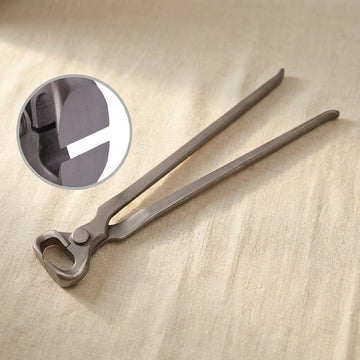
This is your primary cutting tool and arguably the most important hand tool you'll own. A good pair of nippers makes trimming hoof wall feel like cutting through butter; a bad pair makes it feel like you're trying to chew through concrete. Budget nippers vary widely, so check them: the jaws should meet evenly along their full length, the joint should have no side play and the cutting edges should be properly hardened. Loose rivets let the jaws wobble, which leads to uneven cuts and immense frustration. You'll spend more time fighting the tool than trimming the hoof.
Stick to the brands trusted by the trade: Diamond, Mustad, and NC Tool are the gold standard for a reason. They use high-grade tool steel, are precisely engineered, and hold a sharp edge for a respectable amount of time between dressings. A 14-inch nipper is a great all-rounder, while a 15-inch gives you a little more leverage for tougher hooves, though with slightly less fine control. Your first pair will feel like an extension of your arm, so it's worth every penny.
-
Hoof Knife (with replaceable blade)
Typical UK 2026 Price: £25 - £50
Your knife is for paring the sole and frog. The debate between a single-edge and double-edge knife is as old as the trade itself. A double-edge (like the classic Dick knife) is versatile, allowing you to cut towards or away from yourself with a flick of the wrist. However, it's also less forgiving if you slip. A single-edge knife is safer for a novice and many experienced farriers prefer them. For an apprentice, a knife with a replaceable blade system (like those from Fontaine or Hall) is a godsend. Learning to properly sharpen a knife on a wheel or stone takes time and practice. With replaceable blades, you can guarantee a razor-sharp edge every time, which means cleaner work and less strain on your wrists.
-
Flat Rasp (14 inch)
Typical UK 2026 Price: £40 - £75
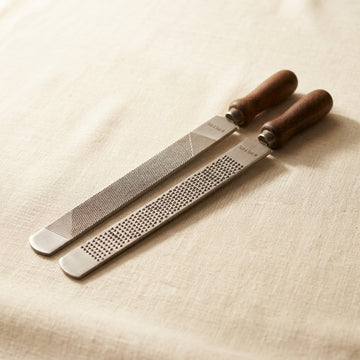
Rasp quality equals hoof quality. It’s that simple. A high-quality rasp removes horn efficiently and leaves a smooth, clean finish. A cheap, poorly made rasp will tear and shred the hoof wall, clog up instantly, and be blunt before you've finished your first set of four. This is not a tool to skimp on. The coarse side is for removing bulk and levelling the hoof, while the fine side is for finishing and bevelling the edges. Brands like Bellota, Heller Legend, and Save Edge dominate the market because they have perfected the art of cutting teeth into steel. A sharp rasp does the work for you, allowing you to be precise and efficient. A blunt one will have you sweating, swearing, and leaving a rough finish that can compromise the health of the hoof.
-
Clinch Cutter
Typical UK 2026 Price: £20 - £40
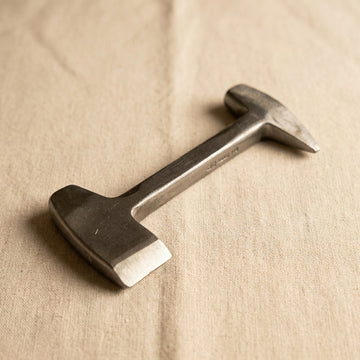
A simple but essential tool for removing old shoes. The clinch cutter, also known as a buffer, has a chisel-tipped end that you place under the folded-over end of the nail (the clinch). A sharp tap with your driving hammer straightens the nail, allowing the shoe to be pulled without tearing chunks out of the hoof wall. Look for one made from hardened steel that will withstand thousands of hammer blows without mushrooming or chipping. It's a small tool, but doing its job properly is the first step in a professional shoeing job.
-
Driving / Shoeing Hammer
Typical UK 2026 Price: £45 - £80
This is the hammer you'll use to drive nails into the hoof wall. Balance is everything. A well-balanced hammer feels lighter in the hand and does most of the work for you. Head weights typically range from 8 to 14 ounces (oz). A lighter hammer (8-10oz) offers more control for precise nailing, which is ideal for an apprentice. A heavier hammer (12-14oz) drives nails with fewer blows but can be more fatiguing. The traditional hardwood shaft, usually hickory, provides excellent shock absorption and feel. The claw on the back is for wringing off the sharp end of the nail after it has been driven through the hoof wall. Find one that feels comfortable and balanced in your hand.
-
Clinching Tongs
Typical UK 2026 Price: £55 - £100
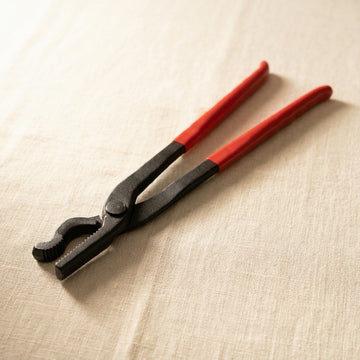
After the nail is driven and wrung off, you need to set the clinch. This is where clinching tongs (or a clincher) come in. This tool is used to bend the short end of the nail over and set it tightly and flush into a small groove in the hoof wall. A well-set clinch is the hallmark of a good shoeing job – it's neat, strong, and won't snag. There are different styles, but a good pair will have a smooth jaw action and provide enough leverage to set clinches securely without requiring brute force. This is another tool where quality pays; cheap versions will not grip the nail properly and will leave messy, proud clinches.
-
Hoof Pick (with a proper brush back)
Typical UK 2026 Price: £4 - £10
The humblest tool in your box, but you'll use it on every single horse before you even think about picking up your nippers. It's your first line of inspection. A good hoof pick needs to be strong enough to scrape out packed mud and stones from the sole and collateral grooves. Crucially, it must have a stiff brush on the back. Brushing the sole and wall clean is non-negotiable; you cannot properly assess a hoof if it's covered in dirt. They are cheap and easily lost, so buy two and keep one in your box and one in your vehicle.
-
Pritchel
Typical UK 2026 Price: £25 - £45
A pritchel is a hardened steel punch with two primary functions for a first-year apprentice. Firstly, after you've shaped a shoe and the nail holes have closed up slightly, the pritchel is used to re-open them (or 'clear the nail holes') so the nail can pass through cleanly. Secondly, and just as importantly, it's used for backing out a nail that you've driven incorrectly. It happens to everyone. You'll feel the nail going into the sensitive lamina, and you need to get it out immediately. The pritchel allows you to tap it back out from the point end without causing further damage. It’s an essential 'get out of jail free' card.
-
Shoe-Shaping Turning Hammer (Rounding Hammer)
Typical UK 2026 Price: £45 - £75
This will be your primary anvil tool. The turning or rounding hammer is used for shaping horseshoes on the anvil. It typically has two faces: one flat face for levelling and planishing the shoe, and one rounded (or 'domed') face for drawing out steel, turning heels, and shaping the branches of the shoe. The rounded face concentrates the force of your blow, allowing you to move the hot steel more effectively. This is your introduction to the forge, and a well-balanced turning hammer is fundamental to learning good hammer control and shaping techniques.
-
Leather Farrier's Apron
Typical UK 2026 Price: £60 - £120
You cannot apprentice in jeans. A proper leather farrier's apron, or 'chaps', is a non-negotiable piece of personal protective equipment. It protects your legs from hot scale and dropped shoes from the forge. It protects you from nail pricks. Critically, it provides a layer of protection and grip when you have a hoof between your knees. A good apron will have pockets for your knife and nails, and often a magnet for holding onto nails. It is part of the professional uniform of a farrier. Invest in a decent one made of thick, supple leather or high-quality suede; it will last you for years.
Tools your year-one trainer will mention
The ten tools above will get you through your first months of trimming and basic shoeing under supervision. However, your ATF will quickly introduce you to the forge and anvil work. While they will provide the main equipment, you will eventually be expected to acquire your own. The 'big three' are:
- Portable Forge: Essential for heating shoes to shape them. Gas forges are the standard for mobile farriers.
- Anvil: The heart of all metalwork. A good farrier's anvil (around 70-120 lbs) is a significant investment, often costing between £200-£600 even secondhand.
- Tongs: You'll need various tongs to hold hot shoes securely while working them on the anvil. Expect to pay £40-£80 for each good quality pair.
These are Year 2 or 3 purchases for most apprentices, but it's wise to start saving and keeping an eye out for good quality second-hand gear from retiring farriers.
British steel vs. imported
You'll quickly notice that many of the top-tier brands aren't British. Bellota is Spanish, Diamond and NC Tool are American, and Mustad is Swedish. Why? Because the modern farriery trade is global, and these companies have invested millions in specialised manufacturing processes. Bellota's rasp technology is second-to-none. The drop-forging consistency from the American brands is legendary. This doesn't mean British manufacturing is dead. Far from it. For hand-forged, specialist tools like custom hammers, tongs, and fullers, British artisan toolmakers like Phoenix are still considered among the best in the world. Furthermore, some global brands like Heller maintain a strong UK presence, combining international R&D with local knowledge. The rule is simple: buy the best tool for the job, regardless of its origin.
Apron and safety kit
We've listed the leather apron as an essential tool, and it is. It's your primary piece of PPE. Alongside this, steel-toed safety boots are mandatory. You will have horses stand on your feet, and you will drop heavy tools and hot shoes. Normal work boots are not sufficient. The topic of gloves is more divisive. Some farriers wear them for forge work to protect from heat and scale, but very few will wear them when nailing on a shoe. The job requires an immense amount of 'feel' to know where that nail is going, and gloves can interfere with that tactile feedback. Your ATF will guide you, but for shoeing itself, most journeymen work bare-handed.
Tool care: weekly routine
Your investment in quality tools is wasted if you don't look after them. Rust is your enemy. Dirt and grit will dull edges and seize up joints. At the end of every week, you should have a routine for cleaning, oiling, and sharpening your kit. A sharp tool is a safe and effective tool. We've written a detailed guide on this exact topic, which covers everything from dressing your nippers to oiling your hammer handles. You can find it linked below.
What to check in an all-in-one kit
All-in-one "professional farrier kits" are sold on Amazon, eBay and in agricultural supply catalogues at low prices. Check each tool in a kit against the points in this guide before you rely on it under a horse: nipper jaws that meet along their full length, a joint with no side-play, cleanly cut rasp teeth, a hoof knife that takes and holds an edge, and handles that sit securely. Building your kit one tool at a time lets you choose each piece for its quality, feel and function.
Full apprentice kit budget (2026 UK)
So, what's the real cost? To buy the ten essential tools listed above from reputable, trade-approved brands, you should budget between £450 and £800. The variation comes down to brand choices – a top-of-the-range pair of GE nippers will cost more than a solid pair from Diamond, for example. This is a significant outlay, but it is a one-time investment for tools that will last the first decade of your career, if not longer. Factor this cost into your first-year apprenticeship budget. Start now, buy one tool a month if you have to, but buy quality.
UK-stocked, fast dispatch
At Toolsmith Ltd, we understand that when you need a tool, you need it now. A broken nipper or a blunt rasp can bring your day to a halt. Our own farrier tools — hoof nippers and pin cutters, clinchers, a clinch cutter, a pritchel, hoof tongs and a 20-inch hoof rasp — are made in Pakistan and priced below the trade-brand price bands above; current prices are shown below. They suit apprentices building a first or spare kit; check them against the same points as any other tool. Everything we sell ships from UK stock, and we aim to dispatch orders placed before 2pm UK time, Monday to Friday, the same working day.
Related guides
- Farrier Tool Maintenance — Weekly Routine (UK)
- For Veterinary Practices — trade accounts
- Farrier Rasps Explained: Choosing & Maintaining
- Sheep Shears & Hoof-Trimming Tools: A UK Flock Guide
- Livestock Husbandry Tools: Burdizzos, Elastrators & Dehorners
- Shop all Farrier & Veterinary Tools
- Equine Dental Rasps and Floats: A UK Equine Vet's Toolkit Guide
Frequently asked questions
What tools do I need as a first-year farrier apprentice?
Ten essentials: 14-15 inch hoof nippers, a hoof knife (replaceable-blade models are kindest to novices), a 14-inch flat rasp, clinch cutter, driving hammer (8-10 oz for control), clinching tongs, a hoof pick with a stiff brush, a pritchel, a turning hammer for anvil work, and a leather farrier's apron. Steel-toed safety boots are mandatory alongside.
How much does a UK farrier apprentice starter kit cost in 2026?
Budget £450-£800 to buy the ten essential tools from reputable, trade-approved brands — the variation comes down to brand choice. Forge, anvil and tongs are typically Year 2 or 3 purchases: a good farrier's anvil runs £200-£600 even secondhand. Buy one quality tool a month if you have to; the kit should last the first decade of your career.
Are cheap all-in-one farrier tool kits worth buying?
Only if every tool in the kit passes the checks you would apply to it on its own: nipper jaws that meet along their full length, a joint with no side-play, cleanly cut rasp teeth and a hoof knife that holds an edge. Building the kit one tool at a time lets you choose each piece for its quality, feel and function.