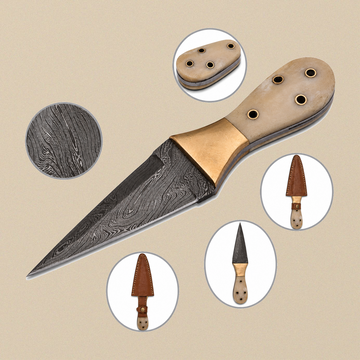
Quick answer: For a working skinner, D2 tool steel is the pragmatist's pick — a hard, aggressive edge that holds through an entire animal and asks only to be wiped dry. Hand-forged Damascus cuts almost as well, with more shock-toughness and character. Choose a short, deep-bellied drop-point blade (76–114 mm) with a handle that locks into a curled grip.
Of all the fixed-blade patterns, the skinner is the most honest: every line of it exists because of one job. The deep-bellied edge, the dropped point, the short stout blade — all of it is about long, controlled slicing strokes that separate hide from meat without nicking either. That same geometry happens to make skinners superb all-round camp and kitchen-prep knives, which is why they outsell most other patterns. Here is how to read one before you buy.
The shape: belly does the work
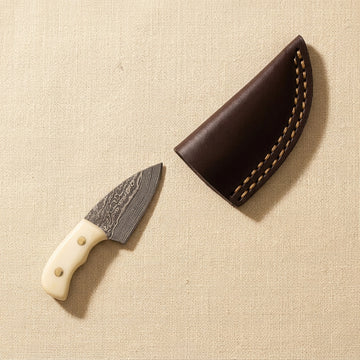
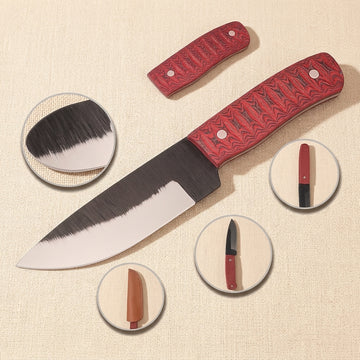
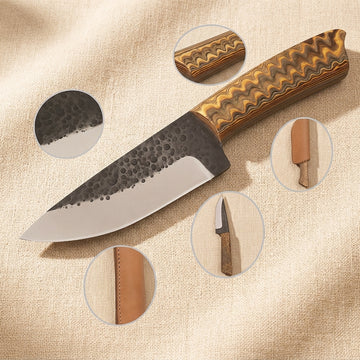
A skinner carries most of its edge in a continuous curve (the belly), so a single wrist motion keeps a long section of edge in contact through the cut — the stroke slices rather than saws. The drop point keeps the tip below the spine line and out of trouble; some patterns round it further toward a semi-skinner or up-swept profile. Blades run short and wide: our range sits between a 76 mm miniature — a genuine pocket workhorse — and 4.5-inch (114 mm) full-size patterns, with a 9.5-inch overall utility build at the top. Short blades mean control; on a skinner, reach is not the point.
D2 or Damascus: choosing the steel
D2 tool steel is the pragmatist's pick: a semi-stainless die steel that takes a hard, aggressive edge and holds it through an entire animal or a weekend of camp chores. It asks only that you wipe it dry — high chromium slows rust but does not stop it. Hand-forged Damascus layers alternating steels around a hard core: shock-tough, keen, and patterned so no two blades match. Cutting performance between good examples of either is closer than forums admit; the real difference is temperament (D2 shrugs off neglect slightly better) and character (Damascus is the one that gets handed round the fire). Both arrive from us with working edges, and both respond to the same whetstone routine.
Handles and fit: pakkawood, bone and grip
Most of our skinners wear pakkawood — resin-stabilised hardwood laminate in reds, greens and naturals that laughs at blood, fat and rain, and never shrinks off its pins. Bone and horn handles bring traditional looks and a warmer grip, at the cost of wanting dry storage. Whichever you choose, check the grip in a fist with the thumb on the spine: a skinner is steered from the belly, so the handle should lock comfortably into a curled grip without hot spots.
Field care in thirty seconds
- Wipe the blade clean and dry before it goes back in the sheath — always.
- Store out of the leather at home; sheaths hold moisture against steel.
- Touch up on a fine stone or strop little and often; the belly wants a rolling pass, not a flat one.
- Oil lightly — food-safe mineral oil if the knife preps meals.
UK law, briefly
Fixed-blade knives are age-restricted: sales are 18+ with age verification on delivery, UK addresses only, and public carry requires a reasonable excuse (a hunting trip or camp kit qualifies; everyday carry does not). Between uses it lives with your gear, not in the car — our knives & axes guide has the full policy.
Every skinner is individually photographed and ships from UK stock — browse the current blades below.
Related guides
- Shop Skinner & Damascus Blades →
- D2 Tool Steel Knives: What UK Makers & Buyers Should Know
- Choosing a Damascus Knife: A UK Buyer's Guide
- Mosaic Pins for Custom Knife Handles
Frequently asked questions
Which steel should I buy for a skinner knife, D2 or Damascus?
Cutting performance between good examples of either is closer than forums admit. D2 is a semi-stainless die steel that takes a hard, aggressive edge, holds it through a weekend of camp chores and shrugs off neglect slightly better. Damascus is shock-tough, keen, and no two patterned blades match. Both respond to the same whetstone routine.
What blade length do I need on a skinner?
Short — a skinner works through its deep belly with long, controlled slicing strokes, so control matters and reach does not. The range runs from a 76 mm miniature that is a genuine pocket workhorse up to 4.5-inch (114 mm) full-size patterns. Check the handle in a curled fist with the thumb on the spine: no hot spots.
Can I legally buy and carry a skinner knife in the UK?
Fixed-blade knives are age-restricted: sales are 18+ with age verification on delivery, to UK addresses only. Public carry requires a reasonable excuse — a hunting trip or camp kit qualifies; everyday carry does not. Between uses it lives with your gear at home, not in the car, wiped dry and stored out of the leather sheath.