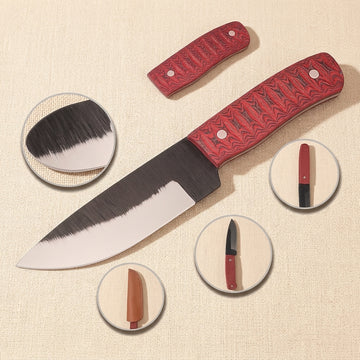
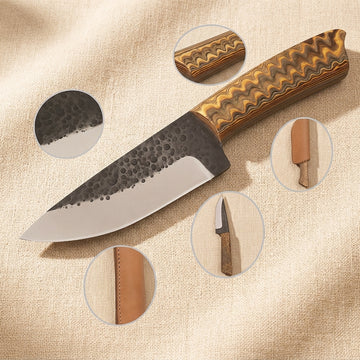
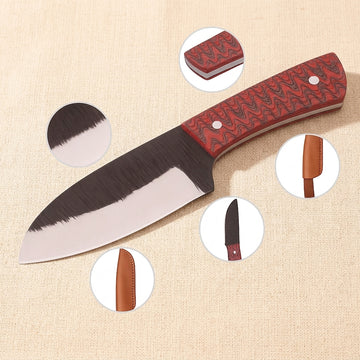
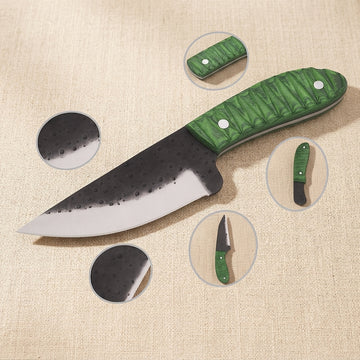
Quick answer: Choose D2 if you want a working blade that holds its edge far longer than softer steels at a sensible price — ideal for outdoors, EDC and hard-use knives. It is semi-stainless (roughly 12% chromium), so wipe it dry and oil it before storage, and expect sharpening to need diamond stones. For looks-first cabinet blades, Damascus is the better buy.
Among knife makers and serious users, "D2" gets spoken with a certain respect. It is the steel that holds an edge through work that would dull a kitchen knife by lunchtime — and it does so at a sensible price. But D2 also asks a little more of its owner than a fully stainless blade. This guide explains what D2 tool steel is, why makers reach for it, how it compares to Damascus, and what to expect when you put a D2 blade to real use in the UK climate.
What D2 actually is
D2 is a high-carbon, high-chromium tool steel — originally an industrial die steel for cutting and stamping. Its roughly 12% chromium sits just below the threshold usually called "stainless" (around 13%), which is why D2 is described as semi-stainless: far more corrosion-resistant than a plain carbon steel, but not immune to rust. It is air-hardening and forms large, hard carbides — and those carbides are the key to how it cuts.
Edge retention and toughness
The headline is edge retention. Those hard carbides give D2 outstanding wear resistance, so a properly heat-treated D2 edge keeps cutting long after softer steels have given up — exactly what you want in a working or outdoor blade. The trade-offs are honest ones: D2 is a little less tough than simpler steels (the carbides can make a very fine edge slightly more prone to micro-chipping if abused), and it takes more effort to sharpen. For most users, long edge life is well worth those compromises.
D2 versus Damascus
It is not really a contest — they answer different questions. Damascus is pattern-welded steel, prized first for its flowing visual pattern (and often built around a high-performance core). D2 is a monosteel chosen purely for cutting performance and value. A D2 blade is about what it does; a Damascus blade is about what it does and how it looks. Many makers offer both for exactly that reason — and some Damascus is folded around a D2-class core to get both at once.
Corrosion and everyday care
Semi-stainless is the phrase to remember. D2 shrugs off the light moisture that would spot a carbon blade, but in a damp UK shed or a sweaty pocket it can still develop surface rust if neglected. The care routine is simple: wipe the blade dry after use, keep it clean, and give it a thin film of oil before long storage. Treat it well and it stays bright; ignore it and it will remind you it is not fully stainless.
Sharpening D2
Those wear-resistant carbides that hold the edge also resist your stones, so D2 is slower to sharpen than soft steels — diamond stones or plates make the job far easier than ordinary whetstones. The good news is you do it rarely: once a D2 edge is set well, it stays sharp through a lot of cutting. Patience at the stone is repaid by weeks between sessions.
Who D2 is for
D2 suits the buyer who values a long-lasting working edge over a mirror-stainless finish or the lowest sharpening effort — outdoors knives, EDC, hard-use field blades. If you want a beautiful blade for the cabinet, look at Damascus; if you want a blade that simply keeps cutting and takes a little care in return, D2 earns its reputation.
For pattern-welded blades, blade care and sharpening in depth, see our companion knife guides, and browse the D2 range below.
Related guides
- Skinner Knives: Blade Shapes, D2 vs Damascus & Field Care
- Shop D2 Steel Items →
- Choosing a Damascus Knife in the UK: A Collector's Buyer Guide
- Damascus Steel Care: Patina, Rust & Maintenance
- How to Sharpen Damascus Knives with Whetstones
Frequently asked questions
Which should I buy — a D2 knife or a Damascus knife?
They answer different questions. D2 is a monosteel chosen purely for cutting performance and value — the pick for a working, outdoors or EDC blade. Damascus is pattern-welded steel prized first for its flowing looks, often built around a high-performance core. If you want a knife that simply keeps cutting, choose D2; if the blade's beauty matters as much, choose Damascus.
Will a D2 steel blade rust in the UK?
It can if neglected. D2's roughly 12% chromium sits just below the usual 13% "stainless" threshold, so it shrugs off light moisture far better than plain carbon steel but can still develop surface rust in a damp shed or sweaty pocket. Wipe the blade dry after use, keep it clean, and apply a thin film of oil before long storage.
How do I sharpen a D2 knife?
Use diamond stones or plates — D2's hard, wear-resistant carbides resist ordinary whetstones, so sharpening is slower than with soft steels. The consolation is frequency: once a D2 edge is set well it stays sharp through a great deal of cutting, so sessions at the stone are rare. Patience during sharpening is repaid by weeks of edge life between them.