Quick answer: Build the station in order: a torch hook stand and heatproof surface first (safety), then cross-locking tweezers — the cheapest upgrade to joint quality there is — then a heavy-based third hand when you meet your first three-handed job, and finally titanium soldering picks, which molten solder will not stick to. Pair it all with a proper block and good ventilation.
Ask a jeweller what they need to start soldering and they will name a torch. Ask one who has been soldering for a decade and they will talk about everything around the torch — where it rests between joints, what holds the work, what pushes the solder about. None of it is exciting, all of it decides whether a joint goes cleanly first time. Here is the support kit for a UK bench.
Torch hook stands: the safety item nobody buys first
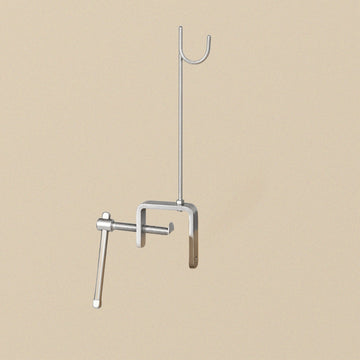
A lit torch has to go somewhere between joints, and "balanced on the block" is how bench fires start. A torch hook holder gives it a defined home: ours run from a 7-inch bench-top stand through 10-inch and 12-inch table-mount versions, plus a two-way clamp holder in stainless that grips the bench edge and swings to where you actually work. Choose height by torch length and hose stiffness — the hook should take the weight without the hose dragging the whole thing sideways. If you use a Little Torch or similar mini Hoke, get the matching size; a big hook lets a small handpiece swing.
Third hands and the value of a fixed workpiece
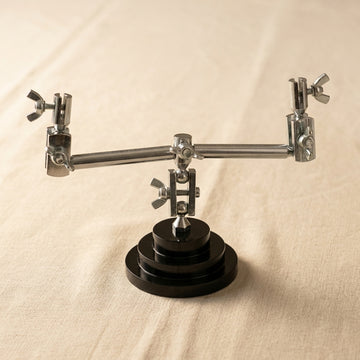
A third-hand base is a weighted stand holding cross-locking tweezers on an adjustable arm. Its job is to present the work at the exact angle you want and then not move — which is why the base matters more than the tweezers: heavy, wide-footed, ideally with a double clamp so you can hold two components in relation to each other while you bring heat. This is the tool that turns an awkward three-handed job (torch, solder, work) into a two-handed one.
Cross-locking tweezers
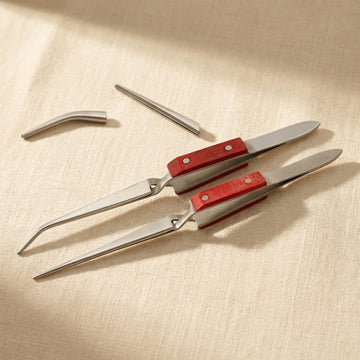
Reverse-action or cross-locking tweezers grip when relaxed and open when squeezed, so they hold without any effort from you — indispensable for jump rings, chain repairs and any joint that wants closing under light pressure. A straight-and-curved 2-piece set covers most bench work: straight for general holding, curved to reach past your own fingers and around a piece. They live near the flame, so stainless is the minimum and insulated grips are welcome when you lift hot work off the block.
Titanium picks: solder won't stick
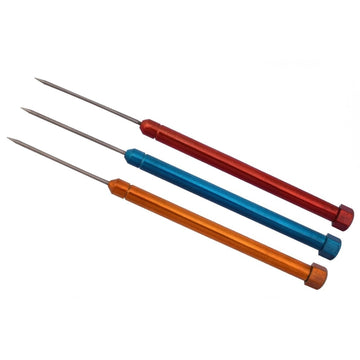
A soldering pick nudges pallions into place, drags a bead of flowing solder along a seam and lifts hot work. The reason to buy titanium rather than steel is simple and satisfying: molten silver solder does not wet titanium, so it will not weld itself to your pick mid-joint. A 3-piece set gives you different tip profiles for placing, dragging and probing. Titanium picks are near-permanent — the tip will oxidise and discolour, which is cosmetic, and any solder that does cling is knocked off with a tap.
Building the station in order
- First: torch stand and a heatproof surface — safety before convenience.
- Second: cross-locking tweezers, the cheapest upgrade to joint quality there is.
- Third: third-hand base, when you meet the first job that needs three hands.
- Fourth: titanium picks, once you are soldering often enough to resent a steel pick sticking.
Pair all of it with a proper soldering block and good ventilation, and the difference in first-time-clean joints is immediate.
Everything above ships from UK stock with same-day dispatch before 2pm — browse the soldering range below.
Related guides
- Shop Soldering Tools →
- Jewellery Soldering Torches: A UK Bench Buying Guide
- Charcoal Blocks for Soldering: UK Bench Setup
- Soldering Silver for First-Time UK Bench Jewellers
Frequently asked questions
What soldering accessories do I need beyond the torch?
Four things, in this order: a torch hook stand so a lit torch has a defined home between joints; cross-locking tweezers that grip when relaxed and open when squeezed; a weighted third-hand base to present work at a fixed angle; and titanium picks for placing and dragging solder. Together they decide whether a joint goes cleanly first time.
Why buy titanium soldering picks instead of steel?
Molten silver solder does not wet titanium, so a titanium pick will not weld itself to the joint mid-flow the way steel can. A three-piece set gives different tip profiles for placing pallions, dragging a bead along a seam and probing. They are near-permanent: tip discolouration is cosmetic, and any solder that does cling knocks off with a tap.
What matters most in a third-hand soldering tool?
The base, not the tweezers. It should be heavy and wide-footed so the work stays exactly where you set it, ideally with a double clamp so two components can be held in relation to each other while you bring heat in. That is what turns an awkward three-handed job — torch, solder, work — into a two-handed one.