Quick answer: Match the torch to the heaviest work you actually do. A refillable butane torch (£15–£60) genuinely covers beginners' small silver work; a MAPP/propane single-gas torch (£30–£90) handles medium silver; oxy-propane (£150–£400, Smith Little Torch class) is the UK professional standard for heavy silver, annealing, gold and platinum. An underpowered flame loses the race against silver's heat conduction.
Ask ten bench jewellers what tool they'd save in a fire and most will name their torch before their saw. It's the one piece of kit that genuinely shapes how you work: the wrong flame turns a five-minute solder join into a frustrating afternoon of overheated firescale and collapsed seams. The right one disappears into the background and just does the job. The problem is that "jewellery torch" covers everything from a £15 kitchen butane unit to a £400 oxy-propane setup, and most beginner advice online is written for American natural-gas workshops that bear no resemblance to a UK spare-room bench. This is the no-nonsense guide to picking your first torch in the UK — what each gas family actually does, how to match it to your metal, and how to run it without burning the house down.
Why the torch is the decision that shapes your bench
Every other soldering tool you buy bends to the torch you choose. Your soldering block, your heat-proof surface, your ventilation, even where your bench can physically sit in your home — all of it follows from the flame. A self-contained butane torch needs nothing but a window open. An oxy-propane setup needs two cylinders, regulators, hoses, and a sensible place to store gas. Get the torch right for the work you actually do, and the rest of the bench falls into place. Buy the wrong one and you'll either be fighting an underpowered flame on every job or babysitting a setup far bigger than your work needs.
The single biggest mistake beginners make is buying on price alone and ending up with a flame that can't put enough heat into the metal fast enough. Silver and copper are thirsty for heat — they conduct it away from the join almost as fast as you put it in. An underpowered torch loses that race, so the whole piece heats up grey and sullen while the join never quite reaches soldering temperature. Power matters. So does control. The art is matching both to your work.
The four torch families you'll meet in the UK
Self-contained butane (the starting point)
These are the refillable butane torches — from the small "crème brûlée" chef's torches up to dedicated jewellery units like the Blazer or Dremel Versa-style torches. Gas and flame in one handheld unit, refilled from a tin of lighter butane. Flame temperature tops out around 1,300°C, which is plenty for the bread-and-butter of small-scale work: earring posts, jump rings, chain repairs, small silver findings, and most sterling silver pieces up to a few grams.
Strengths: cheap (£15–£60), zero setup, no cylinders, no regulators, completely portable. You can solder on a kitchen table next to an open window. For a student starting out or anyone testing whether they enjoy the craft, this is the sensible first buy.
Limits: the flame is small and the heat output modest. Try to solder anything chunky — a heavy ring shank, a bangle, anything in 1.5mm-plus silver — and you'll watch the heat drain away faster than the torch can supply it. Butane also runs cooler in a cold workshop, and the tank only lasts 20–40 minutes of continuous use.
Single-gas propane / MAPP torches
Step up to a torch running off a disposable propane or MAPP-gas canister (the screw-on bottles from any UK DIY shop) and you gain real heat. MAPP-style gas burns hotter than butane — comfortably past 2,000°C at the flame core — and the bigger canister means a broader, more sustained flame. A plumber's-style torch with a fine jewellery tip handles medium silver work, larger findings, and light hollowware that a butane torch simply can't reach.
Strengths: a big jump in usable heat for not much money (£30–£80), still self-contained, canisters widely stocked. A good middle ground for someone who has outgrown butane but isn't ready for a piped-gas setup.
Limits: the flame is harder to make truly fine, so very small or delicate joins near existing solder seams take more care. You're also buying disposable canisters, which works out dearer per hour than refillable gas over time.
Oxy-propane (the UK professional standard)
For most professional and serious UK bench jewellers, oxy-propane is the destination. You run propane (from a refillable cylinder) mixed with oxygen (from a separate oxygen cylinder or an oxygen concentrator), through a fine jewellery torch like a Smith Little Torch or a Sievert-style handpiece. The oxygen lets the gas burn far hotter and cleaner — well over 2,500°C — and, crucially, with a range of interchangeable tips you can dial a flame from a needle-fine pinpoint for granulation up to a broad bushy flame for annealing a sheet.
Strengths: the full range. Pinpoint control for the finest work, brute heat for heavy pieces, clean flame for gold and platinum work. This is what lets you solder a tiny chain link in the morning and anneal a bracelet blank in the afternoon with the same torch and a tip change.
Limits: cost and commitment. Expect £150–£400 for torch, regulators, hoses and the oxygen source, plus a sensible spot to store cylinders. Overkill for someone soldering the occasional jump ring; essential for anyone doing this for a living.
Natural gas + air or oxygen (the workshop fixture)
Established workshops with a mains gas supply often plumb the torch straight into natural gas, mixed with either compressed air or oxygen. It's the cheapest gas to run once installed and never needs a cylinder swap. But it requires a fixed gas point, and under the Gas Safety (Installation and Use) Regulations 1998 a gas engineering business must be on the Gas Safe Register to do that work legally — so it's a workshop decision, not a first-torch decision. Worth knowing it exists; not worth chasing until you have a permanent bench in a building you own or have a long lease on.
Flame types: what you're actually aiming for
Heat is only half the story — the kind of flame matters just as much. Two terms you'll hear constantly:
- Reducing (bushy) flame: slightly gas-rich, soft, with a larger inner cone. It's a little cooler and, more importantly, it limits oxidation — it keeps firescale down on silver and protects the metal while you bring the join up to temperature. This is your default soldering flame for most work.
- Oxidising (sharp) flame: oxygen-rich, hissing, with a tight pointed cone. Hotter and more aggressive, but it promotes firescale and can pit the surface if you linger. Used deliberately for very fast, localised heat — not as a general soldering flame.
- Neutral flame: the balanced point between the two, where the inner cone is well defined and stable. A good neutral flame is what you tune toward on an oxy-propane torch before nudging it slightly reducing for soldering.
The practical takeaway: you want a torch that lets you find and hold a soft reducing flame easily. Single-gas torches give you one flame and you adjust your technique around it; oxy setups let you tune the flame to the job. Learning to read the flame — its colour, its sound, the size of the inner cone — is as much a part of soldering as feeding the solder.
Matching the torch to your metal and your work
Choose based on the heaviest, most heat-hungry job you realistically do, not the lightest:
- Fine sterling silver findings, jump rings, chain, earring posts: butane is genuinely fine. Don't over-buy.
- Mixed silver work up to medium ring shanks and pendants: a MAPP/propane single-gas torch, or entry oxy-propane if budget allows.
- Heavy silver, bangles, hollowware, anything you need to anneal: oxy-propane. Silver's heat conductivity will defeat anything smaller.
- Gold and especially platinum: oxy-propane (platinum needs a very hot, clean flame — see our goldsmith's soldering guide). Platinum melts around 1,768°C, so a butane torch can't touch it.
If you're still finding your feet with the actual technique — heat the whole piece, not just the solder, draw the flame in, let the solder flow toward the heat — start with our walkthrough on soldering silver for the first time before you spend big on a torch. Plenty of "the torch is rubbish" complaints are really technique problems in disguise.
Gas safety in a UK home or studio workshop
This is the part the cheap-torch listings skip. A soldering flame is open fire, and the gases that feed it need respect. The essentials:
- Ventilation always. Solder and flux give off fumes; combustion uses oxygen and produces carbon monoxide. Work near an open window with airflow, never in a sealed cupboard.
- Store cylinders upright and secured, away from heat, ideally in a ventilated outdoor store rather than a living space. Disposable canisters should be kept cool and out of direct sun.
- Fit flashback arrestors on any oxy-fuel setup. These stop a flame travelling back up the hose into the regulator — a non-negotiable on oxygen-fed torches.
- Soldering surface and surround: work on a proper heat-proof surface — a charcoal or soldering block on a ceramic or steel base — with nothing flammable within arm's reach, and a way to put out a fire to hand.
- Know your gas point rules: no one may carry out work on a gas fitting unless they are competent to do it, and a business doing gas work must be on the Gas Safe Register (Gas Safety (Installation and Use) Regulations 1998, regulation 3). Have any fixed natural-gas connection installed by a Gas Safe registered engineer.
We've written the full fire-and-ventilation setup separately — read the bench fire safety guide for UK silversmiths before your first solder, not after your first scare.
What to actually buy first — three honest scenarios
- "I want to try this" (£15–£60): a refillable butane jewellery torch and a tin of lighter gas. Solders the vast majority of beginner projects, costs almost nothing, and tells you whether you love the craft before you commit.
- "I'm in this and doing varied silver work" (£30–£90): a single-gas MAPP/propane torch with a fine jewellery tip. The heat headroom to grow into bigger pieces without a cylinder setup.
- "This is my trade or my serious practice" (£150–£400): an oxy-propane setup — Smith Little Torch or equivalent, dual regulators, flashback arrestors, and an oxygen source. Buy once, cry once; it will outlast everything else on the bench.
The bits that go with the torch
Whatever you buy, budget for the supporting kit: a flint striker (never a lighter held near the gas), the right regulators and hoses for cylinder torches, a selection of tips for oxy setups, a quench pot, and your soldering surface and flux. None of it is expensive, but a torch without a striker and a heat-proof surface isn't a working setup. If you're building the bench from scratch, our guide to setting up the soldering corner covers the surfaces and small kit in detail.
Dispatch from UK stock
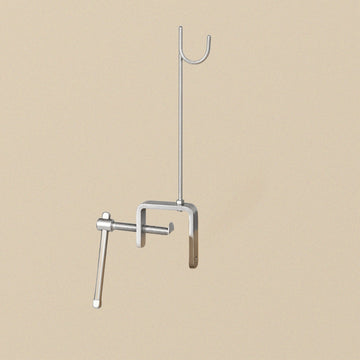
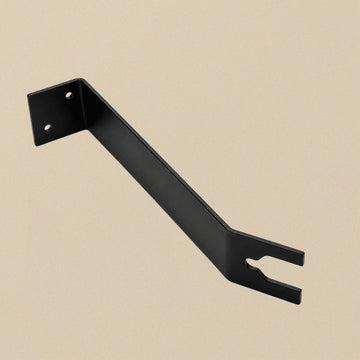
Toolsmith does not currently sell soldering torches; we stock torch hook holders for mini soldering torches and other soldering bench tools. Everything we sell ships from UK stock, either packed by us or through Amazon's UK fulfilment centres. We aim to dispatch orders placed before 2pm UK time, Monday to Friday, the same working day; later orders go out from the next working day. Most UK orders arrive 2–3 working days after dispatch, and UK delivery is free.
Sources
- Gas Safety (Installation and Use) Regulations 1998, regulation 3 (legislation.gov.uk)
- HSE — Gas Safe Register
Related guides
- Soldering Silver for the First Time: A UK Bench Guide
- Goldsmith's Soldering: Yellow, White & Rose Gold
- Charcoal Blocks & Soldering Surfaces Explained
- Bench Fire Safety for UK Silversmiths
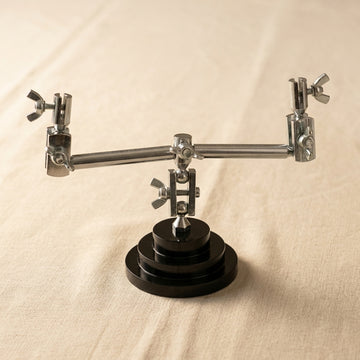
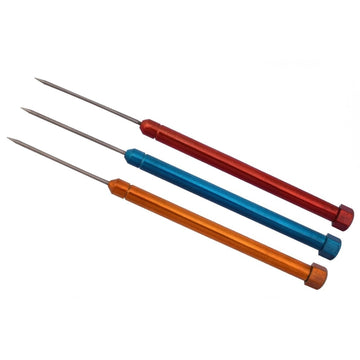
- Soldering Bench Accessories: Torch Stands, Third Hands & Titanium Picks
- Shop all Soldering Tools
Frequently asked questions
What soldering torch do I need to start making jewellery?
A refillable butane jewellery torch and a tin of lighter gas. Its flame reaches around 1,300°C — plenty for earring posts, jump rings, chain repairs and most small sterling silver pieces — it costs £15–£60, needs no cylinders or regulators, and can be used on a kitchen table next to an open window.
When do I need an oxy-propane torch?
When your work outgrows single-gas flames: heavy silver, bangles, hollowware, anything you need to anneal, and especially gold and platinum — platinum melts around 1,768°C, beyond any butane torch. Oxy-propane burns well over 2,500°C with interchangeable tips from needle-fine to broad, but budget £150–£400 for the torch, regulators, hoses and an oxygen source.
What safety kit does a home soldering bench need?
Ventilation near an open window, cylinders stored upright and secured away from heat, flashback arrestors on any oxy-fuel setup, a proper heat-proof soldering surface with nothing flammable within arm's reach, and a way to put out a fire to hand. Have any fixed natural-gas connection installed by a Gas Safe registered engineer.