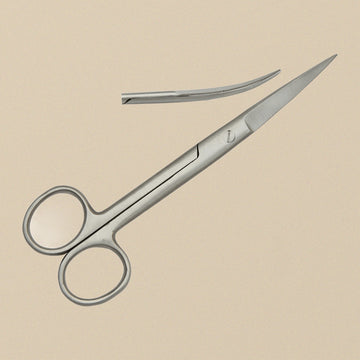
Quick answer: Build the examination tray around four instruments: a rhodium-coated front-surface mouth mirror (No. 4 or 5), the periodontal probe that matches your charting system (Williams, UNC-15 or WHO/BPE), a sharp explorer and a locking college tweezer — all in stainless steel with a glare-cutting satin finish. Then buy duplicates, because turnaround depends on sterile spares.
Before a single restoration is placed, the diagnosis is made with four humble instruments: a mirror, a probe, an explorer and a pair of tweezers. They are the first things on every tray and the most frequently sterilised tools in the practice — which is exactly why their grade and finish matter more than their modest price suggests. This guide covers the UK dental examination set, what each instrument does, and how to choose stainless steel that survives a thousand autoclave cycles.
The mouth mirror
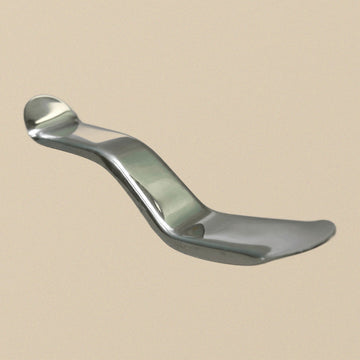
The mouth mirror does three jobs: indirect vision (seeing the distal and lingual surfaces you cannot look at directly), retraction of the cheek and tongue, and reflecting light into the field. Mirror heads are sized by number — a No. 4 and No. 5 cover most adult work. The choice that affects clarity most is the surface: a front-surface mirror puts the reflective coating on top of the glass for a crisp, ghost-free image, while a cheaper plane mirror reflects off the back and gives a faint double image. Rhodium-coated front-surface heads are the professional standard.
The periodontal probe
A periodontal probe measures pocket depth in millimetres, and the markings define the instrument. A Williams probe is marked at 1-2-3-5-7-8-9-10mm; a UNC-15 carries markings to 15mm with colour bands; the WHO/CPITN probe has a 0.5mm ball end and a coloured band for BPE screening. Pick the marking system your charting uses and stay consistent — mixing probes mid-assessment is how recording errors creep in.
The explorer (dental probe)
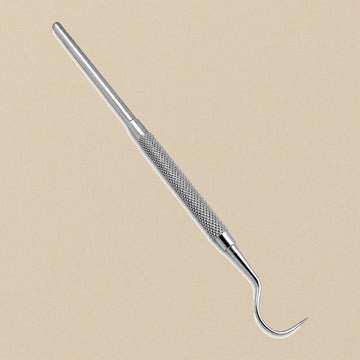
The explorer's fine, sharp tip checks margins, calculus and surface texture; the classic shepherd's hook (No. 23) and the sickle are the familiar shapes. Note the modern caution: dragging a sharp explorer hard across an early carious lesion can damage softened enamel, so contemporary practice uses it for tactile feedback rather than forceful "sticking". The tip must stay genuinely sharp to be useful, which again comes back to steel quality.
College tweezers (cotton pliers)
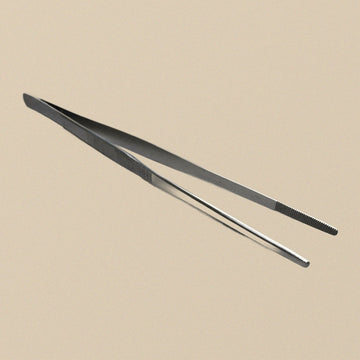
College tweezers carry cotton pellets, articulating paper and small items to and from the mouth. They come locking (they hold what you place in them) or plain. Angled tips give better access to the back of the arch. A locking pair earns its place quickly — it holds the paper while you have both hands occupied.
Steel grade, finish and handles
Examination instruments are sterilised constantly, so corrosion resistance is everything. A good stainless grade takes a finer working tip and resists the pitting that repeated autoclaving causes in cheap steel. A satin (matte) finish cuts glare under the operating light, which is why many clinicians prefer it over a mirror polish for the working ends. Lightweight hollow handles reduce hand fatigue across a long list, and silicone or resin grips improve control when gloves are wet.
Buying and caring for the set
Build the tray around a front-surface mirror, the probe that matches your charting, a sharp explorer and a locking college tweezer — then buy duplicates, because turnaround between patients depends on having sterile spares. Keep them in a cassette through the cycle to protect the tips, and retire any instrument whose tip has dulled or whose mirror has clouded. A blind mirror or a blunt explorer quietly degrades your diagnosis.
For what happens after diagnosis — burs, lab work and the sterilisation room — see our companion dental guides, and browse the examination range below.
Related guides
- Tofflemire Matrix Retainers & Aspirating Syringes: A UK Restorative Guide
- Gifts for Dentists, Hygienists & Dental Students: UK Ideas That Get Used
- Dental Implant Surgical Kits: Trephines, Osteotomes & Sinus-Lift Instruments
- Shop Examination & Diagnostic instruments →
- Orthodontic & Wire-Bending Pliers: A UK Dental Guide
- Dental Burs for Lab Technicians: Carbide vs Diamond vs Tungsten
- Dental Lab Sterilisation: A UK Practice Guide
Frequently asked questions
What dental examination instruments do I need for a basic tray?
Four instruments make the diagnostic set: a mouth mirror for indirect vision, retraction and light; a periodontal probe for pocket measurement; an explorer for checking margins, calculus and texture; and college tweezers for carrying pellets and articulating paper. Buy duplicates of each — turnaround between patients depends on having sterile spares ready, not on a single hard-worked set.
What is the difference between a front-surface and a plane mouth mirror?
A front-surface mirror puts the reflective coating on top of the glass, giving a crisp, ghost-free image; a cheaper plane mirror reflects off the back of the glass and produces a faint double image. Rhodium-coated front-surface heads are the professional standard. Sizes are numbered — a No. 4 and No. 5 cover most adult work.
Which periodontal probe markings should I choose?
Pick the marking system your charting uses and stay consistent. A Williams probe is marked at 1-2-3-5-7-8-9-10mm; a UNC-15 runs to 15mm with colour bands; the WHO/CPITN probe has a 0.5mm ball end and a coloured band for BPE screening. Mixing probes mid-assessment is how recording errors creep in.