Quick answer: Run the autoclave on distilled water only, and keep a fixed rhythm: daily vacuum/leak test, chamber wipe and cycle log; weekly clean and door-gasket check; monthly Bowie-Dick and spore tests; and the periodic examination by a competent person that the Pressure Systems Safety Regulations 2000 require, at the intervals in your written scheme of examination. Keep complete cycle records: gaps in the paperwork cause more trouble than dirty tools.
Dental lab sterilisation doesn't get the attention clinical sterilisation does — but HTM 01-05, the decontamination guidance for primary care dental services, is the benchmark many labs use for documented cleaning, packaging, sterilisation and traceability of any tool that contacts patient impressions, tissue or prosthetic work surfaces. In practice, badly maintained autoclaves and incomplete cycle records cause more trouble than dirty tools.
This guide covers the daily, weekly and monthly autoclave maintenance routine a compliant UK dental lab runs, what tools can and can't go in, and how to keep audit records without drowning in paperwork.
Why lab sterilisation matters even away from the chair
Dental lab work sits adjacent to the clinical path. Impressions carry patient saliva and biological material; prosthetics return to the clinical environment after lab finishing. Good practice: if a tool touches impression material, plaster model, wax-up in a patient-identified workflow, or a device destined for fitting, it needs documented sterilisation.
Autoclave sterilisation — typically 134°C (273°F), 18 minutes at pressure, B-class vacuum cycle — is the standard for non-disposable instruments. Lower-temperature cycles (121°C for 15 min) are sometimes used for heat-sensitive items but are the exception.
Which lab tools can (and can't) go in an autoclave
Yes — fully autoclave-safe
- Stainless steel wax carvers (Ash 49, PKT 1-5, Hollenbach, discoid-cleoid) — see Dental Instruments.
- Stainless steel dental spatulas (Le Cron and equivalents).
- Metal impression trays and metal model surveyor parts.
- Forceps, tweezers, scissors in 420/440-grade stainless steel.
- Crucibles and casting flasks (stainless).
Yes with caveats
- Tungsten-carbide tipped carvers — can autoclave, but repeated cycles may cause the braze holding the tungsten tip to the steel shank to fatigue. Check manufacturer spec; if uncertain, hand-clean with alcohol instead.
- Diamond burs and stones — most withstand autoclave. Check the backing material spec. Plastic-handled burs are often not autoclave-safe.
- Ceramist brushes — wooden-handle brushes survive 20-40 cycles before handles warp and bristles weaken. Consider them consumable if using in sterilisation workflow.
No — will damage or fail
- Electric wax pens — never autoclave electronics.
- Plastic-handled instruments unless explicitly rated. Most plastic handles soften, discolour or crack under 134°C cycles.
- Rubber investment mixing bowls — hand wash only.
- Any tool with a non-stainless spring, screw or joint — rust risk on repeated cycles.
Daily maintenance routine (5 minutes end-of-day)
- Run a vacuum / leak test cycle at the start of each working day on a B-class autoclave. Failed test = autoclave out of service until serviced.
- Check water reservoir — top up with distilled water only. Tap water deposits mineral scale that fails the autoclave within 6-12 months.
- Wipe chamber with distilled-water-dampened cloth. No detergent, no abrasive.
- Empty condensate reservoir if not auto-draining.
- Log the day's cycle count in the maintenance book.
Weekly maintenance
- Clean chamber with dedicated autoclave cleaner (Sultan, CleanClave or equivalent) — not household descaler. Run a manual rinse cycle afterward.
- Inspect door seal / gasket for cracks, compression set, or discolouration. A failing seal is the single most common cause of failed cycles. Replacement gaskets: £15-£40, user-replaceable on most units.
- Check loading tray rails for rust or warping.
- Review cycle logs for any failed cycles or temperature anomalies.
Monthly maintenance
- Run a Bowie-Dick test on B-class vacuum autoclaves. Pass = green/colour-changed indicator, document result.
- Run a biological indicator / spore test (G. stearothermophilus strip). Incubate per manufacturer instructions. Pass = no growth after 24-48h.
- Check water filter if fitted — replace per manufacturer schedule (typically every 3-6 months).
- Verify temperature probe calibration — most autoclaves self-test; document the pass/fail.
- Full external clean and service-schedule check.
Annual service
A steam autoclave is a pressure system, so under the Pressure Systems Safety Regulations 2000 you must have a written scheme of examination, drawn up or certified by a competent person, and the parts it covers must be examined by a competent person within the intervals the scheme sets (regulations 8 and 9). Book the examination well ahead: engineers book up.
Documentation you need to keep
- Daily cycle log — date, operator, cycle type, load contents, cycle printout/receipt.
- Weekly Bowie-Dick results (indicator strip or printout).
- Monthly spore test results — pass/fail with date.
- PSSR written scheme of examination and examination reports.
- Engineer service records.
Keep records for as long as your indemnity insurer, your clients and any local policy require — check with each before you set a retention period.
Common UK lab audit non-conformances
- Missing daily logs — the most common finding. Fix: default every end-of-day to 2-minute log entry.
- Autoclave on tap water — will fail within months. Fix: switch to distilled immediately.
- Expired pressure certificate — annual service missed. Fix: calendar reminder 6 weeks before due.
- Operating without Bowie-Dick / spore testing — fix: monthly Bowie-Dick + quarterly spore test minimum.
- Mixed clean/dirty zones — lab layout lets contaminated items cross into clean areas. Fix: one-way workflow, physical zoning.
Budget guide (2026 UK)
- New 23L B-class autoclave: £2,800-£4,500
- Distilled water: ~£25/month depending on cycle count
- Autoclave cleaner: £20-£40/month
- Bowie-Dick strips: ~£30 per 50-test box
- Spore test strips: ~£15 per 10-test pack
- PSSR examination by a competent person: ask your engineer for a quote
- Replacement door gasket (every 12-24 months): £15-£40
Annual running cost after initial purchase: roughly £500-£900 depending on cycle volume.
Where to buy autoclave-compatible lab instruments
Toolsmith stocks stainless-steel dental wax carvers, spatulas, casting kit and supporting lab tools in the Dental Instruments and Wax Carving Tools collections. All instruments are 420/440-grade stainless and autoclave-compatible under standard 134°C cycles. For autoclave hardware itself (the machine, service, spore tests), Eschmann, Prestige and SciCan are the established UK dental-lab brands.
For dental labs and training centres setting up a compliant sterilisation workflow from scratch, see our Dental Labs UK trade page for instrument supply and institutional pricing.
Sources
- NHS England — HTM 01-05: decontamination in primary care dental practices
- Pressure Systems Safety Regulations 2000, regulation 8 — written scheme of examination (legislation.gov.uk)
- Pressure Systems Safety Regulations 2000, regulation 9 — examination in accordance with the written scheme (legislation.gov.uk)
- HSE — Pressure Systems Safety Regulations 2000 (PSSR)
- General Dental Council — Standards for the Dental Team
Related guides
- Dental Wax Carvers — Tip Geometries Explained — identifying which stainless tools go through the autoclave daily.
- Dental Wax Carving Tools — A UK Professional's Working Kit — the autoclave-safe core kit.
- GDC (General Dental Council) Standards for the Dental Team — compliance reference.
- HTM 01-05 (Decontamination in primary care dental practices) — DH document, applies in full to clinical practices, informs lab best practice.
- Dental Wax Carvers - Tip Geometries Explained (UK Lab Guide)
- Dental Wax Carving Tools - A UK Professional's Working Kit
- Lost-Wax Casting for Beginners - UK Buying Guide 2026
- Dental Burs for Lab Technicians: Carbide vs Diamond vs Tungsten
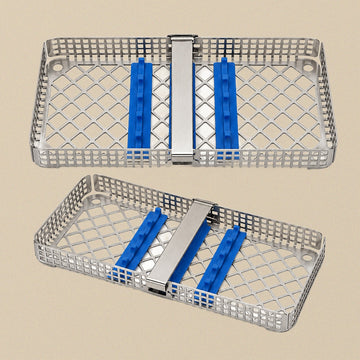
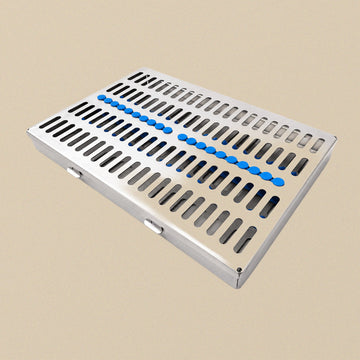
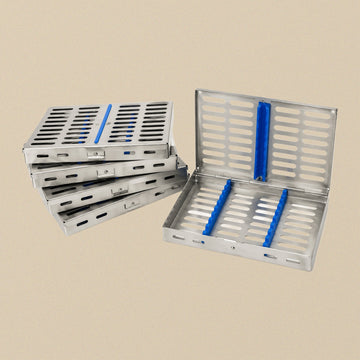
- Sterilisation Cassettes & Instrument Trays: A UK Practice Buying Guide
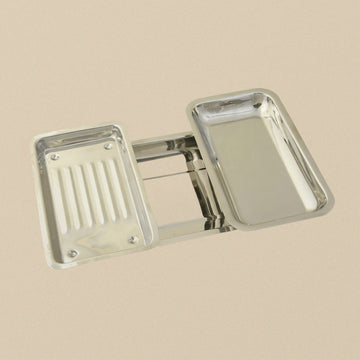
- Kidney Dishes, Trays & Instrument Boxes: A UK Clinic Guide
Frequently asked questions
What maintenance does a dental lab autoclave need?
Daily: a vacuum/leak test before use, distilled-water top-up, chamber wipe and a cycle-log entry. Weekly: clean with a dedicated autoclave cleaner and inspect the door gasket — a failing seal is the most common cause of failed cycles. Monthly: Bowie-Dick and biological spore tests. At the intervals in your written scheme of examination: an examination by a competent person under the Pressure Systems Safety Regulations 2000.
Which dental lab instruments can go in an autoclave?
Stainless steel wax carvers, spatulas, metal impression trays, and 420/440-grade forceps, tweezers and scissors are fully autoclave-safe under standard 134°C cycles. Tungsten-carbide-tipped carvers and diamond burs need a manufacturer-spec check first. Never autoclave electric wax pens, unrated plastic-handled instruments, rubber mixing bowls, or any tool with a non-stainless spring or screw.
How long must a UK dental lab keep sterilisation records?
As long as your indemnity insurer, your clients and any local policy require — check with each before you set a retention period. Keep the daily cycle log (date, operator, cycle type, load, printout), weekly Bowie-Dick results, monthly spore-test results, the PSSR examination reports and engineer service records.