Quick answer: For a first good pair, buy sharp fine-point embroidery scissors in forged stainless steel — the precise tip is what lets you cut a single thread without nicking the fabric. Add a curved or double-curved pair if you do appliqué or machine embroidery, and stork scissors if you want a beautiful heirloom that still works. Check the blades meet cleanly to the very point.
For anyone who works with thread and fine fabric, a small pair of sharp scissors is the most-handled tool in the basket — and the one whose quality you feel on every cut. Embroidery and "fancy" scissors are precision instruments dressed up beautifully: the ornament is real, but so is the engineering underneath. This guide explains the main types — from the famous stork to fine-point snips and curved blades — and how to choose a pair that cuts cleanly to the very tip for years.

Stork scissors: the classic
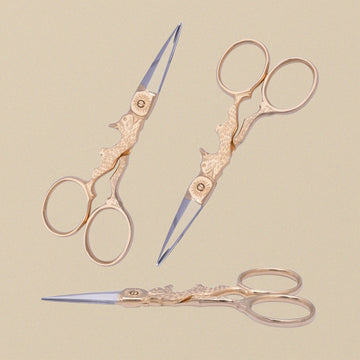
The stork scissors — handles shaped as a long-legged bird, blades forming the beak — began life as a Victorian midwife's tool and became the emblem of needlework. They are decorative, but the slim, slightly curved blades are genuinely useful for detailed snipping, and a well-made pair is an heirloom. Look past the finish to the blades: they should meet cleanly along their length and come to a true point.
Fine-point embroidery scissors
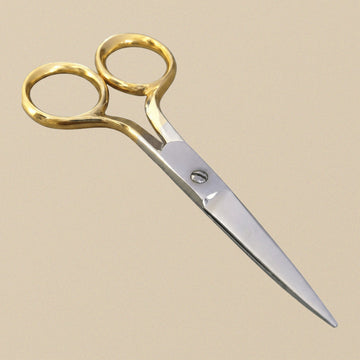
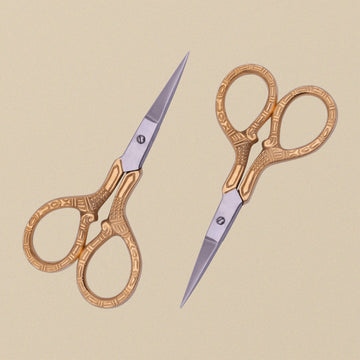
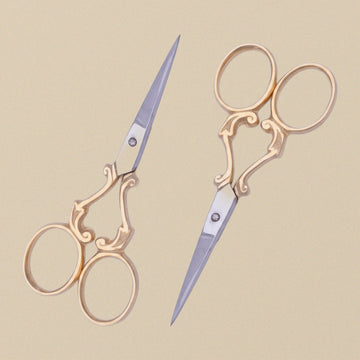
The everyday workhorse is a short pair with extremely sharp, fine points. The point matters as much as the edge: it lets you reach a single thread on the surface of the work and cut it close without nicking the fabric beneath. For counted-thread work, cross-stitch and hand embroidery, this precision at the tip is the whole job.
Curved and double-curved blades
Curved blades lift the tips up and away from the fabric, so you can trim appliqué and surface threads flush without catching the ground cloth. Double-curved scissors add a second bend in the shank, lifting your whole hand clear — invaluable for trimming close to a machine-embroidery hoop or cutting away stabiliser without lifting the work. If you do a lot of appliqué or machine embroidery, a curved pair quickly becomes indispensable.
Thread snips and spring scissors
Spring-action thread snips sit in the palm and close with a squeeze, then spring back open — fast, one-handed thread trimming at the machine or frame. They are not for detail cutting, but for sheer speed of snipping ends they save a great deal of reaching for scissors.
- Detail & points: fine-point embroidery scissors, stork scissors.
- Trimming flush: curved and double-curved blades.
- Fast thread cuts: spring snips.
Steel, finish and the pivot
The decoration should never distract from the basics. Forged stainless steel holds an edge and resists the rust that fine points are prone to. Hold a closed pair to the light: the blades should touch along their whole length with no gap, and the points should align exactly. Work the pivot — it should be smooth and firm, not loose (which lets the blades pass instead of cut) or stiff. A pair that cuts paper cleanly to the very tip will cut thread beautifully.
Care and choosing
Keep embroidery scissors for fabric and thread only — paper and adhesives dull fine edges fast. Wipe the blades after use, and a tiny drop of oil at the pivot keeps the action sweet. For a first good pair, buy a sharp fine-point scissor; add a curved pair if you do appliqué, and a stork pair if you love a beautiful tool on the table. The best fancy scissors are the ones that earn their keep.
For the wider world of precision scissors — grooming, surgical and beauty — see our companion guides, and browse the range below.
Related guides
- Shop Embroidery & Fancy Scissors →
- Pet Grooming Scissors: Curved, Straight, Thinning
- Manicure Scissors & Nail Nippers: A UK Buyer's Guide
- Surgical Scissors: Mayo, Metzenbaum & Iris
Frequently asked questions
What embroidery scissors should I buy first?
Start with a short, fine-point pair — the sharp tip reaches a single thread on the surface of the work and cuts it close without nicking the fabric beneath, which is the whole job in counted-thread work and cross-stitch. Choose forged stainless steel, check the blades touch along their full length, and add curved or stork pairs later as your work demands.
What are stork scissors actually for?
Stork scissors began as a Victorian midwife's tool and became the emblem of needlework. They are decorative, but the slim, slightly curved blades are genuinely useful for detailed snipping, and a well-made pair is an heirloom. Judge them like any working scissors: look past the finish and check the blades meet cleanly along their length and come to a true point.
When do I need curved or double-curved embroidery scissors?
When you trim flush against fabric. Curved blades lift the tips up and away from the cloth so you can cut appliqué and surface threads without catching the ground fabric. Double-curved scissors add a second bend that lifts your whole hand clear — invaluable for trimming close to a machine-embroidery hoop or cutting away stabiliser without lifting the work.