Quick answer: For a salon, a double-sided stainless foot file plus a chiropody rasp covers almost all hard-skin removal safely; add a bladed callus shaver with spare blades only if you're trained to use one. For home use, stick to a quality stainless file — it removes callus gradually, so you can't take off too much too fast.
Smooth, comfortable feet come down to controlled hard-skin removal — and that means choosing the right tool for the amount of callus, the client and the setting. Foot files, chiropody rasps and callus shavers all reduce hard skin, but they work differently and carry different risks. This UK guide explains what each does, how to judge quality, and how to remove calluses and corns safely without overdoing it.
Foot files (abrasive)
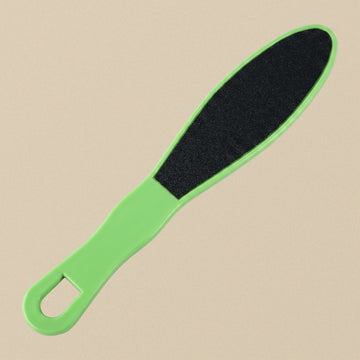
The everyday pedicure tool. A foot file has an abrasive surface — etched stainless steel, sapphire-grit or a replaceable pad — bonded to a flat paddle. It abrades hard skin gradually, which makes it the safest choice for general smoothing and home use because you can't take off too much too fast.
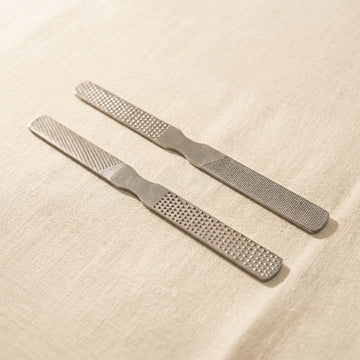
- Stainless etched files last for years, are fully washable and sterilisable, and suit a professional setting. Many are double-sided with a coarse side for reduction and a fine side for finishing.
- Grit matters: coarse for thick calluses, fine for finishing and for thinner skin. A two-sided file covers both.
- Use on dry or barely-damp skin for control — soaking wet skin abrades unpredictably and you can remove too much.

Chiropody rasps
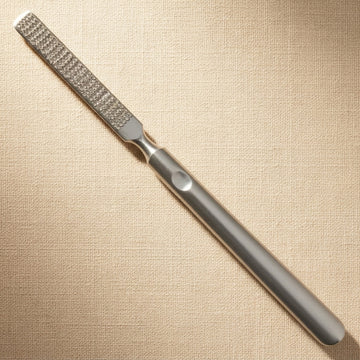
A chiropody rasp is a stainless-steel file built for heavier reduction than a beauty foot file — typically a long, slim double-sided blade (often 6 or 7 inch) with a coarse rasp on one face and a finer file on the other. Foot-care professionals reach for a rasp when there's significant hard skin to bring down quickly before finishing with a finer file. Look for solid one-piece stainless that won't flex and a handle that stays secure when wet.
Callus and corn shavers (bladed)
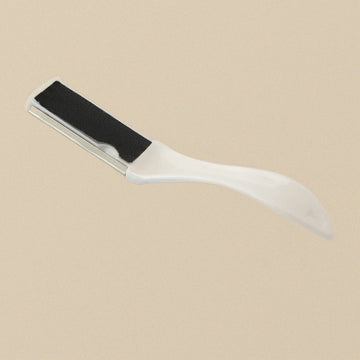
A callus shaver holds a replaceable blade behind a guard and slices a thin layer of hard skin away. In trained hands it's fast and precise; in untrained hands it's the riskiest tool here, because a blade removes live skin just as easily as dead. Key points:
- Take off thin layers, checking constantly. Stop while there's still a protective layer of skin — never shave down to pink or tender tissue.
- Replaceable blades should be changed often; a dull blade drags and tears. A shaver supplied with a pack of spare blades is the better value.
- Finish with a file to smooth the shaved area.
An important safety note
Bladed shavers are not suitable for everyone. Anyone with diabetes, poor circulation, neuropathy or fragile skin should never have calluses shaved and should see a registered podiatrist — a small nick can become a serious wound. For these clients, gentle filing only, and refer when in doubt. This is good practice for any UK salon offering foot care.
Hygiene
Feet carry fungal and bacterial risk, so foot tools must be cleaned and sterilised between clients. Solid stainless files and rasps are ideal because they tolerate scrubbing and autoclaving; replaceable-pad files mean a fresh surface per client. Always dispose of used shaver blades into a sharps bin.
What to buy first
For a salon, a good double-sided stainless foot file plus a chiropody rasp covers almost everything safely. Add a callus shaver with spare blades only if you're trained to use one. For home use, stick to a quality stainless file — it's the safe, durable choice.
Browse the full pedicure and foot-care range, and pair this with our toe-nail nippers guide for the complete foot-care kit.
Related guides
- Shop Pedicure & Foot Care tools →
- Toe-Nail Nippers & Clippers: A UK Podiatry & Chiropody Guide
- Beauty & Nail Tools: A UK Technician's First Professional Kit
Frequently asked questions
What callus-removal tool should I buy for home use?
A quality double-sided stainless foot file — coarse side for reducing thick callus, fine side for finishing. It abrades hard skin gradually, so it's the safest choice: you can't take off too much too fast. Use it on dry or barely-damp skin for control, and leave bladed callus shavers to trained professionals — a blade removes live skin as easily as dead.
What is a chiropody rasp and when do I need one?
A chiropody rasp is a long, slim stainless-steel file — typically 6 or 7 inch, double-sided with a coarse rasp on one face and a finer file on the other — built for heavier reduction than a beauty foot file. Professionals reach for it when there's significant hard skin to bring down quickly before finishing with a finer file. Look for solid one-piece stainless that won't flex.
Who should not use a bladed callus shaver?
Anyone with diabetes, poor circulation, neuropathy or fragile skin should never have calluses shaved — a small nick can become a serious wound — and should see a registered podiatrist instead. For these clients, gentle filing only, and refer when in doubt. Even in trained hands, shave thin layers, stop well before pink or tender tissue, and bin used blades in a sharps container.