Quick answer: For thick or difficult toe nails, buy a concave double-spring nipper in hardened stainless steel with a roughly 14 mm jaw — it handles the great majority of thick-nail work with control an ordinary clipper can't match. Add a barrel-spring heavy-duty nipper if you regularly see very hard nails, and a long-reach clipper for clients who cut their own.
Thick, hard or involuted toe nails defeat ordinary clippers — and forcing a flimsy clipper through them risks splitting the nail and tearing the nail fold. Podiatry-grade toe-nail nippers exist precisely for this: short, strong jaws and a sprung handle that deliver controlled cutting force. This UK guide explains the difference between nippers and clippers, decodes spring types and jaw shapes, and helps you choose a nipper that will cut cleanly for years.
Nippers versus clippers
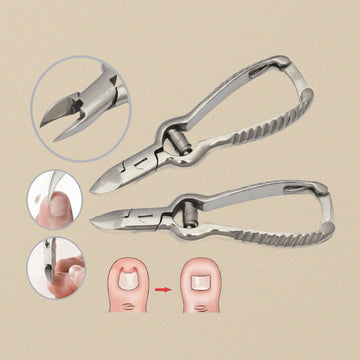
A standard clipper (lever or compound type) is fine for normal nails. A nipper is a plier-style tool with a cutting jaw and a return spring, giving far more force and control over a small, precise bite — which is what thick or curved nails demand. For chiropody, podiatry and any client with difficult nails, the nipper is the professional choice.
Spring types
The spring holds the jaws open and sets how the tool feels in the hand. You'll see three:
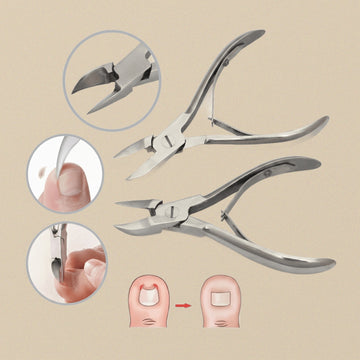
- Single (leaf) spring — simple and light, good for general use and lighter nails.
- Double spring — smoother, more durable return and less hand fatigue over a long clinic list; a popular podiatry choice.
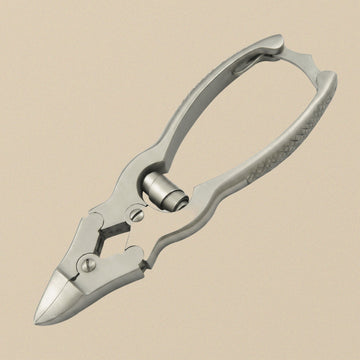
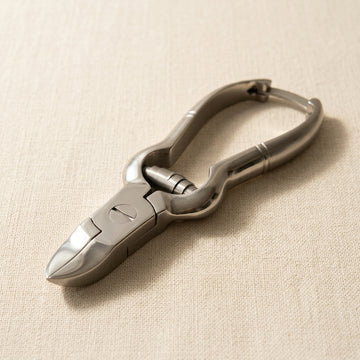
- Barrel spring — a coiled barrel between the handles giving strong, consistent tension; favoured for heavy-duty cutting and the longest service life.
Jaw length and shape
The jaw is where the work happens:
- Jaw length: a shorter jaw (around 14 mm) concentrates force for very thick nails; a longer jaw cuts more in a pass on normal nails. Many clinicians keep one of each.
- Concave (curved) edge follows the nail's shape and is the standard for toe nails.
- Handle reach: longer handles (some clippers reach 21 cm) help clients who cut their own nails but can't reach comfortably.
For ingrown or deeply involuted nails, some practitioners also use specialist thin-tip nippers — but for most thick-nail work, a quality concave double-spring nipper is the everyday tool.
What makes a nipper "podiatry grade"
- Hardened stainless steel that holds an edge and survives repeated autoclaving without pitting.
- Box joint (rather than a lap joint) for a rigid, wobble-free cut under load.
- Blades that meet cleanly end to end — check against the light, exactly as you would a cuticle nipper.
- A secure spring that returns crisply and won't pop out in use.
Technique and safety
Cut in small bites following the natural shape of the nail rather than one big crunch, and never cut so far down the sides that you risk the nail fold. As with bladed foot tools, clients with diabetes, poor circulation or neuropathy need extra care and, where appropriate, referral to a registered podiatrist. Sterilise between every client.
Care
Dry thoroughly after cleaning, oil the joint and spring occasionally, and store so the cutting edges aren't knocked against other tools. A good nipper, looked after, easily lasts a decade and can be resharpened.
What to buy first
For most foot care, start with a concave double-spring nipper in stainless steel with a roughly 14 mm jaw — it handles the great majority of thick nails. Add a barrel-spring heavy-duty nipper if you regularly see very hard nails, and a long-reach clipper for self-care clients.
See the full range of toe-nail nippers and clippers, and pair this with our foot files and callus removers guide for the complete pedicure kit.
Related guides
- Shop Pedicure & Foot Care tools →
- Pedicure Foot Files, Rasps & Callus Removers
- Manicure Scissors & Nail Nippers: A UK Buyer's Guide
Frequently asked questions
What toe-nail nipper should I buy for thick nails?
A concave double-spring nipper in hardened stainless steel with a roughly 14 mm jaw is the everyday professional choice — the shorter jaw concentrates force for very thick nails, and the concave edge follows the nail's natural shape. If you regularly see very hard nails, add a barrel-spring heavy-duty nipper, which gives strong, consistent tension and the longest service life.
What is the difference between toe-nail nippers and clippers?
A standard lever or compound clipper is fine for normal nails. A nipper is a plier-style tool with a cutting jaw and return spring, delivering far more force and control over a small, precise bite — which is what thick, hard or involuted nails demand. Forcing a flimsy clipper through a thick nail risks splitting it and tearing the nail fold.
How should thick toe nails be cut safely?
Cut in small bites following the nail's natural shape rather than one big crunch, and never cut so far down the sides that you risk the nail fold. Clients with diabetes, poor circulation or neuropathy need extra care and, where appropriate, referral to a registered podiatrist. In professional use, sterilise nippers between every client and store them so the cutting edges are protected.