Quick answer: A basic bone-work module needs four things: a No. 3 scalpel handle with size 10 and 15 blades, a Gigli saw set with two handles and a spare wire, a stainless bone hand drill for pins and K-wires, and tungsten-carbide pin cutters. All plain autoclavable stainless with no electronics, so it drops into a standard sterilisation cycle.
Most surgical kits are judged by their forceps and scissors, but when a procedure reaches bone the instruments change character entirely. Scalpels give way to wire saws, drills and cutters that work by muscle rather than motor — and choosing them well matters, because these are the tools least forgiving of flex, slip or a dull edge. This guide covers the bone-work basics a UK veterinary practice, training lab or field kit actually uses.
Scalpel handles: No. 3 and what fits it
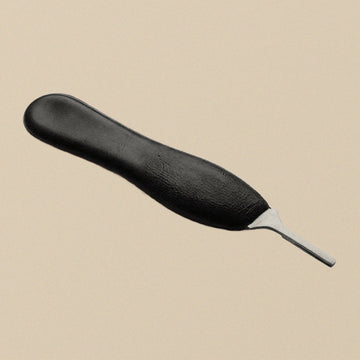
A scalpel is two purchases, not one: a reusable handle and a disposable blade. The No. 3 handle is the everyday pattern — it takes the small blade family (sizes 10, 11, 12 and 15), which covers skin incisions, stab incisions and fine dissection. Its larger sibling, the No. 4, takes the bigger 20-series blades for long incisions through thick tissue. A good handle is autoclavable stainless steel with a crisp blade seat: the blade should snap on positively and sit without rock. Always mount and remove blades with needle holders or artery forceps, never fingers.
The Gigli saw: a wire that cuts bone
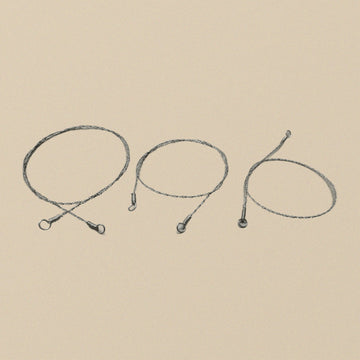
The Gigli saw looks improbable — a length of twisted, toothed wire with a loop at each end — and works brilliantly. Hooked onto a pair of T-handles, the wire is passed around or behind the bone, and cutting happens on alternating pulls, with the flexible wire following curves no rigid blade could. It packs almost flat, needs no power, and is equally at home in a veterinary theatre and an expedition medical kit. Two rules govern it: keep the working angle wide so the wire does not bind, and guard the soft tissue on the far side before the first stroke. The wire itself is a consumable — buy a spare with the handles and retire any wire with a kink.
Hand drills for pins and wires
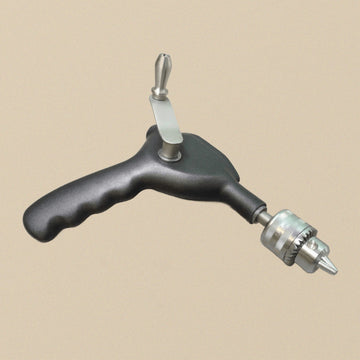
For placing pins and Kirschner wires, a stainless bone hand drill — the Ralk pattern is the classic — gives a level of feedback no cordless driver can: you feel the cortex give and stop precisely. Hand drills also sidestep the two failure points of powered kit, batteries and sterilisation limits, which is why they persist in veterinary and orthopaedic teaching settings. Look for a chuck that grips fine wire concentrically and a body that strips fully for the autoclave.
Cutting pins and wire cleanly
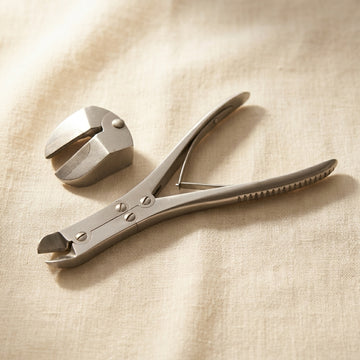
Once a pin is placed it has to be trimmed, and ordinary scissors are the wrong answer. Dedicated wire and pin cutters — around 200 mm, with tungsten-carbide jaw inserts — shear hard stainless flush without splintering it or destroying the tool. Carbide inserts matter: plain steel jaws dent, then chew. Keep them for pins and wire only, and they will outlast everything else on the tray.
Building the bone-work module
- No. 3 scalpel handle plus a box of 10 and 15 blades — the incision workhorse.
- Gigli saw set — two handles, two wires, almost no weight or space.
- Bone hand drill — pins and K-wires with full tactile control.
- Carbide pin cutters — the only thing that should ever trim a pin.
All of it is plain autoclavable stainless with no electronics, so the whole module drops into a standard sterilisation cycle and keeps working for decades with basic care.
Every instrument above ships from UK stock with same-day dispatch before 2pm — browse the full bone and scalpel range below.
Related guides
- Kidney Dishes, Trays & Instrument Boxes: A UK Clinic Guide
- Shop Scalpels, Saws & Bone Instruments →
- Surgical Scissors: Mayo, Metzenbaum & Iris — a UK Vet Guide
- Small-Animal Vet Surgery Kit: 12 Essentials for a UK Clinic
- UK Veterinary Haemostats: 5 Must-Have Forceps
Frequently asked questions
What instruments do I need for a basic bone-work surgical kit?
Four items cover it: a No. 3 scalpel handle plus a box of size 10 and 15 blades for incisions and fine dissection; a Gigli saw set — two handles, two wires, almost no weight or space; a stainless bone hand drill for pins and Kirschner wires; and carbide-jawed pin cutters, the only thing that should ever trim a pin.
How does a Gigli saw work and how is it used safely?
The twisted, toothed wire hooks onto a pair of T-handles, passes around or behind the bone, and cuts on alternating pulls — the flexible wire follows curves no rigid blade could. Two rules govern it: keep the working angle wide so the wire does not bind, and guard the far-side soft tissue before the first stroke. Retire any wire with a kink.
Why choose a hand drill over a cordless driver for bone pins?
Feedback and reliability. A Ralk-pattern hand drill lets you feel the cortex give and stop precisely — feedback no powered driver matches — and it sidesteps the two failure points of powered kit: batteries and sterilisation limits. Look for a chuck that grips fine wire concentrically and a body that strips fully for the autoclave.