Quick answer: If you buy one Tofflemire matrix retainer, choose the contra-angle head — it sits away from the cheek and earns its place the first time you work a distal box on a lower seven. For an aspirating syringe, the classic ring handle is the pattern tutors teach on; twin-ring and winged patterns suit smaller hands and longer lists.
Two instruments quietly decide how smoothly a restorative appointment runs: the matrix retainer that rebuilds a tooth's missing wall, and the aspirating syringe that delivers the anaesthetic before any of it starts. Both come in more patterns than catalogues usually explain. Here is what the variations mean and how to choose for a UK practice, dental school kit or veterinary dental tray.
What a Tofflemire retainer actually does
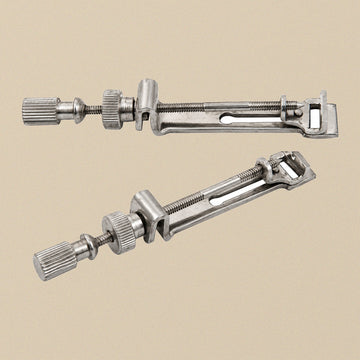
When a cavity takes out the wall between two teeth (a Class II), the filling material needs a temporary wall to pack against — a thin stainless matrix band. The Tofflemire retainer is the classic instrument that holds that band: the band loops through its head, a spindle locks it, and a knurled vise nut tightens the loop snugly around the tooth. Wedged at the margin, it turns an open box into a mould. After curing, the band slides free and the contact point looks like tooth again.
Straight head or contra-angle?
The standard straight (universal) pattern suits most posterior work from the buccal side. The contra-angle head version angles the band channel so the instrument body sits away from the cheek — noticeably easier on second molars and for lingual placement. Many clinicians keep one of each on the tray; if you buy one, the contra-angle earns its place the first time you work a distal box on a lower seven. Either way, look for surgical stainless steel, a spindle that seats the band without burrs, and a vise that runs smoothly under glove pressure — the whole instrument autoclaves as one piece.
Aspirating syringes: why the handle pattern matters
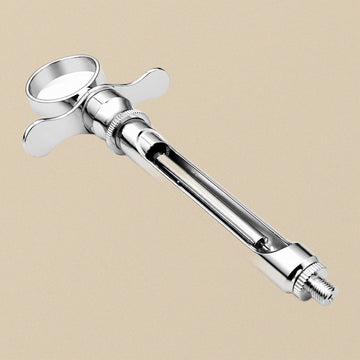
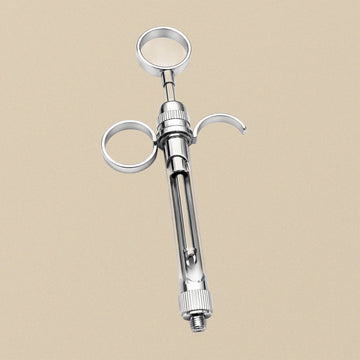
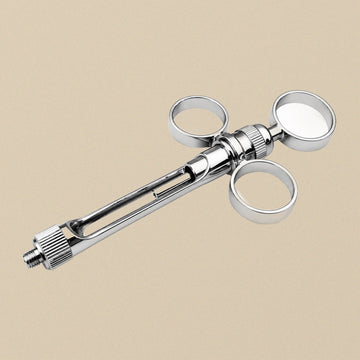
A dental aspirating syringe takes a standard 1.8 ml anaesthetic cartridge and — crucially — lets you pull back before injecting, confirming the needle is not in a vessel. The mechanics are identical across patterns; what differs is the handle, and that is an ergonomics decision:
- Ring handle: the traditional three-finger grip; positive aspiration control with a bare thumb-ring pull.
- Twin-ring with finger rest: steadier for smaller hands, spreading load across two fingers.
- Three-ring scissor handle: scissor action gives the strongest, most deliberate aspiration stroke.
- Winged T-bar and oval thumb-rest patterns: broad rests that suit long sessions and gloved grip changes.
If you are kitting a student clinical bag, the classic ring handle is the pattern tutors teach on. If you already know your grip runs small or your lists run long, the twin-ring and winged patterns are the comfortable upgrades.
Care and longevity
All of these are plain surgical stainless instruments: scrub or ultrasonic-clean promptly, autoclave in a cassette, and check the syringe harpoon and retainer spindle occasionally for wear. A retainer whose vise creeps loose mid-pack, or a syringe that will not hold aspiration, has earned retirement — at this price point they are honest consumables over a career, not heirlooms to nurse along.
Retainers, bands and every syringe pattern above ship from UK stock — browse the restorative range below.
Related guides
- Dental Implant Surgical Kits: Trephines, Osteotomes & Sinus-Lift Instruments
- Shop Restorative & Matrix Instruments →
- Dental Examination Instruments: Mirrors, Probes & Explorers
- Dental Extraction Forceps & Luxation Elevators: A UK Guide
- Dental Burs: Lab, Carbide, Diamond & Tungsten — a UK Guide
Frequently asked questions
Which Tofflemire retainer should I buy, straight or contra-angle?
The straight (universal) pattern suits most posterior work from the buccal side, but the contra-angle head angles the band channel so the instrument body sits away from the cheek — noticeably easier on second molars and lingual placement. Many clinicians keep one of each; if buying one, take the contra-angle. Look for surgical stainless, a burr-free spindle and a smooth vise.
What is the difference between aspirating syringe handle patterns?
The mechanics are identical — every pattern takes a standard 1.8 ml cartridge and lets you pull back to confirm the needle is not in a vessel. The differences are ergonomic: the ring handle is the traditional teaching pattern, twin-ring with finger rest steadies smaller hands, the three-ring scissor handle gives the strongest aspiration stroke, and winged patterns suit long sessions.
How long should a matrix retainer or aspirating syringe last?
They are plain surgical stainless: scrub or ultrasonic-clean promptly, autoclave in a cassette, and check the syringe harpoon and retainer spindle occasionally for wear. A retainer whose vise creeps loose mid-pack, or a syringe that will not hold aspiration, has earned retirement — at this price point they are honest consumables over a career, not heirlooms.