Quick answer: Identify the case back type before buying anything: snap-off backs need a case knife, screw-down backs need a case back wrench with correctly sized pins, and smooth fish-eye backs need a dedicated fish-eye opener. A 16-piece watch repair kit covers snap-off and screw-down cases for a first bench; leave fused or solder-sealed vintage backs to a specialist.
Opening a watch case is the first step of every repair, every battery swap, every movement inspection. Get the tool wrong and you scratch the case, bend the stem, or — most commonly — strip the notches on a screw-down back so the watch can never be properly re-sealed.
This guide walks through every type of watch case, which opener to use, and the two mistakes UK watchmakers see most often in beginner kits.
The four case back types
Before buying any opener, identify which of the four types you're working with.
1. Snap-off case backs (press-fit)
The most common type on vintage and budget watches. The back clips into a groove with a slight interference fit. Removed with a case knife or snap-off case back opener — essentially a precision lever inserted into a shallow notch between case and back.
Tool needed: Case knife (3mm or 5mm tip) or dedicated snap-off opener.
Common mistake: using a generic flat screwdriver — damages the notch and slips into the movement.
2. Screw-down case backs (diver-style, notched)
Modern sports watches, dive watches, most Seiko/Citizen/Casio mid-range. Four to eight notches cut into the back rim. Back unscrews with a case back wrench — a die-cast tool with interchangeable pins that sit in the notches.
Tool needed: Case back wrench with pin set (minimum 3 pin diameters: 1.5mm, 2.0mm, 3.0mm).
Common mistake: using the wrong pin diameter. Stripped notches are the #1 reason watchmakers turn away a repair.
3. Fish-eye case backs (smooth, no notches)
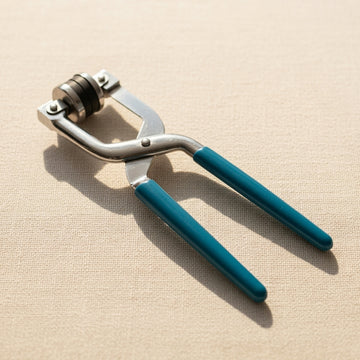
High-end and vintage watches (Rolex, Omega bubble backs, some Breitling). Back is smooth — no notches. Opened with a fish-eye case opener or compression tool that grips the back via friction rings.
Tool needed: Fish-eye case back tool — specifically sized to the case diameter.
Common mistake: using a generic wrench on a smooth-back case — zero grip, maximum scratch risk.
4. Fused / heritage sealed backs
Pocket watches, vintage Swiss dress watches — sometimes sealed with solder or heat-fit. Only removed by a specialist with a ring-cutter or via the crystal. Leave these to experienced watchmakers.
What's in a basic UK watchmaker's case-opening kit
If you're servicing your own watches or starting a repair bench, this is the minimum kit for under £80 total:
- Case knife with 3 tip sizes — covers 90% of snap-off backs (£15–£20)
- Case back wrench with 18+ pin set — covers screw-down backs (£25–£40)
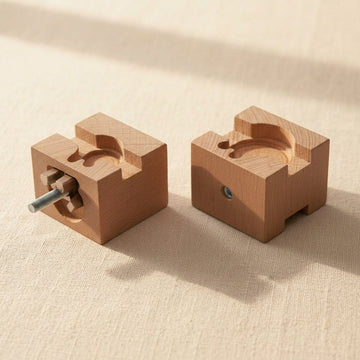
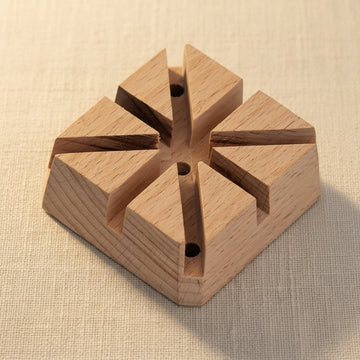
- Case holder / movement holder — soft wood or nylon to grip the case without marring (£10)
- Spring bar pliers with concave + convex jaws — for bracelet removal once case is open (£15–£25)
- 10x loupe — for checking gasket condition after opening (£8–£12)
Skip anything sold as "universal watch opening set" under £15 — the pin metallurgy isn't hardened enough and the pins will shear inside the notches.
Opening a screw-down back — step by step
The technique that prevents damage:
- Clean the case back — grit in the notches + high torque = stripped notches
- Size the pins correctly — pin must fit the notch fully, no slop
- Seat the wrench on the case holder — never hold the watch in your hand while applying torque
- Apply vertical pressure as you rotate — 70% down-force, 30% rotation
- Rotate anticlockwise in short, controlled arcs — not a full wrench turn
- If the back doesn't move at 1/4 turn, stop — it may be seized. Applying more force is how you strip the notches
Re-sealing after opening
Opening is only half the job. After service you must:
- Inspect the rubber O-ring / gasket — replace if compressed, hardened, or split
- Apply silicone gasket grease in a thin film (not a glob)
- Torque the screw-down back snugly but not over-tight — the gasket does the sealing, not the threads
- Water-test if the watch is rated 50m+ — use a pressure tester or at minimum a vacuum test
What to buy first
For an entry-level repair kit:
- 16-piece watch repair kit — includes case knife, back wrench with pins, spring bar pliers, and movement holder. Covers snap-off and screw-down cases under one roof. UK stock, fast dispatch.
- 10x brass loupe with case — for gasket inspection and hairspring work.
For dedicated repair work add:
- Professional case knife with hardened tip
- Fish-eye opener sized to the specific cases you service
Five rules before you open your first case
- If the back is sealed and you don't have the right opener, stop. A scratched case is a refurb job.
- Never open a vintage watch over a hard surface — use a lint-free cloth on a padded mat.
- Identify the case type before choosing the tool — not the other way around.
- Replace gaskets on any case you open if it's rated 30m+ water resistance.
- Practice on a £10 scrap watch before your first customer job.
Shop the range
Case opening tools → · All watch and clock tools → · Trade and bulk orders →
Toolsmith Ltd · Watch repair tools from UK stock · Same-day dispatch target for orders before 2pm Mon–Fri · Co. No. 16520777
Related guides
- Watch Spring Bar Replacement - Step-by-Step UK Guide
- Watchmakers' Screwdrivers: Sets, Sizes & Sharpening
- Watch Strap & Bracelet Sizing: Link Removers, Pin Pushers & Notching Pliers
Frequently asked questions
What tools do I need to open a watch case back?
It depends on the case type. Snap-off backs need a case knife with a 3mm or 5mm tip; screw-down backs need a case back wrench with at least 1.5mm, 2.0mm and 3.0mm pins; smooth fish-eye backs need a dedicated fish-eye opener sized to the case. A case holder to grip the watch is essential for all three.
How do I avoid stripping the notches on a screw-down case back?
Clean the notches first, fit pins that fill the notch with no slop, and seat the watch in a case holder rather than your hand. Apply roughly 70% downward pressure and 30% rotation, turning anticlockwise in short controlled arcs. If the back has not moved within a quarter turn, stop — it may be seized, and extra force is what strips notches.
Do I need to replace the gasket after opening a watch case?
Inspect the O-ring every time you open a case, and replace it if it is compressed, hardened or split — and on any watch rated 30m water resistance or more. Apply a thin film of silicone gasket grease, tighten the back snugly rather than over-tight, and pressure- or vacuum-test any watch rated 50m or above.