Quick answer: Start with a colour-coded nine-piece watchmakers' screwdriver set in a rotating stand, plus a sharpening stone or jig — and learn to dress the blades square from day one. Going professional? Add individual premium drivers in your two most-used sizes (around 1.20mm and 1.60mm) and spare blades. Blade fit and a freshly dressed tip prevent most slips and scratches.
Watch repair begins and ends with the screwdriver. It's the first tool you pick up and the one whose mistakes are the most visible: a blade that slips out of a screw slot leaves a bright scratch across a movement plate or chews the head of a screw, and on a customer's watch that's a disaster you can't undress. Yet watchmakers' screwdrivers are widely misunderstood — bought as a cheap nine-piece set, used until the blades round off, and then blamed for slipping when the real fault is a blade that was never dressed properly in the first place. This guide explains why these little drivers are a category of their own, how the sizes map to the work, and the one skill — sharpening and dressing the blade — that separates people whose drivers never slip from people who keep scratching movements.
Why a watch screwdriver isn't just a small screwdriver
A hardware screwdriver is wedge-shaped — it tapers to the tip. Drop that profile into a watch screw and only the very edge touches; it cams out and slips. A watchmaker's screwdriver blade is ground with parallel sides and a flat, square tip, so the blade fills the screw slot along its whole depth and width. That full contact is what stops it slipping and what lets you apply turning force without the blade riding up out of the slot. The blade is also hollow-ground on quality drivers — relieved behind the tip — so the cutting edge stays in the slot, not the shoulders.
The other defining feature is the rotating cap on top. You press down on the cap with your index finger while turning the body with thumb and middle finger — the cap stays still, the blade turns. It gives steady, controlled downward pressure that keeps the blade seated. Hardware drivers have no such thing because they don't need that precision. Everything about a watch screwdriver is built around one goal: the blade does not slip.
The sizes, and what each is for
Watch screwdrivers are sized by blade width in millimetres, and a set spans a small but crucial range. Common sizes and typical uses:
- 0.50–0.80mm: the smallest — dial-foot screws, case-clamp screws, the tiniest movement screws. Easy to over-torque and snap, so used with the lightest touch.
- 1.00–1.40mm: the everyday movement sizes — bridge screws, train-bridge and balance-cock screws on most calibres. These are the drivers you'll reach for most.
- 1.60–2.00mm: larger movement and case screws, mainspring-barrel and ratchet screws.
- 2.50–3.00mm: case-back screws, strap and bracelet screws, larger clock work.
Quality sets are colour-coded on the rotating cap so you can grab the right size at a glance — once you've learned that, say, the blue one is your 1.20mm, you stop hunting. The golden rule of watch work is to match the blade width to the screw slot as closely as possible: a blade that's too narrow concentrates force and slips; a blade slightly wider than the slot won't seat at all.
The set, the stand, and buying individually
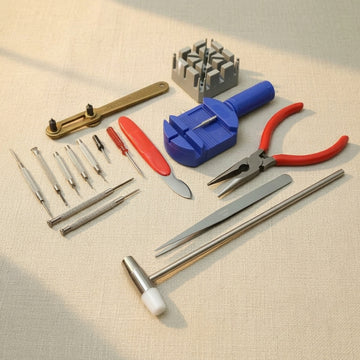
The classic purchase is a nine-piece set in a rotating stand — the stand keeps the sizes upright, colour-coded and to hand, and usually holds spare blades underneath each driver. For most hobbyists and many pros this set covers everything. Watchmakers who specialise sometimes buy individual drivers in the one or two sizes they use constantly, in a higher grade than a set offers. If you're assembling a first kit from scratch, the screwdriver set sits right alongside the tweezers and case tools — our watch repair toolkit under £60 guide shows how it all fits together for a first bench.
Blade fit: the rule that prevents 90% of damage
Most slipped-blade scratches come down to one of two errors: wrong size, or a worn tip. Use a blade that genuinely fills the slot — width and depth — and seat it fully before applying any turning force. If a driver keeps slipping even at the right size, the blade tip has rounded off or lost its square edges and needs dressing. Which brings us to the skill nobody teaches.
Dressing and sharpening blades — the skill that matters most
Watch screwdriver blades are meant to be reshaped. They're consumable working edges, not sealed units, and a sharp, square, properly dressed blade is the single biggest factor in whether your driver slips. Yet most people never touch them. Here's the essence:
- Flatten the tip square. Hold the blade against a fine sharpening stone or a dedicated sharpening jig (Bergeon and others make one that holds the blade at a fixed angle) and grind the tip flat and exactly perpendicular to the blade axis. A square tip sits flush in the slot; a skewed one rides up.
- Keep the sides parallel and the faces flat. Dress the two flat faces to restore the crisp edges where blade meets slot. Those sharp corners are what grip.
- Match the blade to your screws. You can dress a blade slightly to suit the screws you work on most — but keep it square above all.
- Carry spare blades. Quality drivers take replacement blades, so a snapped or worn-out tip is a 30-second swap, not a new driver.
Learn to dress a blade on a stone and your drivers will outperform a set twice the price that's never been touched. It takes ten minutes to learn and pays off on every job thereafter.
Quality tiers: what you're paying for
- Premium (Bergeon, Horotec): the Swiss standard. Beautifully finished, dead-true blades, smooth rotating caps, replacement blades readily available. Expensive, but a once-in-a-career purchase for a professional.
- Mid-range: solid sets with hardened steel blades and a usable stand — the sweet spot for a serious hobbyist or someone starting professionally. Dress the blades and they perform far above their price.
- Budget: fine to learn on, but the blades are softer and the tips round off quickly. Treat the blades as something you'll be dressing often, and don't trust them on irreplaceable screws until you've squared them up.
What to buy first
- Hobbyist / learning: a colour-coded nine-piece set in a rotating stand, plus a sharpening stone or jig. Learn to dress the blades from day one.
- Going professional: a quality mid-to-premium set, with individual premium drivers in your two most-used sizes (usually around 1.20mm and 1.60mm) and a stock of replacement blades.
Looking after them
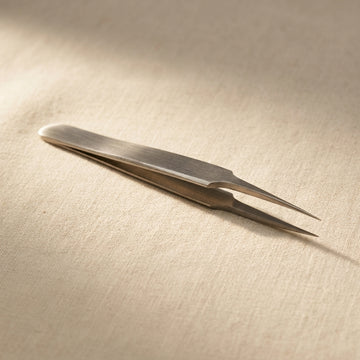
Keep each driver to its size — don't force a 1.20mm into a job that wants 1.40mm. Wipe blades clean of oil and swarf, store them in the stand so the tips aren't knocking about, and re-dress a tip the moment it starts slipping rather than soldiering on. One more thing specific to watch work: keep your drivers demagnetised. A magnetised blade grabs screws and steel filings and makes placing a screw maddening — a quick pass through a demagnetiser cures it. The screwdriver also pairs constantly with the tweezers you use to place the screws it drives, so it's worth getting both right together.
Dispatch from UK stock
Toolsmith does not currently sell watchmakers' screwdrivers, replacement blades or sharpening jigs; we stock other watch-repair tools such as case holders, case-closing pliers and anti-magnetic tweezers. Everything we sell ships from UK stock, either packed by us or through Amazon's UK fulfilment centres. We aim to dispatch orders placed before 2pm UK time, Monday to Friday, the same working day; later orders go out from the next working day. Most UK orders arrive 2–3 working days after dispatch, and UK delivery is free.
Related guides
- Watch Repair Toolkit Under £60: A UK First Set
- Watchmaker Tweezers: AA, 3C & 5 Anti-Magnetic Explained
- Watch Case Opening Tools: The Complete Guide
- Watchmaker's Demagnetiser Buying Guide
- Shop all Watch & Clock Tools
Frequently asked questions
Which watchmakers' screwdriver set should I buy first?
A colour-coded nine-piece set in a rotating stand covers virtually all watch work for hobbyists and many professionals — the stand keeps the sizes upright and to hand, and usually holds spare blades under each driver. Pair it with a sharpening stone or jig from the start; a dressed blade matters more than the badge on the handle.
Why does my watch screwdriver keep slipping out of the screw slot?
Two causes: wrong blade width, or a worn tip. A watch screwdriver blade is parallel-sided with a flat, square tip that should fill the slot in both width and depth. If the right size still slips, the tip has rounded off or lost its square edges — dress it flat and perpendicular on a fine stone or jig.
What size watch screwdriver do I need for each job?
Sizes are blade widths in millimetres. 0.50–0.80mm handles dial-foot, case-clamp and the tiniest movement screws; 1.00–1.40mm covers everyday bridge and balance-cock screws; 1.60–2.00mm suits mainspring-barrel and ratchet screws; 2.50–3.00mm handles case-backs and strap screws. Match the blade width to the screw slot as closely as possible.