Quick answer: You need both, used as a system. A steel block is non-negotiable for planishing, forming, texturing and riveting — its unyielding mass returns the hammer’s force into the metal. A rubber block is the shock absorber: place it under the steel block when stamping for a deeper, cleaner impression and far less noise.
Key difference: steel returns the hammer's force into the metal; rubber absorbs it. Put rubber under steel for stamping, and use steel alone for forming.
| Block | What it does | Use it for | Limits |
|---|---|---|---|
| Steel | A hard, high-mass surface that returns the hammer's force into the workpiece | Planishing, forming, texturing, riveting; the hard surface for stamping | Rings loudly; marks the back of softer metal |
| Rubber | Dense rubber that absorbs energy and deadens vibration | Under the steel block when stamping, for a deeper, cleaner mark and less noise | Unsuitable as a primary work surface; stamping straight onto it gives a shallow impression |
Walk into any working jeweller's studio and listen. Alongside the scratch of a file and the hiss of a torch, you'll hear the rhythmic sound of a hammer. But the specific sound it makes—a sharp, deafening RING or a dull, satisfying THUD—tells you everything you need to know about the surface it's striking. That surface is the bench block, the unsung, heavyweight hero of the silversmith's bench. It’s the foundation for so much bench work, from forming and forging to stamping and riveting.
For those building or refining their bench setup, a common question arises: do I need a rubber block or a steel block? It’s a debate that can be confusing, with makers on both sides swearing by their choice. The truth, as with most things at the bench, is nuanced. It’s not a matter of rubber or steel, but rather a question of when to use rubber, when to use steel, and—most importantly—when to use them together. This guide cuts through the noise to give you a direct look at the properties and practical applications of each.
The Case for Steel: Mass, Hardness, and Force
Let's be clear from the outset: if you intend to move metal with a hammer, a steel bench block is non-negotiable. It is the very definition of a foundational tool. Its function is rooted in simple physics: mass and hardness.
When you strike a piece of silver sheet with a hammer, you are applying a directed force. For that force to do its job—to planish, texture, or form the metal—it needs to meet an equal and opposite reaction. A solid steel block provides an unyielding, high-mass surface. It doesn't absorb the hammer's energy; it resists it, forcing all that kinetic energy back into the workpiece. This is what allows you to efficiently shape metal. Trying to planish a cuff on a wooden surface, for example, is a lesson in futility. The wood absorbs the blow, and your hammer simply bounces off, leaving the silver largely unchanged.
The key properties of a steel block are:
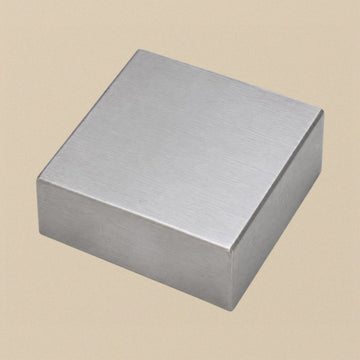
- Hardness: Our steel blocks are ground flat and case-hardened. This smooth, tough surface won't deform under repeated hammer blows. This is essential for achieving a flat, even finish when planishing or ensuring a crisp mark when riveting.
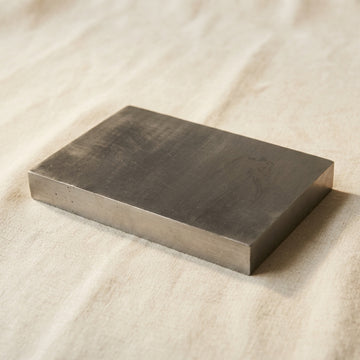
- Mass: The sheer weight of the block provides the necessary inertia. The heavier the block, the more efficient the transfer of force. For serious forming, a larger, heavier block like the Heavy Duty Solid Steel Doming Bench Block 6×4×3/4 offers a superior surface and mass for raising or forging.
- The Downside—Noise and Marks: This unyielding nature has two consequences. First, the iconic, ear-splitting RING of steel on steel. It's the sound of work getting done, but it’s not ideal for shared spaces or late-night sessions. Second, a hardened steel block will mark any softer metal placed upon it. If you're stamping or texturing one side of a piece, realise that the back will be burnished and potentially marked by the block's surface. Many jewellers keep a small, thin sheet of brass or copper to use as a sacrificial "pad" between the block and their workpiece to protect the reverse side.
Why the Wooden Base?
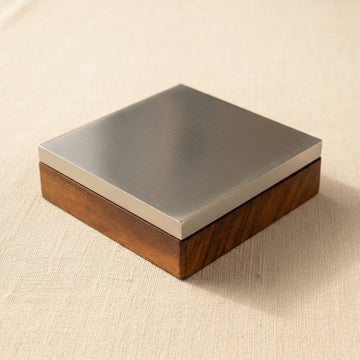
You'll notice that many standard blocks, such as our popular Steel Bench Block with Wooden Base, come seated in a wood surround. This isn't just for aesthetics. The wooden base serves two critical functions. Firstly, it prevents the smooth steel block from "walking" or vibrating its way across your benchtop during heavy hammering. It provides grip and stability. Secondly, it protects the surface of your workbench from being scratched and dented by the hard edges of the steel. It's a simple feature that makes the tool far more practical in a busy workshop.
The Role of Rubber: Dampening, Grip, and Quiet
If steel is all about unyielding force, rubber is its polar opposite. A dense, heavy-duty rubber block is designed to absorb energy, not reflect it. This makes it entirely unsuitable for tasks like planishing or forging, where you need that force transfer. A hammer blow on a rubber block results in a dull thud, with most of the energy dissipated into the rubber itself. So, what is it good for?
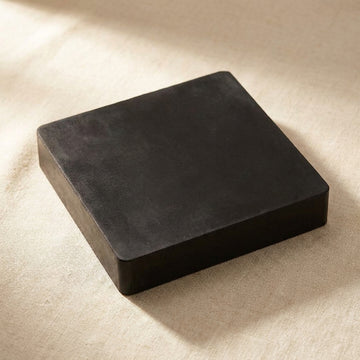
The primary role of a rubber block is to provide vibration and noise dampening. It’s the solution to the problems created by the steel block's hardness. A product like the Heavy Duty Rubber Bench Block 6×6×1 is an indispensable part of a modern jeweller's toolkit, specifically for stamping.
When you strike a metal punch stamp with a hammer on a bare steel block, the block itself can bounce slightly on the bench. The stamp can also rebound microscopically on the metal's surface. This often results in a "ghosting" or double impression, blurring the clean lines of your hallmark or design. It’s frustrating and can ruin a finished piece.
Placing your workpiece directly on a rubber block to stamp also presents problems. Whilst it's quiet, the soft surface can deform around the stamp, resulting in a shallow, mushy impression. The rubber absorbs too much of the force needed to displace the silver or copper.
The rubber block's superpower isn't to be a primary work surface, but to be a silent partner. Its behaviour is all about absorption, making it the perfect companion for tasks that require a single, clean, non-rebounding strike.
The Professional Setup: Layering for a Versatile Bench
This brings us to the most important takeaway: the professional solution isn't to choose one block over the other, but to understand how to use them in concert. By layering your blocks, you can create a system that is optimised for the specific task at hand.
For Stamping and Punching
The Setup: Place your rubber block directly on your workbench. Then, place your steel block on top of the rubber block. Your workpiece and stamp go on top of the steel.
How It Works: This layered "sandwich" is the secret to perfect stamping. The steel block provides the essential hard, flat surface needed for a crisp, deep impression. The rubber block underneath acts as a giant shock absorber. It completely deadens the vibration, preventing the steel block from bouncing and eliminating any chance of the stamp chattering. All the force of your hammer blow is delivered cleanly and precisely in a single moment.
The result is a significantly deeper and cleaner mark with less effort. You also get a massive reduction in noise, transforming the piercing ring into a solid, dull thud. Your ears, and your neighbours, will thank you. For anyone serious about personalising their work with metal stamps, this setup is a game-changer. We delve deeper into the nuances of punch selection and technique in our Metal Punch Stamps: A UK Maker's Guide.
For Forming, Planishing, and Riveting
The Setup: For these tasks, remove the rubber block. Your steel block should be placed directly on your solid workbench. For heavy forming or raising, many silversmiths place their block on a leather sandbag to help absorb some vibration and noise without sacrificing the efficiency of the hammer blow.
How It Works: When forming, you want the full, unadulterated transfer of force. You need the mass of the steel block to work for you. Placing a rubber block underneath would be counterproductive; it would absorb the energy you're trying to put into the metal, meaning you'd have to work much harder to achieve the same result. The noise and vibration are simply part of the process here.
This is the domain of planishing, texturing, forging, and using doming punches. All these techniques, which fall under the broad category of Hammers & Forming Blocks, rely on a solid foundation. Even dapping, which uses a dedicated dapping block with concave depressions, requires this solid transfer of energy. You can learn more about this specific process in our guide to Doming & Dapping: Steel Punches and Forming Blocks. Of course, all the force in the world is useless without control, a topic we cover in How to Hold a Hammer at the Bench.
Choosing Your Size and Shape
When investing in your blocks, size matters. It dictates not just the scale of the work you can do, but also the efficiency of your hammering.
A 4x4 inch steel block, like the Steel Bench Block with Wooden Base, is the quintessential workhorse for most jewellers. It's more than adequate for stamping, riveting, and working on smaller components like earring posts, jump rings, and small pendants. Its compact size makes it easy to position on a busy bench.
However, once you move into forming larger items like cuffs, bangles, or small bowls, a larger block becomes essential. A block like our Heavy Duty Solid Steel Doming Bench Block 6×4×3/4 provides a larger, more stable surface area and, crucially, more mass. This extra weight makes each hammer blow more effective, saving you time and effort when planishing a large, flat surface or forging a thick piece of wire.
For the rubber block, the Heavy Duty Rubber Bench Block 6×6×1 is a versatile, standard size. Its 6x6 inch footprint provides a stable base for both 4x4 and 6x4 steel blocks, making it the perfect universal partner for your stamping setup.
Maintenance: Looking After Your Investment
These are simple, robust tools, but a little care will ensure they last a lifetime.
Steel Block Care: Your steel block is made of high-carbon steel. That means it's hard, but it will rust if neglected, especially in a damp British workshop. After a session, wipe it down to remove any flux residue or fingerprints. Once a month, give it a wipe with a cloth lightly dampened with a general-purpose machine oil (like 3-in-1). This creates a protective barrier against moisture. Always wipe off any excess oil before you begin work to avoid transferring it to your precious metal.
Rubber Block Care: The rubber block is virtually maintenance-free. Over time, you might find that small filings or chips of metal become embedded in its surface. When this happens, simply take it to a sink and rinse it under the tap. A stiff nylon brush can be used to dislodge any stubborn debris. Let it air dry completely before returning it to the bench. Avoid using harsh solvents, as they can degrade the rubber over time.
In conclusion, the rubber vs. steel debate is a false one. A well-equipped bench needs both. The steel block is your anvil, providing the mass and hardness to shape metal. The rubber block is your shock absorber, providing the quiet and stability for clean stamping. Understanding their individual properties and, more importantly, how they work together as a system, is a fundamental step in moving from an aspiring maker to a confident, efficient silversmith.
Related guides
- Doming & Dapping: Steel Punches and Forming Blocks
- Metal Punch Stamps: A UK Maker's Guide
- How to Hold a Hammer at the Bench
- Chasing, Repoussé & Forming Hammers: A UK Silversmith's Hammer Library
- Forming Stakes & Mini Anvils for Silversmiths: T-Stakes, Wheel Stakes & Micro-Forming
Frequently asked questions
Do I need a rubber or a steel bench block for silversmithing?
Both — the either/or debate is a false one. Steel is essential whenever you move metal with a hammer: planishing, forging, riveting and doming all rely on its hardness and mass. Rubber absorbs energy, so it is unsuitable as a primary work surface, but placed under the steel block it kills bounce and noise when stamping.
What is the best bench block setup for metal stamping?
Layer the blocks: rubber block on the bench, steel block on top, workpiece and stamp on the steel. The steel provides the hard, flat surface for a crisp, deep impression, while the rubber deadens vibration — stopping the block bouncing and the stamp “ghosting” a double image. It also turns the piercing ring into a dull thud.
What size steel bench block should I buy?
A 4x4-inch steel block with a wooden base is the quintessential workhorse for stamping, riveting and small components. Step up to a heavier 6x4-inch solid block for cuffs, bangles and larger forming, where the extra mass makes each hammer blow more effective. A 6x6-inch rubber block partners either size.