Quick answer: Hallmarking is legally required on UK-sold silver at 7.78 g or more, gold at 1 g, platinum at 0.5 g and palladium at 1 g, under the Hallmarking Act 1973. Register a sponsor's mark with one of the four assay offices (£55-£150 one-off), then expect £2-£5 per piece — and remember a self-struck maker's mark is not a hallmark.
UK hallmarking is one of the oldest consumer-protection schemes in Europe — it's been mandatory on precious-metal articles since 1300, and the rules today are set by the Hallmarking Act 1973. If you sell jewellery in the UK and your pieces cross the statutory weight threshold, hallmarking isn't optional. This guide covers what hallmarking actually is, when you're legally required to do it, what it costs, and how a working UK silversmith manages it day-to-day.
This is not legal advice — if you're registering a business and need a definitive answer, contact one of the four UK assay offices directly (links below). This is a working-jeweller's overview.
What a UK hallmark actually is
A UK hallmark is a set of punched marks applied to a finished precious-metal article by one of four official assay offices. It guarantees, under criminal law, that the metal content matches the declared fineness. A ring "stamped 925" by a maker is a maker's claim; a ring that passes through London Assay Office and receives the Leopard's Head is a legally-guaranteed assertion.
A complete UK hallmark has three compulsory marks and often includes two optional marks:
- Sponsor's mark (compulsory): the maker's registered initials, struck from a punch held by the assay office on the maker's behalf. Typically 2-4 letters in a shaped shield.
- Fineness mark (compulsory): the metal purity as a number in a shaped outline — e.g. 925 for sterling silver, 750 for 18ct gold, 950 for platinum, 950 for palladium.
- Assay office mark (compulsory): the traditional town mark identifying which office tested the piece — Leopard's Head (London), Anchor (Birmingham), Rose (Sheffield) or Castle (Edinburgh).
- Date letter (optional): single letter identifying the year of hallmarking. Font and shield shape rotate in a published cycle.
- Traditional fineness symbol (optional): e.g. the Lion Passant for sterling silver, Britannia for 958 silver.
When hallmarking is legally required
Hallmarking is mandatory on any UK-sold article above these weight thresholds, per the Hallmarking Act 1973:
- Silver: 7.78 grams or more
- Gold: 1 gram or more
- Platinum: 0.5 grams or more
- Palladium: 1 gram or more
Below these weights, an article of at least the minimum fineness is exempt from hallmarking and can be described as gold, silver, platinum or palladium without a hallmark (Schedule 1 to the Act). Above them, describing an unhallmarked article as gold, silver, platinum or palladium in the course of trade, or supplying or offering to supply one so described, is an offence under section 1 of the Act.
The four UK assay offices
- Goldsmiths' Company Assay Office (London) — Leopard's Head mark. Oldest (1300).
- The Birmingham Assay Office — Anchor mark.
- Sheffield Assay Office — Rose mark.
- Edinburgh Assay Office — Castle mark.
You can use any of the four regardless of where you're based. Pricing and turnaround times differ between offices, so compare their current price lists before you register.
How the process works for a working maker
- Register a sponsor's mark. One-time application with your chosen assay office. Typical fee: £55-£150 depending on office and mark complexity. You choose your 2-4 initials and a shield shape.
- Make your piece to finished standard. Hallmarking happens AFTER final filing and polishing but BEFORE any setting of stones (stones must be removed or the assay office may refuse the piece).
- Package and send to the assay office. Tracked courier only. Most offices accept same-day drop-off if you're local.
- Pay the per-article fee. Typically £2-£5 per piece for standard silver/gold pieces; more for platinum or complex items. Volume discounts apply at most offices.
- Piece comes back marked. 2-10 working days depending on office and service tier.
Maker's marks vs hallmarks — a common confusion
It's a legal distinction, not a cosmetic one:
- A maker's mark (or sponsor's mark) struck by you on your own bench, even with a registered punch, is NOT a hallmark. It's one of the three marks that together make up a hallmark.
- A hallmark is only valid when struck by an assay office after testing.
Punching your initials on a ring doesn't hallmark it. It just adds a maker's mark. The piece still needs to go to an assay office to be legally sellable above-threshold in the UK.
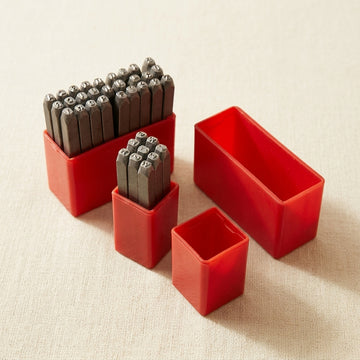
If you're making under-threshold pieces or selling to hobby/craft markets where hallmarking isn't required, a registered or custom maker's punch is still worth having — it identifies your work, builds brand recognition, and helps repair or resize jobs come back to you years later. Toolsmith stocks letter, number and design punches suitable for maker's mark use.
DIY punching tools you'll still need
Even with hallmarking outsourced to an assay office, a working silversmith bench still needs:
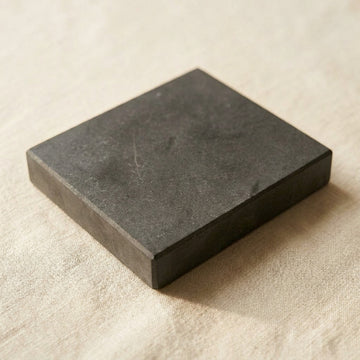
- Hardened steel bench block — for striking any punch cleanly. See Hammers & Forming Blocks.
- Chasing hammer (~100g) — for driving punches consistently.
- Engraving block or ring clamp — to hold the piece securely while punching.
- Letter/number stamp sets — for reference marks, batch numbers or maker's marks on under-threshold items.
Hallmarking exemption categories
Some items are exempt from hallmarking even above-threshold:
- Articles below the weight thresholds listed above
- Articles made before 1950 (antiques)
- Articles containing precious metal in a non-precious setting below a specified ratio
- Fine-silver under very specific trade categories (check with assay office)
"Non-UK trade" exemptions have narrow conditions — always verify with the assay office before relying on an exemption.
Registering as a new UK maker — practical first steps
- Choose your assay office — you can use any of the four, wherever you are based.
- Register your sponsor's mark with that office's application form. Allow 2-4 weeks.
- Plan your pricing: hallmarking adds £3-£5 per piece to cost-of-goods on average, plus courier costs.
- Plan for multi-piece batch dispatches — individual-piece dispatch is uneconomic; aim for 10+ pieces per batch where possible.
- Keep a hallmarking log: date, batch ID, assay office reference, pieces included, return date. Useful for compliance and for finding a specific piece later.
Where to learn more
For the authoritative rules, read the Hallmarking Act 1973 on legislation.gov.uk and the four assay offices' websites, all listed under Sources below. Toolsmith stocks letter, number and design punches, chasing hammers and bench blocks, and the full silversmith bench range UK makers need for finishing work before hallmarking dispatch.
For the full buying guide to setting up a bench that's ready for first-hallmarked-batch work, see Setting Up a Jewellery Bench on a Student Budget. For college programmes covering hallmarking as part of their BTEC curriculum, see our Jewellery Colleges UK trade page.
Sources
- Hallmarking Act 1973, section 1 — prohibited descriptions of unhallmarked articles (legislation.gov.uk)
- Hallmarking Act 1973, Schedule 1 — exempted articles, including the weight thresholds (legislation.gov.uk)
- Hallmarking Act 1973, Schedule 2 — approved hallmarks and assay office marks (legislation.gov.uk)
- The Goldsmiths' Company Assay Office, London
- The Birmingham Assay Office
- Sheffield Assay Office
- Edinburgh Assay Office
Related guides
- Setting Up a Jewellery Bench on a Student Budget (UK, 2026)
- How to Hold a Hammer at the Bench - UK Silversmith Technique Guide
- Best Ring Mandrels for Small UK Jewellery Studios (2026 Guide)
- Goldsmith's Soldering: Yellow, White & Rose Gold Without Pitting
Frequently asked questions
When do I legally need to hallmark jewellery in the UK?
Whenever a UK-sold article meets the statutory weight thresholds: 7.78 g for silver, 1 g for gold, 0.5 g for platinum and 1 g for palladium. Describing an unhallmarked above-threshold piece as gold, silver, platinum or palladium in the course of trade, or supplying one so described, is an offence under section 1 of the Hallmarking Act 1973; below the thresholds, articles of at least the minimum fineness are exempt.
How much does hallmarking cost a small UK maker?
Registering a sponsor's mark is a one-time £55-£150 depending on the office and mark complexity, then £2-£5 per standard silver or gold piece, with volume discounts at most offices. In practice hallmarking adds around £3-£5 per piece to cost of goods plus courier fees — so batch dispatches of ten or more pieces to keep it economic.
Is a maker's mark the same as a hallmark?
No. A maker's (sponsor's) mark struck at your own bench — even with a registered punch — is only one of the three compulsory marks. A hallmark is valid only when struck by one of the four assay offices (London, Birmingham, Sheffield or Edinburgh) after testing. Punching your initials on a ring does not make it legally sellable above-threshold.