Quick answer: For most hobbyists and students, an inexpensive “blue box” AC demagnetiser (typically £15–£25) is all you need to fix a magnetised watch that is suddenly running fast. Busy professional workshops may justify a £200+ station from Elma, Greiner or Horotec. Technique matters most: press and hold the button, withdraw the movement slowly to a metre, then release.
Why Is My Watch Suddenly Running So Fast?
It is a familiar story. A reliable mechanical watch, which has kept excellent time for years, suddenly starts gaining minutes. Not just a few seconds a day, but a significant, noticeable amount. Before you start pricing up a full service or fearing the worst, there is a common and surprisingly simple culprit to consider: magnetism. In our modern world, we are surrounded by magnetic fields, and the delicate heart of a mechanical watch is particularly vulnerable to their invisible influence.
Understanding this phenomenon is a fundamental skill for any aspiring or working watchmaker in the UK. Magnetism is one of the first things a professional checks for when diagnosing a timing issue. The good news is that it is often an easy problem to test for and even easier to fix, provided you have the right tool and the correct technique. Getting it wrong, however, can make the problem worse. This guide will walk you through the essentials.
What Causes a Watch to Become Magnetised?
The problem lies with a tiny, coiled component inside the movement called the hairspring. This spring, paired with the balance wheel, acts as the oscillator, regulating the speed at which the watch runs. It beats back and forth thousands of times an hour. If the hairspring becomes magnetised, its coils can stick to each other. This effectively shortens the spring's working length, causing the balance to oscillate much faster than it should. The result is a watch that runs erratically and, most commonly, gains a substantial amount of time.
Everyday Culprits
You do not need to work in a science lab to encounter problematic magnetic fields. They are generated by many common household and personal items. Some watches are built to ISO 764, the international standard for magnetic resistant watches, which sets minimum requirements for watches designed to withstand everyday magnetic fields; a stronger or longer exposure can still magnetise them.
- Speakers: The magnets in speakers are a primary source. This includes headphones, laptop speakers, soundbars, and even the tiny speaker in your smartphone. Resting your watch on your laptop for hours is a classic way to magnetise it.
- Magnetic Clasps: Many tablet cases, handbags, and even some coats use strong neodymium magnets in their clasps. If your watch wrist regularly comes into contact with one, it can easily become magnetised.
- Fridge Doors and Motors: The magnetic seal on a refrigerator door or the motor itself can be strong enough to affect a watch if it gets close.
Stronger Magnetic Fields
Some environments present a more significant risk. These fields are more powerful and can magnetise a watch almost instantly.
- Induction Hobs: These cooktops work by generating a powerful alternating magnetic field to heat pans. Placing your wrist near the hob while it is active is a guaranteed way to magnetise your watch.
- Shop Security Scanners: The deactivation pads used at checkouts to remove security tags from items generate a strong magnetic pulse. While brief, direct exposure can be enough.
- Large Hi-Fi Equipment: High-end audio equipment, particularly large subwoofers or vintage amplifiers with unshielded transformers, can produce significant magnetic fields.
The Heavy Hitters
Finally, there are extreme magnetic environments that will affect almost any non-specialised mechanical watch. The most common example is medical imaging equipment. An MRI (Magnetic Resonance Imaging) scanner generates an incredibly powerful magnetic field. Anyone undergoing an MRI scan must remove all metal objects, including their watch. Forgetting to do so will not only magnetise it but could also damage it permanently.
Symptoms of a Magnetised Watch Movement
A magnetised watch will present some very distinct symptoms. Recognising them can save you a lot of time in diagnostics.
- Running Extremely Fast: This is the number one sign. We are not talking about a watch gaining 15 seconds a day. A magnetised hairspring can cause a watch to gain several minutes per day, or in severe cases, even run at double speed, gaining an hour every hour. The coils stick together, the spring becomes shorter, and the beat rate skyrockets.
- Inconsistent Timing in Different Positions: The watch may run fast when lying flat but slow down or even stop when held vertically. This is because gravity can sometimes be enough to pull the magnetised coils apart, only for them to snap back together in a different orientation.
- Stopping Completely: In some cases, the magnetism can be strong enough to cause the balance wheel itself, or the hairspring, to stick to a neighbouring part of the movement like a bridge or plate, causing the watch to stop dead.
If you are inspecting the movement with a good quality magnifier, you might even be able to see the problem. A detailed watchmaker's loupe buying guide can help you choose the right tool for this kind of diagnostic work. Look for coils of the hairspring that are bunched together and do not expand and contract evenly as the balance oscillates.
How to Test for Magnetism
Before you reach for a tool, you need to confirm your diagnosis. There are two simple ways to do this.
The Professional Method: A Watchmaker's Compass
The traditional tool is a small, sensitive compass designed specifically for watchmaking. You simply bring the watch movement close to the compass. If the needle deflects or spins, the watch is magnetised. These are reliable but are becoming less common as a more modern tool is already in everyone's pocket.
The DIY Method: Using Your Smartphone
A compass app on your smartphone can do the job just as well. Most phones have a built-in magnetometer that these apps use.
- Find and download a simple, reliable compass app from your phone's app store. Avoid ones cluttered with ads or extra features.
- Place your phone on a flat, stable surface away from any other metal objects or potential magnetic sources. Open the app and let the needle settle.
- Slowly bring the watch (ideally with the case back removed) towards the top of the phone, where the sensor is usually located (often near the earpiece speaker).
- Watch the compass needle closely. If the needle moves, twitches, or spins as the watch gets closer, you have confirmed the presence of a magnetic field. If the needle remains perfectly still, magnetism is unlikely to be the issue.
Choosing a Demagnetiser: What Do You Really Need?
Once you have confirmed magnetism, you need the right tool to fix it. For watchmakers, the choice generally comes down to two categories.
The "Blue Box" AC Demagnetiser
This is the most common and affordable type of demagnetiser, often seen in a simple blue or red plastic housing. It is a staple for hobbyists and is included in the toolkits for many students starting their journey. In fact, many people taking their first steps with guidance from UK-based organisations like the British Horological Institute (BHI) will use one of these. We offer trade accounts for UK watchmaking schools on the watch-repair tools we stock.
These devices consist of a coil of wire around an iron core. When you press the button, mains AC electricity flows through the coil, creating a strong, rapidly alternating magnetic field. They typically cost between £15 and £25 and are perfectly adequate for occasional use on individual watches. They are effective, but the correct technique is absolutely critical to their success.
Professional Demagnetising Stations
A professional workshop that handles dozens of watches a week will invest in a more substantial piece of equipment. Brands like Elma, Greiner, and Horotec produce professional-grade demagnetisers. These units, which can cost £200 or more, deliver a more powerful and controlled magnetic pulse. They often work with a single button press, generating a decaying oscillating field automatically, making the process faster, more reliable, and less prone to user error. For a busy trade professional, the investment is easily justified by the time saved and the guarantee of a perfect result every time.
The Correct Way to Use a Demagnetiser
Using the common "blue box" demagnetiser is simple, but it is not intuitive. Following the wrong procedure can actually make the watch *more* magnetised. The goal is to subject the component to a magnetic field that is both alternating in polarity and gradually decreasing in strength.
Preparation
First, you must prepare the watch. It is strongly recommended to demagnetise the movement only, not the entire watch. While you can sometimes get away with doing the whole watch, you risk magnetising the steel case itself, which can then re-magnetise the movement later. You will need the right tools to get the case open; our watch case opening tools guide covers the equipment you will need for this step.
Once the movement is out of the case, place it on a clean, non-metallic surface. Crucially, move all other watches (especially quartz ones), electronic tools, bank cards, and your phone at least a metre away. The pulse from the demagnetiser can damage electronic circuits and wipe magnetic strips.
The Demagnetising Procedure (for a Blue Box)
Follow these steps precisely. The slow, steady withdrawal is the most important part of the process.
- Place the demagnetiser on a clear, stable workbench. Plug it in.
- Hold the watch movement with non-magnetic brass or bronze tweezers, or on a piece of pegwood. Position it a few centimetres directly above the centre of the demagnetiser's pad.
- Press and hold the red button. You will hear a distinct buzzing or humming sound. This confirms the electromagnet is active.
- While keeping the button pressed, slowly and steadily lift the movement straight up and away from the device. The movement should be smooth and take around 5-10 seconds to reach a distance of about one metre. Do not rush this part.
- Only when the movement is at least a metre away, release the button.
Why does this work? By holding the button, you create the alternating magnetic field. By slowly pulling the movement away, you are gradually reducing the field's strength to zero. This process scrambles the magnetic domains within the steel of the hairspring, leaving it in a neutral, non-magnetic state. If you release the button while the watch is still on the pad, you will hit it with one final, strong magnetic pulse as the field collapses, which will almost certainly magnetise it.
After the procedure, test for magnetism again using your compass app to confirm it has been successful. If it is still magnetised, repeat the process.
What Not to Do: Common Mistakes to Avoid
To ensure a successful outcome and avoid damaging anything, keep these points in mind.
- Do not demagnetise the whole watch if you can avoid it. You risk magnetising the case.
- Do not release the button while the movement is on or near the demagnetiser. This is the most common error and will magnetise the part.
- Do not slide the movement off the side of the pad. Lift it straight up to ensure a uniform decrease in field strength.
- Do not operate the demagnetiser near quartz watches, batteries, phones, or computers. The magnetic pulse can cause permanent damage to electronics. Lithium batteries are particularly sensitive.
- Do not assume the job is done. Always test again with a compass to verify your work.
When is Professional Service Required?
A demagnetiser is an essential diagnostic and repair tool, but it is not a magic wand. If you have successfully demagnetised the movement and it still runs poorly, it means the magnetism was either a symptom of a different problem or its effects have caused one.
For example, a sharp knock could have both magnetised the hairspring and slightly bent it. Demagnetising will fix the sticking coils, but the watch will still run inaccurately because the spring's shape is wrong. In other cases, the watch may simply be overdue for a full service. The oils may have dried up, causing excess friction that was masked by the more dramatic magnetic issue. If a simple task like a spring bar replacement is the limit of your comfort zone, then this is the point to stop.
If problems persist after demagnetisation, the movement requires a full inspection and service from a qualified professional. This involves complete disassembly, cleaning, reassembly, oiling, and regulation. This is the time to seek out a watchmaker with accreditation from an organisation like the BHI or WCF.
Key takeaways
- Magnetism is a very common cause for a mechanical watch suddenly running extremely fast.
- Everyday items like phone speakers, laptop magnets, and induction hobs are frequent culprits.
- You can easily test for magnetism by seeing if the watch deflects the needle on a smartphone's compass app.
- For most hobbyists and students, an inexpensive "blue box" AC demagnetiser is perfectly sufficient.
- The correct technique is critical: press the button, hold it, and slowly withdraw the movement to a distance of one metre before releasing the button.
- If a watch still performs poorly after being successfully demagnetised, it indicates an underlying issue that requires a professional service.
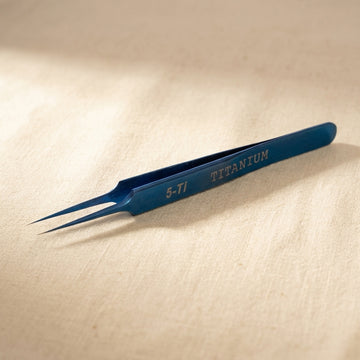
Mastering the use of a demagnetiser is a simple but vital step in developing your watchmaking skills. It allows you to quickly diagnose and solve one of the most common issues affecting mechanical timepieces. Having the right tool for the job makes all the difference, whether you are a student just starting out or a seasoned professional maintaining a busy workshop. Toolsmith does not currently sell demagnetisers; our Watch & Clock Tools collection includes anti-magnetic titanium tweezers and other watch-repair tools.
Sources
Related guides
- Watchmaker Tweezers: AA, 3C, 5 — Anti-Magnetic, Brass & Carbon
- Watchmakers' Screwdrivers: Sets, Sizes & Sharpening
Frequently asked questions
Which watch demagnetiser should I buy for home use?
For occasional use on individual watches, a simple “blue box” AC demagnetiser costing roughly £15–£25 is perfectly adequate, and is standard kit for students and hobbyists. Professional stations from brands like Elma, Greiner and Horotec (£200 or more) deliver a more controlled pulse with one button press, but are only worth it for a busy workshop.
How do I know if my watch is magnetised?
The classic symptom is running very fast — gaining minutes per day rather than seconds. Test it with a compass app on your smartphone: place the phone flat, away from metal, and slowly bring the watch towards it. If the needle twitches or spins, the watch is magnetised. Inconsistent timing in different positions, or stopping dead, are other signs.
How do I use a blue-box demagnetiser correctly?
Hold the movement a few centimetres above the pad, press and hold the button, then lift it slowly and smoothly to about a metre away over 5–10 seconds before releasing. Releasing the button while the watch is still near the pad will re-magnetise it. Keep phones, quartz watches and bank cards at least a metre away, and re-test with a compass afterwards.