Quick answer: Polish in three stages: tripoli cuts back file marks and fire scale, white diamond refines the surface to a near-mirror, and rouge on a soft loose-leaf wheel gives the final mirror. Dedicate one compound per wheel permanently and clean the work between stages. On plated work use only white diamond — tripoli and rouge cut through plating — and skip rouge on brass and copper, which oxidise too fast to hold it.
Polishing is the step that separates a piece you're proud of from one you'd rather not photograph. The compounds aren't optional — they're the working medium. Each compound cuts at a different rate and a different level of fineness, and using them in the wrong order undoes the work. Here's the order, and what each one is for.
The three-stage system
Almost all bench polishing follows a three-stage cut → smooth → finish sequence:
- Cutting (coarse): Tripoli, Bobbing compound, Greystar — removes deep file scratches, fire scale, mill marks.
- Pre-polishing (medium): White diamond, Luxi blue — refines the cut surface to near-mirror, no visible scratches.
- Final polish (fine): Rouge (Jeweller's rouge, red rouge) — brings the mirror to a deep, soft, light-reflecting finish.
Skip a stage and the next one can't catch up. Polish over a coarse cut with rouge alone and you keep the swirls, just shinier.
Tripoli — the cutting stage
Brown or fawn-coloured cake. Made from finely-ground silica/limestone in a wax binder. Aggressive enough to remove tool marks and fire scale, gentle enough not to leave its own deep scratches. Used on:
- Silver and gold sheet fabrication after filing
- Brass and copper rough work
- Any solder seam after pickling
Run on a stitched cotton wheel at moderate speed (2,500–3,500 rpm). Keep the work moving — sustained pressure burns the compound and overheats the metal.
White diamond — the pre-polish
White cake, sometimes off-white or pale grey. Finer than tripoli but still has cutting power. Used for:
- Pre-polishing silver and gold before rouge
- Single-stage polishing on plated work (where rouge would burn through plating)
- Bringing nickel and chrome to a high finish without going to rouge
Run on a stitched or loose-leaf cotton wheel. Don't mix wheels — once you've used a wheel for tripoli, that wheel is forever a tripoli wheel.
Rouge — the mirror finish
Deep red cake. Made from iron oxide in a wax binder. Almost no cutting action — it's a finishing compound. The job of rouge is to bring out the depth in a surface that's already free of visible scratches.
Use only on a soft loose-leaf cotton or flannel wheel, and only after white diamond. Light pressure, slower wheel speed (~2,000 rpm). The result on silver is a deep mirror; on yellow gold a warm glow that's the point of the whole exercise.
Wheel discipline — the rule that saves you hours
One compound per wheel. Forever. Mark the wheels with a felt pen on the side: "TRIPOLI", "WHITE DIAMOND", "ROUGE". Cross-contamination means a finer-stage wheel suddenly cuts deeper than expected, and you find scratches where there shouldn't be any.
Same goes for the buffing motor itself — keep tripoli on one side of the bench, rouge on the other, ideally in separate motors if you can afford the second.
Polishing copper, brass, steel
Different rules:
- Brass and copper: tripoli, then white diamond. Skip rouge — these metals oxidise too fast for the rouge mirror to last.
- Steel: use Greystar (grey, more aggressive) for the cutting stage, then white diamond. Rouge works but is slow on steel; many bench engravers go straight from white diamond.
- Plated metals: ONLY white diamond. Tripoli and rouge will both cut through the plating layer.
Cleaning between stages
Before moving from tripoli to white diamond, ultrasonic clean the work or scrub it with washing-up liquid and a soft brush. Old compound carried over scratches the next stage. Same applies between white diamond and rouge.
Common mistakes
- Loading too much compound on the wheel. Apply briefly to a spinning wheel until you see colour transfer. Too much makes a mess and clogs the cotton.
- Pushing too hard. Let the wheel do the work. Pressure overheats the metal — you'll see colour change on silver and gold.
- Polishing flat panels with the edge of the wheel. Use the face of the wheel, traverse smoothly. Edge-only polishing leaves visible bands.
What we stock
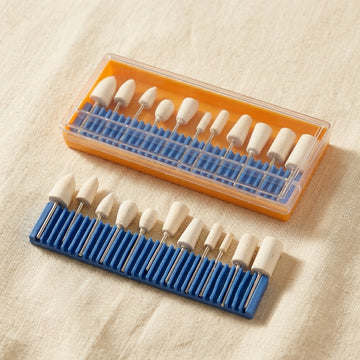
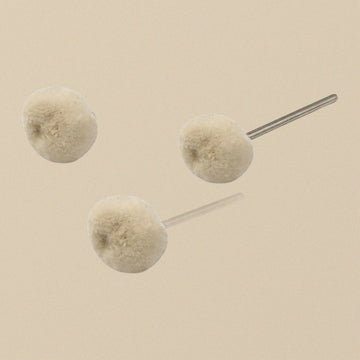
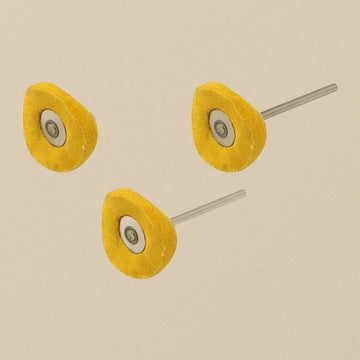
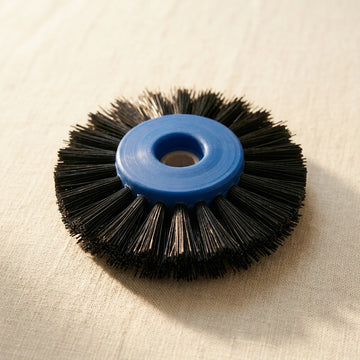
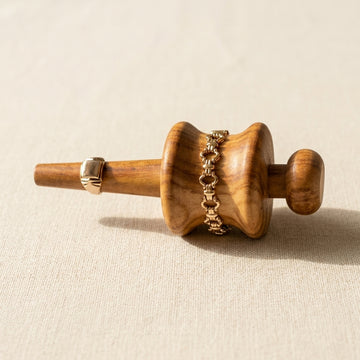
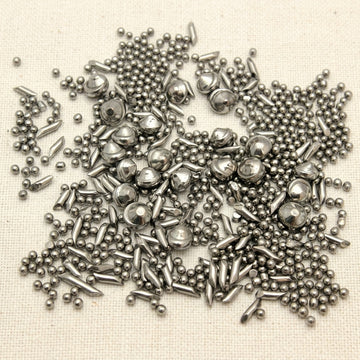
Toolsmith does not currently sell polishing compounds. We stock polishing tools such as felt buffs, cotton and cloth polishing wheels for rotary tools, lathe brushes and stainless steel tumbling shot, shown below. Free UK delivery on every order; we aim to dispatch orders placed before 2pm UK time, Monday to Friday, the same working day.
Question about which compound for which metal? Email info@toolsmithltd.co.uk.
Related guides
- Jeweller's Saw Frames and Blades: Pick the Right Combo
- Watchmaker's Loupe Buying Guide: 10× vs 20× and Eye-Strain Tradeoffs
- Setting Up a Jewellery Bench: 12 Essentials UK Bench Jewellers Actually Use
- Pliers Identifier: 7 Plier Types Every Bench Jeweller Should Know
Related guides
- Hand Gravers for UK Bench Jewellers: A First-Buy and Sharpening Guide
- Burs for Jewellery Making: Hart, Bud, Cup, Ball & Wheel Burs Explained
- Flex Shaft vs Micromotor: Rotary Power Compared
- Rotary Polishing Wheels, Buffs & Brushes: A UK Bench Guide
Frequently asked questions
Which polishing compound do I need for silver jewellery?
All three, used in order: tripoli on a stitched cotton wheel to cut back file marks, fire scale and solder seams; white diamond to refine the surface to a near-mirror; then rouge on a soft loose-leaf wheel for the final deep mirror. Skipping a stage does not save time — polishing over a coarse cut with rouge just leaves shinier swirls.
Can I use the same buffing wheel for different compounds?
No — one compound per wheel, permanently. Once a wheel has carried tripoli it is a tripoli wheel forever, so label each wheel with a felt pen. Cross-contamination makes a finer-stage wheel cut deeper than expected, leaving scratches where there should be none. Keep tripoli and rouge at opposite ends of the bench, ideally on separate motors.
What compound should I use on plated or brass items?
On plated work use white diamond only — both tripoli and rouge will cut through the plating layer. On brass and copper, run tripoli then white diamond and skip rouge, because those metals oxidise too quickly for a rouge mirror to last. For steel, use the more aggressive Greystar for the cutting stage, then finish with white diamond.