Quick answer: Twelve tools make a working UK jewellery bench: bench pin and clamp, saw frame and blades, needle files, the three core pliers, flush cutters, ring mandrels, a 10× loupe, brass mallet, parallel-action pliers, tweezers, a pickle pot with copper tongs, and a bench brush. Budget £150–£250, spending more on the daily-use pliers, files and saw frame, and skip disc cutters and doming blocks until a job demands them.
Every search for "jewellery starter kit" returns 30-piece sets with most pieces you'll never use. Bench jewellers tend to use a small set of tools constantly and a long tail rarely. Here's what to buy first, in the order it earns its keep.
The 12 essentials
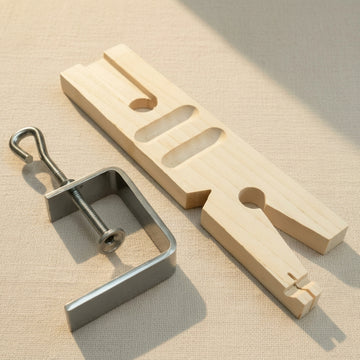
1. Bench pin and clamp
The wedge of wood your work rests on while you saw, file and pierce. Without it you can't work. A V-cut pin clamped to a sturdy table is the foundation. Replace the pin every 6–12 months as it wears.
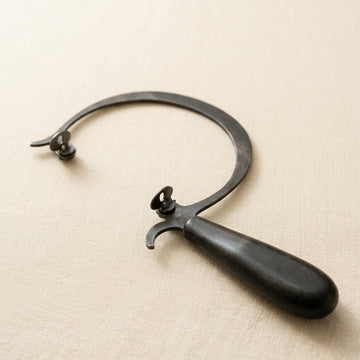
2. Jeweller's saw frame and blades
A 75 mm adjustable frame with a packet each of #2/0, #1 and #4 blades covers everything from sheet piercing to thicker fabrication. See our saw frame and blade guide for sizing details.
3. Half-round needle files (set of 6)
Cut #2 is the bench-standard — coarse enough for stock removal, fine enough for finishing edges before sanding. A six-piece set covers internal ring sizing, fitting bezels, smoothing solder seams.
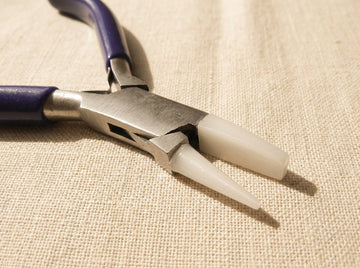
4. Flat-nose, round-nose and chain-nose pliers
Three plier shapes do most jewellery work. Flat-nose for gripping and bending, round-nose for forming jump rings and loops, chain-nose for pinching and detail. PVC grips for comfort over long sessions.
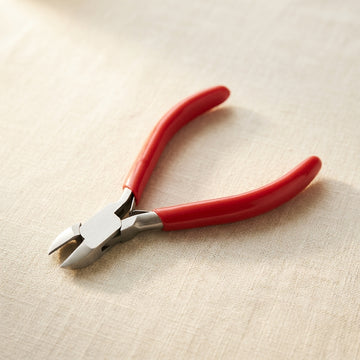
5. Side cutters / flush cutters
Flush cutters leave a clean square cut on wire — needed for jump rings and findings. Side cutters bevel the cut. Bench jewellers carry both.
6. Ring mandrel (wood + steel)
Wood for finishing without marking, steel for hammer-forming. UK-marked sizing scale on both. See our ring mandrel buying guide for the wood/steel trade-off.
7. Watchmaker's loupe (10×)
Setting work, solder line inspection, jewel checking. Buy a 10× monocular and a small magnifier-on-stand together — the loupe for bench work, the magnifier-on-stand for soldering hands-free.
8. Brass mallet (1 lb / 450 g)
For forming and tapping work without marking. Steel hammers go on rivets and stake work — the brass mallet is what you reach for daily.
9. Parallel-action pliers
For straightening wire, bending tabs, holding work square in a vice. The jaw stays parallel through the squeeze, so you don't twist the work.
10. Tweezers — anti-magnetic and locking
Standard fine-point for tiny stones and pickling. Locking (cross-action) for soldering — frees both hands.
11. Pickle pot and copper tongs
An old slow-cooker, citric acid pickle solution, copper tongs (NOT steel — steel contaminates pickle). Removes flux and oxide after soldering.
12. Bench brush and dust pan
For sweeping precious metal filings into a sweepings tray. Sounds trivial — but if you're working in silver or gold, the sweepings pay for the brush within a year.
What to skip on day one
Buying tools you won't need yet just slows you down and clutters the bench. Hold off on these until you have a specific job that needs them:
- Disc cutters — useful, but expensive, and a flat steel block plus saw covers most uses
- Doming blocks — only when you have rounded work to make
- Specialist setting tools — buy these per technique once you know what you're setting
- Polishing motor and wheels — important, but a separate purchase decision (see our polishing compounds guide)
Total budget
A bench-ready 12-essentials set comes in around £150–£250 from UK suppliers depending on quality tier. We'd argue spend slightly more on pliers, files and the saw frame (the daily-use trio) and economise on the consumables.
What we stock
Toolsmith stocks many of the 12 essentials — bench pins, saw frames, needle files, pliers, side cutters, ring mandrels, a 10× loupe, a brass mallet and tweezers — under jewellery making tools; we do not currently sell saw blades or pickling equipment. Free UK delivery on every order; we aim to dispatch orders placed before 2pm UK time, Monday to Friday, the same working day. Email us if you want a starter-kit recommendation matched to a specific style of work.
Question about your bench setup? Email info@toolsmithltd.co.uk.
Related guides
- Jeweller's Saw Frames and Blades: Pick the Right Combo
- Watchmaker's Loupe Buying Guide: 10× vs 20× and Eye-Strain Tradeoffs
- Pliers Identifier: 7 Plier Types Every Bench Jeweller Should Know
- Polishing Compounds Demystified: Tripoli, Rouge, White Diamond and When to Use Each
Related guides
- Hand Gravers for UK Bench Jewellers: A First-Buy and Sharpening Guide
- Lino & Block Printing Tools: A UK Buying Guide
- Disc Cutters for Jewellery: A UK Buyer's Guide
- Bench Organisation: Tool Racks, Stands & Storage
- Jeweller's Tweezers & Clamps: Soldering, Locking & Diamond Types
- Bead & Bench Scoops: Sizes, Anti-Magnetic Steel & Tidy Sorting
- Soldering Bench Accessories: Torch Stands, Third Hands & Titanium Picks
- Rotary Polishing Wheels, Buffs & Brushes: A UK Bench Guide
Frequently asked questions
What tools do I need to set up a jewellery bench?
Twelve essentials cover a working bench: a bench pin and clamp, jeweller’s saw frame with blades, half-round needle files, flat-nose, round-nose and chain-nose pliers, flush cutters, wood and steel ring mandrels, a 10× loupe, a brass mallet, parallel-action pliers, anti-magnetic and locking tweezers, a pickle pot with copper tongs, and a bench brush with a sweepings tray.
How much does a jewellery bench starter setup cost in the UK?
A bench-ready set of the twelve essentials comes in at roughly £150–£250 from UK suppliers, depending on quality tier. Spend slightly more on the daily-use trio — pliers, files and the saw frame — and economise on the consumables. Check a 30-piece starter kit item by item before you buy it: many include tools a bench jeweller rarely touches.
Which jewellery tools should I skip buying at first?
Hold off on disc cutters, doming blocks, specialist setting tools and a polishing motor until a specific job demands them. A flat steel block and a saw cover most disc-cutter uses, setting tools are best bought per technique, and a polishing setup is a separate purchase decision. Buying tools you do not yet need just clutters the bench.